
After two books about science denial and religion and a third book out next spring, after years of blogs and speaking, I finally made the trip to the Ark Encounter and the Creation Museum, the epicenter of Ken Ham’s Answers in Genesis universe.
I needed to see it all in person. After all, the Ark hosts 724,000 to 875,000 visitors per year and about 300,000 visit the Creation Museum.
Both museums are really well-done – absolutely Disney quality – bestowing an aura of credibility to the exhibits.
Across two days and across the two venues, a common theme emerged: creationism is true science, and “secular” science cannot be trusted.
Dinosaurs are the mark of valid science according to Ken Ham, and he is committed to “taking the dinosaurs back” from “secular scientists.”
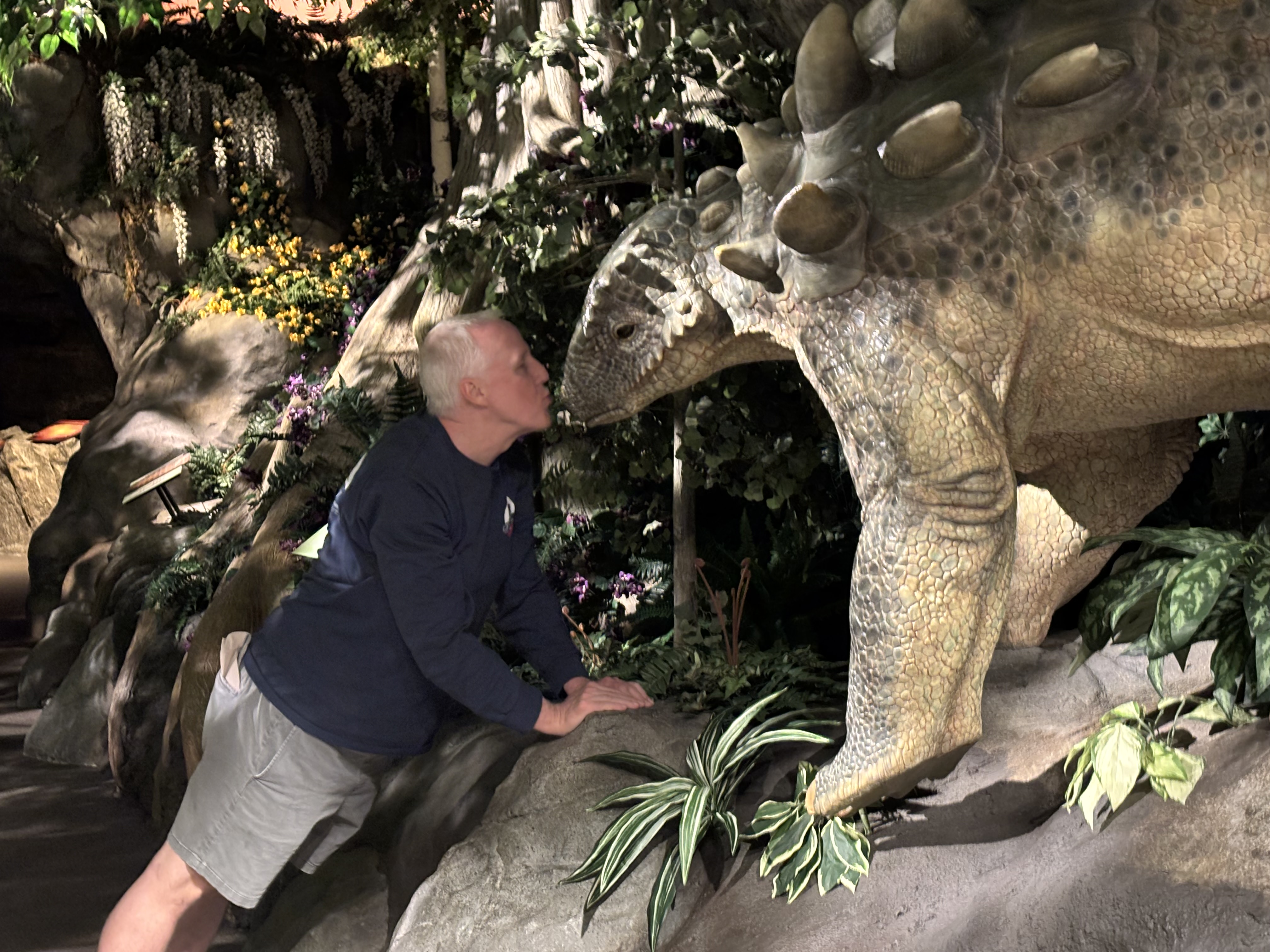
Both the Creation Museum and the Ark Encounter are preoccupied with dinosaurs.
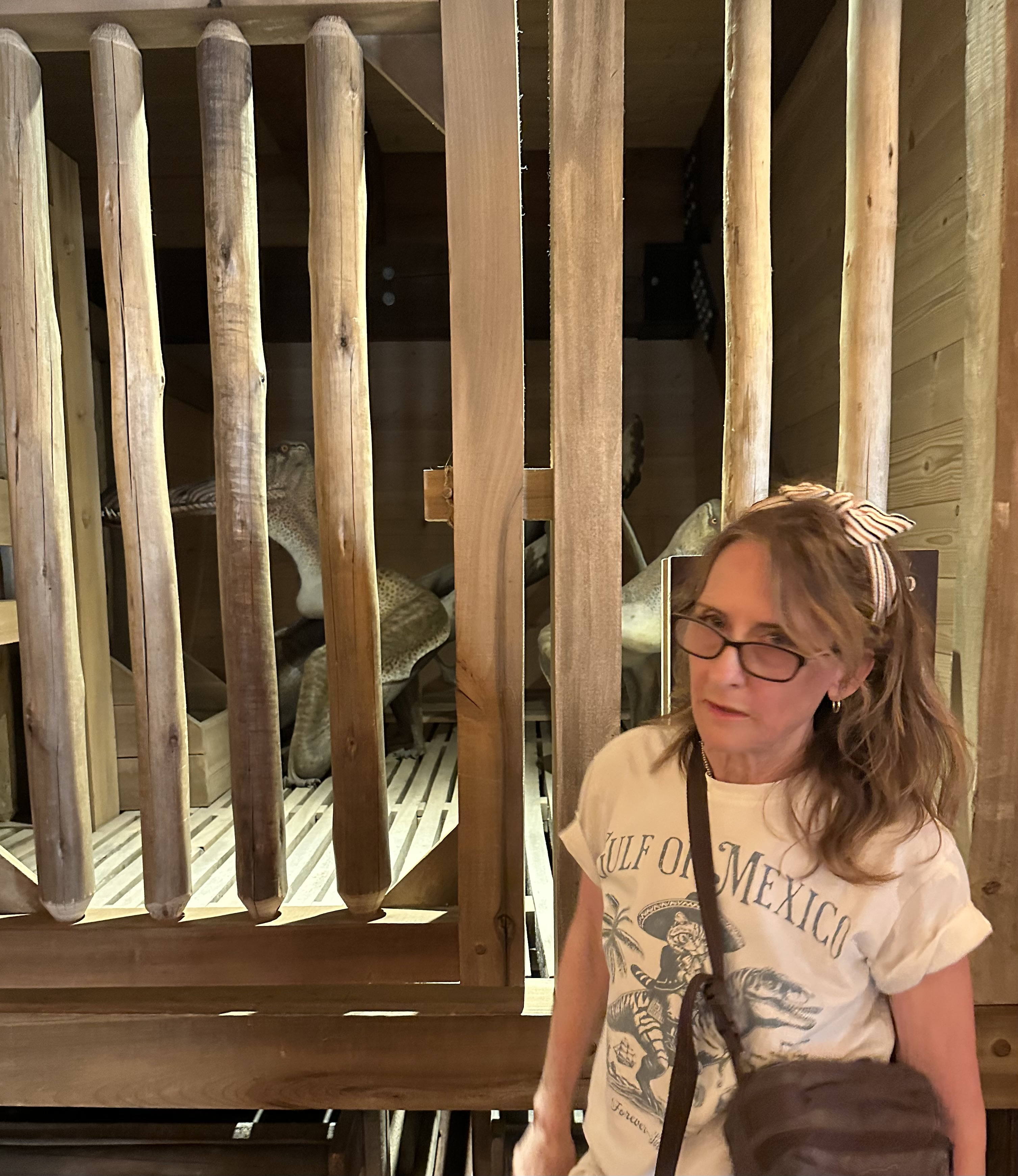
Dinosaurs in cages on the ark. Dinosaur-adjacent pterosaurs soar above the ark in artwork. Extensive explanations of dinosaur transport logistics throughout.
Then there’s the Creation Museum.
From the moment you step inside, you can’t swing a cat without hitting a dinosaur.
Dragons are REAL – they’re actually dinosaurs! Dinosaurs are in the Bible!
Dinosaurs peacefully grazing alongside children, dinosaurs in the Garden of Eden, dinos surround you, dinos peer down at you. Dinosaur giftshops filled with dino merch.
Ken Ham really wants you to believe he is on Team Science.
Answers in Genesis defines science in a way that no one outside the creationist world defines it, sorting “science” into one of two artificial categories:
Science is either “observational science” (things happening in the present) or “historical science” (interpreting evidence from the past).
“Observational science” is the only trustworthy science; “historical science” is sketchy at best and should never be trusted.
Here are two examples (from astronomy and biology) featured at the Creation Museum . . .
Observational science (trusted) answers these questions: what is the color of a star? How far away is a star?
Historical science (not trusted) includes the speed of light. The speed of light cannot be trusted because God might have manipulated it in the past. Therefore, we cannot use physics to determine the age of the universe.
Observational science (trusted) tells us that cells have organelles with complex functions.
Historical science (not trusted): includes evidence that complex cells evolved from simpler cells. The Bible tells us God created everything; therefore, complex cells must be designed, not evolved.
Overwhelmingly, the message of both museums is “don’t trust secular science.”
When it comes to science, the Bible is the only trustworthy source, and the Bible says God created everything.
Biology textbooks, on the other hand, frequently “change as new discoveries are made and hypotheses are formed.” (And that’s a bad thing?? That is HOW science works…. but I digress).
In exhibit after exhibit, both the Ark and the Creation Museum begin with foregone conclusions: the earth is six thousand years old, Genesis is literal, and evolution is fiction.
In exhibit after exhibit, we are told what “Must have happened” in order to support these forgone conclusions.
And with foregone conclusions, you’ll never need critical thinking.


 Janet K. Ray
If secular science can’t be trusted, then not only should we throw away vaccines (as is being done) but we should get also rid of all the products of secular science, including (but not limited to) all medications, anaesthesia pain killers, etc. heart medications, medical interventions for kidney, liver and digestive diseases, and so on. And if the speed of light is really not a constant, then quantum mechanics is wrong, which means that cell phones and computers are the work of Satan, and must be banned. Need I go on?
exactly! And I fear that is exactly what we are seeing.