Reason for Hope

One of my favorite podcasts ends each episode with “reasons for hope.” Lost among the higher-profile results of the recent off-year elections was a scientific “reason for hope.”

Two years ago, Cy-Fair ISD (one of the largest in Texas), elected a slate of board members determined to sabotage the district’s science curriculum. The ringleader was Natalie Blasingame, who, in a fundraising email, vowed to tear down the wall between church and state.

Blasingame and the board immediately banned chapters within already adopted textbooks. Banned content included chapters on vaccines and climate change.  

Although it’s unfortunate that Cy-Fair students missed two years of instruction on some of the most important concepts in science, here’s my reason for hope:

In November, the board members responsible for the chapter-bannings were voted out and replaced with pro-science-literacy folks. 

And boy, do we need science literacy.

Three weeks after the election, the CDC (under the direction of RFK Jr.) updated its website to read “studies have not ruled out the possibility” that vaccines contribute to autism. 

Sigh.

Decades of peer-reviewed research say otherwise.

As one writer put it: we also can’t rule out that vaccines cause tornadoes.

Science literacy. Now more than ever. 

Science Fairs

My first teaching job was middle school science, and science fairs were my absolute favorite. 

My students competed in local fairs and regularly advanced to the regional and state fair. 

Fun memory: defending my brilliant seventh grade student’s project to a panel of judges who wanted assurance that she actually designed her study. 

I assured them she did, and I’ll never forget the judges (medical doctors and scientists) encircling a tiny girl, asking her questions and amazed with her answers. 

Her seventh grade project? 

Designing a new birth control device. 

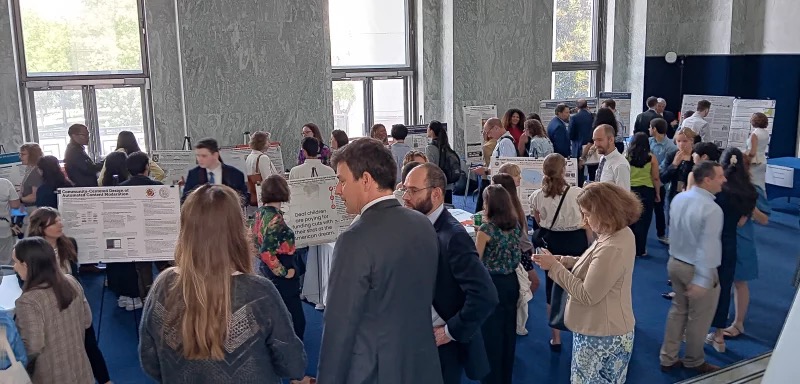
In this dystopian science world where research in mRNA therapies is canceled (absolutely a tragedy), the CDC is held hostage by a germ theory skeptic, and my Texas just made ivermectin an OTC drug, a science fair was held on Capitol Hill. 

But instead of bright-eyed middle schoolers, the fair featured poster displays of promising breakthroughs by actual researchers – studies abruptly cancelled by the current administration. 

In an office lobby, two dozen researchers spoke about the importance of their studies and the dangers threatening scientific research. 

But who needs controlled, peer-reviewed research? Bring on the horse meds. 

Happy Birthday, Monkeys!

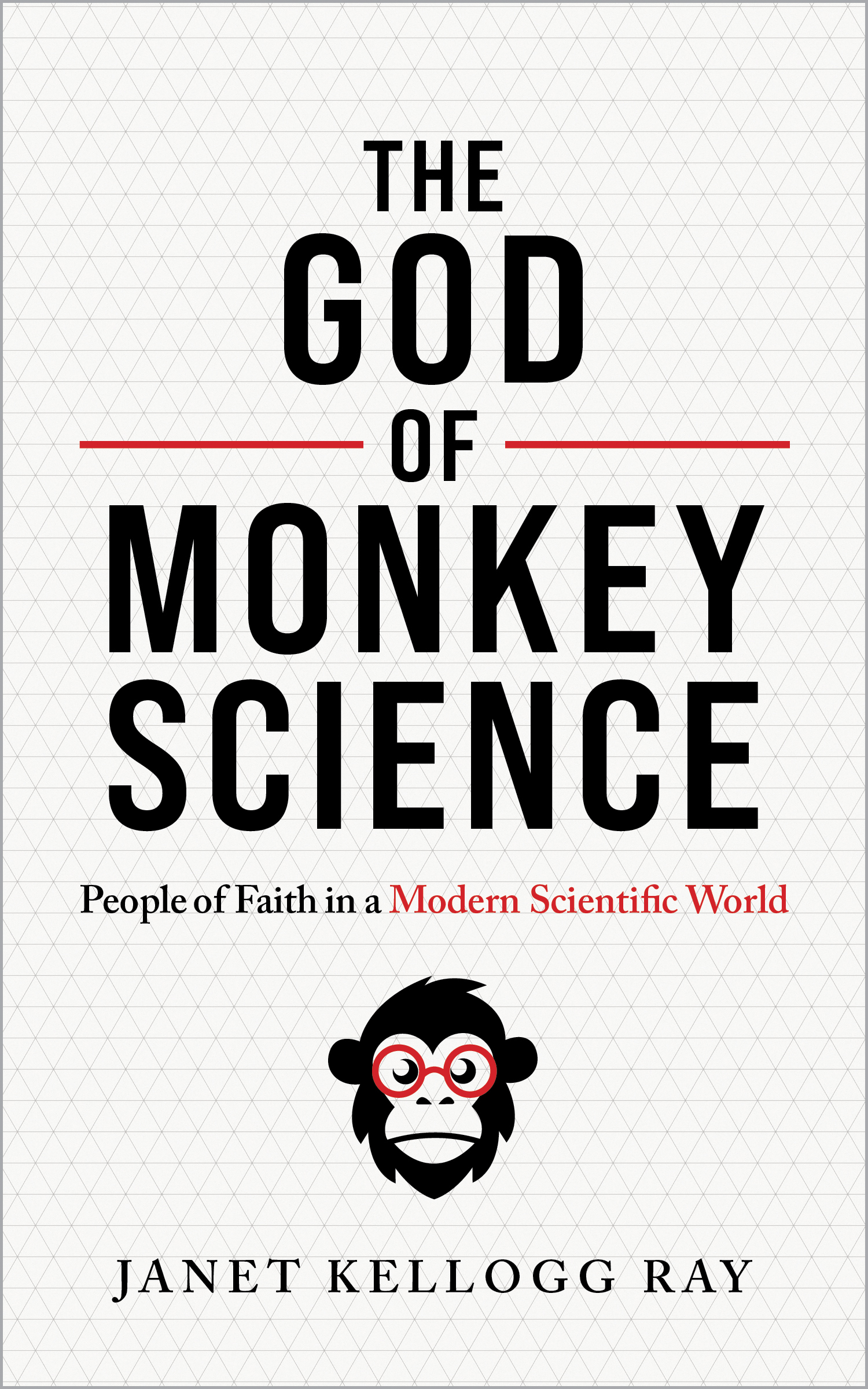
In September, THE GOD OF MONKEY SCIENCE turns two years old!

And just in time for the celebration, here’s a new review by Glenn Branch (National Center for Science Education) in Reviews in Religion and Theology (Vol 321, No. 2).

The message of the book – the dangers of science denial and its roots in evangelicalism – is just as important, if not more so, since HHS is now led by a germ theory skeptic and vaccine conspiracist.

Here’s Branch:

“Addressing them in the same appealing conversational tone she used in her previous book, Baby Dinosaurs on the Ark? (Eerdmans, 2021), she urges them to reconsider their attitudes toward science and scientists, because, as she summarizes, ‘Our culture wars are killing people and wrecking faith’ (p. 179). At a time when the American public is viciously and unnecessarily divided over issues such as these, The God of Monkey Science is a welcome intervention.”

My Research Trip to Kentucky’s Creationist Capital

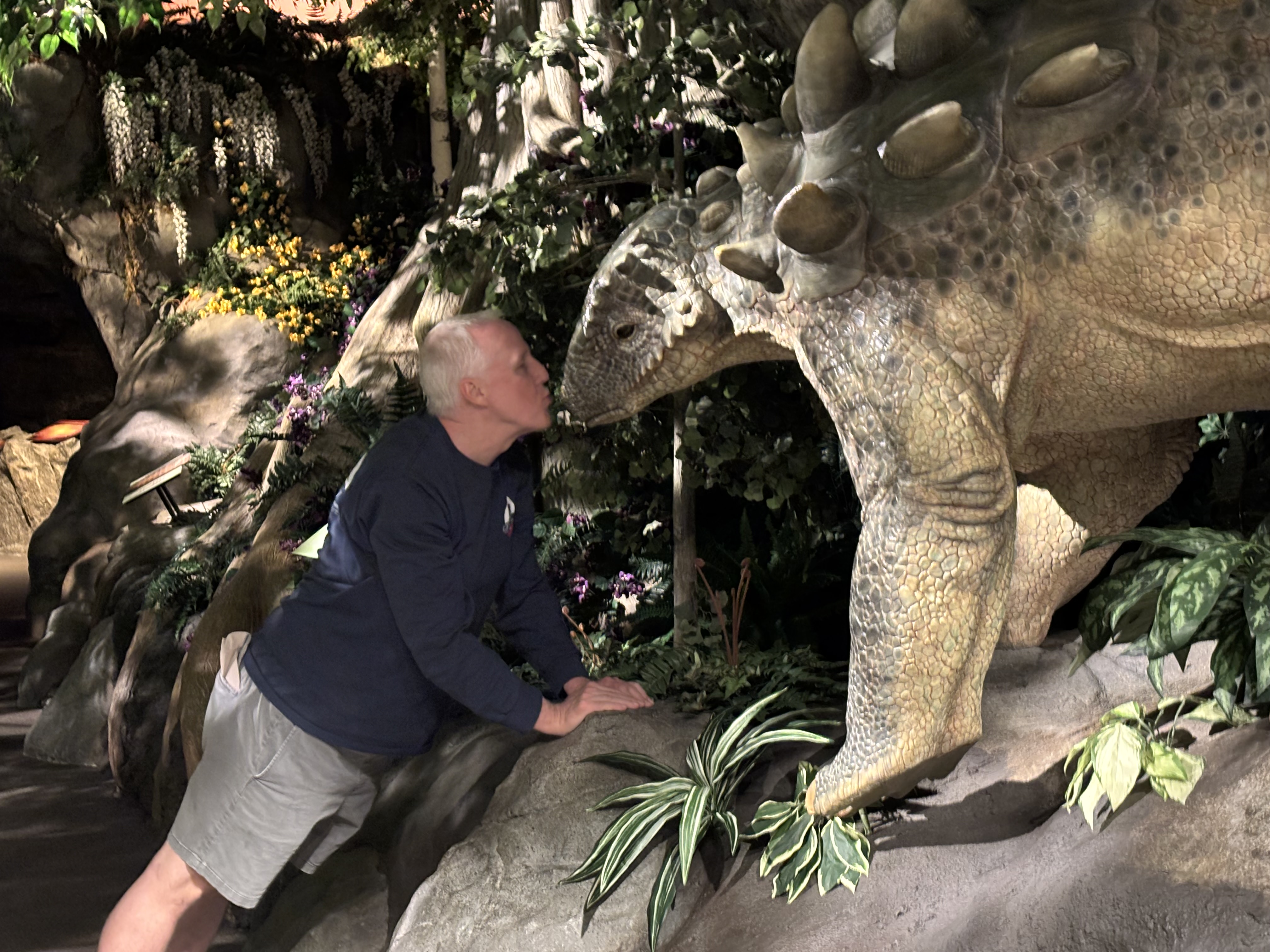
Dinosaurs abound in the Garden of Eden

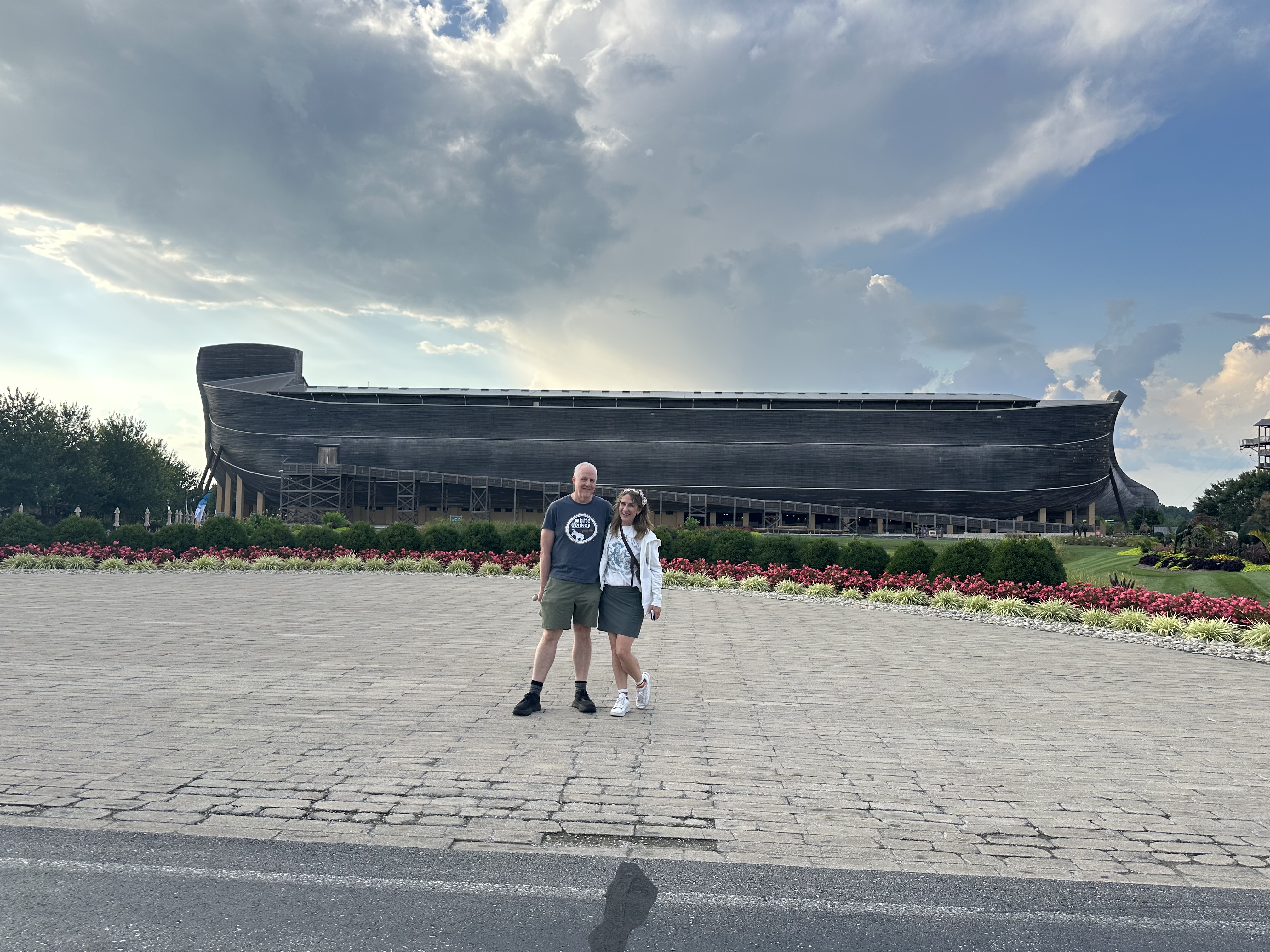
After two books about science denial and religion and a third book out next spring, after years of blogs and speaking, I finally made the trip to the Ark Encounter and the Creation Museum, the epicenter of Ken Ham’s Answers in Genesis universe.

I needed to see it all in person. After all, the Ark hosts 724,000 to 875,000 visitors per year and about 300,000 visit the Creation Museum.

Both museums are really well-done – absolutely Disney quality – bestowing an aura of credibility to the exhibits.

Across two days and across the two venues, a common theme emerged: creationism is true science, and “secular” science cannot be trusted.

Dinosaurs are the mark of valid science according to Ken Ham, and he is committed to “taking the dinosaurs back” from “secular scientists.”

Both the Creation Museum and the Ark Encounter are preoccupied with dinosaurs.

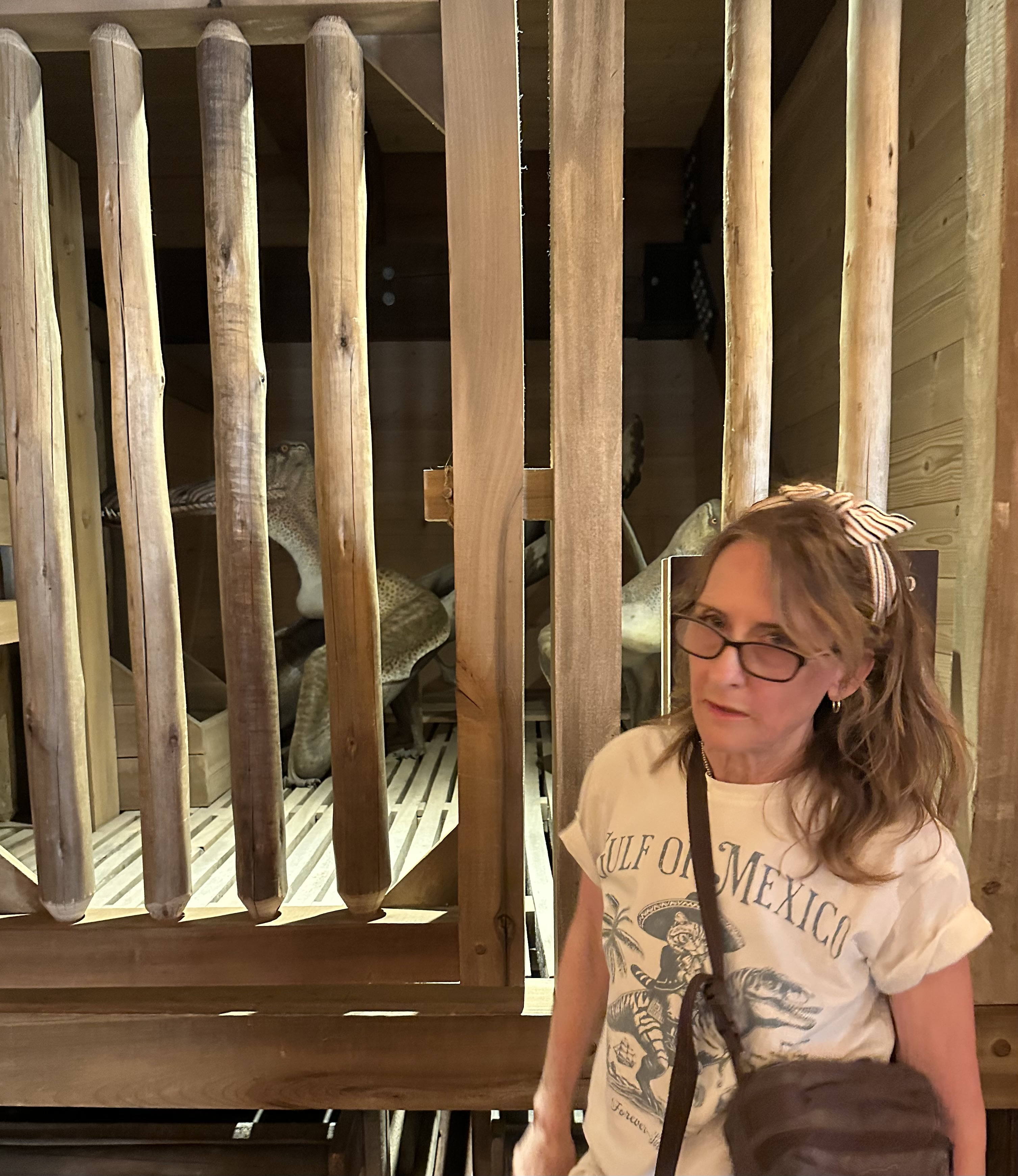
Dinosaurs in cages on the ark. Dinosaur-adjacent pterosaurs soar above the ark in artwork. Extensive explanations of dinosaur transport logistics throughout.

Then there’s the Creation Museum.

From the moment you step inside, you can’t swing a cat without hitting a dinosaur.

Dragons are REAL – they’re actually dinosaurs! Dinosaurs are in the Bible!

Dinosaurs peacefully grazing alongside children, dinosaurs in the Garden of Eden, dinos surround you, dinos peer down at you. Dinosaur giftshops filled with dino merch.

Ken Ham really wants you to believe he is on Team Science.

Answers in Genesis defines science in a way that no one outside the creationist world defines it, sorting “science” into one of two artificial categories:

Science is either “observational science” (things happening in the present) or “historical science” (interpreting evidence from the past).

“Observational science” is the only trustworthy science; “historical science” is sketchy at best and should never be trusted.

Here are two examples (from astronomy and biology) featured at the Creation Museum . . .

Observational science (trusted) answers these questions: what is the color of a star? How far away is a star?

Historical science (not trusted) includes the speed of light. The speed of light cannot be trusted because God might have manipulated it in the past. Therefore, we cannot use physics to determine the age of the universe.

Observational science (trusted) tells us that cells have organelles with complex functions.

Historical science (not trusted): includes evidence that complex cells evolved from simpler cells. The Bible tells us God created everything; therefore, complex cells must be designed, not evolved.

Overwhelmingly, the message of both museums is “don’t trust secular science.”

When it comes to science, the Bible is the only trustworthy source, and the Bible says God created everything.

Biology textbooks, on the other hand, frequently “change as new discoveries are made and hypotheses are formed.” (And that’s a bad thing?? That is HOW science works…. but I digress).

In exhibit after exhibit, both the Ark and the Creation Museum begin with foregone conclusions: the earth is six thousand years old, Genesis is literal, and evolution is fiction.

In exhibit after exhibit, we are told what “Must have happened” in order to support these forgone conclusions.

And with foregone conclusions, you’ll never need critical thinking.

Dragon Hall – large Dino-themed gift shop
My research assistant found a new pet!
Baby Dinosaurs on the Ark! Someone should write a book…..!
My research assistant and I disembarking (disemARKing!)

Science Education: 100 Years After Scopes

One hundred years ago come July, a trial in little Dayton, Tennessee captured the world’s attention. 

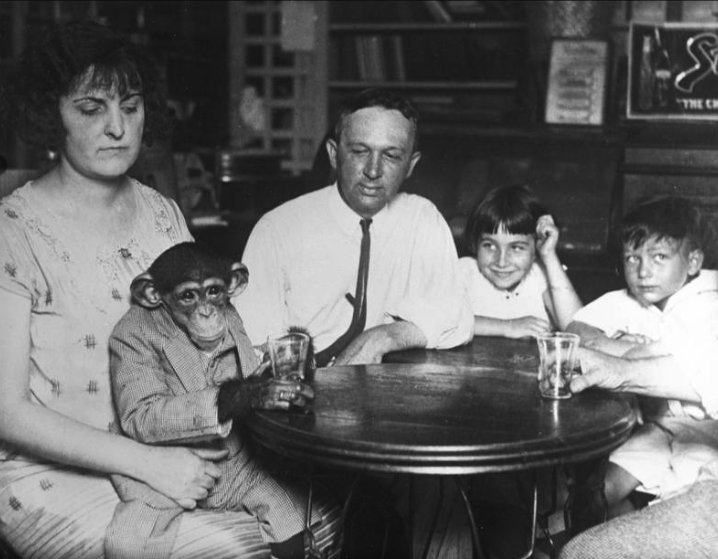
It was hot as blazes, so the whole show moved outdoors. The atmosphere was far more fairground than hallowed ground: little girls played with monkey dolls and vendors hawked sodas and souvenirs.

A chimpanzee named Joe Mendi, smartly dressed in a three-piece suit and a fedora, sipped a Coca-Cola at the local drugstore. 

The Scopes Monkey Trial was a set-up from the beginning. It was a carefully planned publicity event – an alliance between the civic leaders of Dayton and the American Civil Liberties Union. 

Dayton wanted the publicity; the ACLU wanted a case that could be appealed to the Supreme Court of the United States. 

High School teacher John Scopes was easily convicted, but not for teaching evolution. Scopes was convicted of violating Tennessee’s Butler Act, a law forbidding the teaching of human evolution. The case was overturned in a lower court, so it never made it to SCOTUS.

And here we are, in the Year of Our Lord 2025, one hundred years later… 

State lawmakers and state and local school boards across the nation routinely introduce science education initiatives unsupported by actual scientists, or actual science evidence, for that matter. 

Not to be outdone, a local school board in Texas went a step further and banned chapters within adopted science texts. Nothing to see here in chapter 7, kids. Close your eyes and flip to Chapter 8. 

OBSERVATION #1: no one is wearing a “Science is Dumb” t-shirt. We all want to be on Team Science. 

Occasionally, the anti-science effort is overt: teachers must include intelligent design creationism along with lessons about evolution; or, in the case of West Virginia, the Bible must be recognized as an accurate resource for teaching natural history.

Usually, however, the anti-science initiatives are more subtle. Usually, anti-science initiatives are cloaked in science-y language.

The science-y sounding initiatives demand that “both sides” of a science issue be taught and/or “strengths and weaknesses” of a science theory must be discussed. 

No one, however, actually wants to teach “both sides” of photosynthesis. No one wants to critique the water cycle. 

No one. Something else is going on.

OBSERVATION #2: Grandstanding is a thing. 

Anti-science bills often never reach the floor for a vote. These bills usually die in committee or die without action on the governor’s desk.

Oklahoma, Minnesota, West Virginia, New Jersey, and North Dakota – all had anti-science bills eliminated by inaction.

Is it avoidance of being on record? 

A vote for an anti-science measure invites experts to inundate you with actual facts. And in states like Oklahoma and Texas, a vote supporting science likely means you’ll be primaried or defeated.

Sometimes, anti-science still wins:

  • Science chapters within adopted textbooks are still banned in the enormous Cy-Fair ISD in Texas.
  • Tennessee’s 21st century “monkey law” has been on the books since 2012.

I’ll say the quiet part out loud. The science we want to debate is evolution.

Where’s Joe Mendi when you need him? 

We also don’t like vaccines. And we really don’t like climate science. 

One hundred years ago, the Scopes trial wasn’t about evidence. In fact, no scientist testified, and no evidence was admitted into testimony.

John Scopes was convicted because evolution was a front in a culture war. 

And one hundred years later, opposition to evolution, climate science, and vaccine science is not about evidence.

It’s still a culture war. 
Beachballs and Chainsaws

It was only the size of a beachball, but the impact was a tidal wave.

In 1957, the Soviets launched Sputnik, the first man-made satellite, and America was caught flat-footed. 

Embarrassed but determined to regain science supremacy, the US poured over a billion dollars into new textbooks and science education. 

In the following decade, we put humans on the moon, and this time, Americans burst with pride. The moon landing was only the beginning – we not only led the world in space exploration, but also in science and medicine.

Fast-forward to 2025. The DOGE guy “took a chainsaw to bureaucracy,” and that included the largest supporter of biomedical research in the world: America’s National Institutes of Health. 

Immediately, 1300 NIH employees were fired. Two billion dollars in research was cancelled, including child cancer research – an inconvenient truth for those who put a child with cancer on display at a joint address to Congress. 

A one dollar limit was placed on research supplies.

Heart disease and stroke have been reduced by 75% over the last forty years, due to research done at NIH.

Do you know someone who relies on insulin or statin drugs? Ninety-nine percent of FDA approved drugs were developed through the NIH.

The chainsaw stopped three to four year clinical trials immediately. All previous years in the studies – wasted. People dependent on the trial medicines? Who cares. 

The NIH is decimated.

An MD scientist at NIH (for now) says morale is grim: “We feel fear.”

Currently, seventy-five percent of American scientists are considering leaving the US. Europe, Australia, and China are thrilled – they’ve already ramped up recruitment. 

Francis Collins, a world-renown geneticist, medical doctor, researcher, and, by the way, an unapologetic person of faith, was until recently the long-time head of the NIH. 

Dr. Collins called the situation “untenable” and retired in February 2025.

It is worth your time to watch this recent “60 Minutes” story featuring Dr. Collins. Regardless of your stance on the chainsaw approach, you need to know.

Vive la France and Team Science!

It was the Age of Reason, a time of Enlightenment, and a Golden Age of Science – and King Louis XVI of France was here for all of it. 

The young king’s father, Louis the XV, had recently died after smallpox swept through the golden halls of Versailles. Fifty people were infected, eleven (including Louis XV) died.

Smallpox was disfiguring and deadly, and greatly feared. The only prevention was a medical treatment called “inoculation.” Inoculation was popular in most of Europe and in the Middle East, but the French were holdouts.

Inoculation meant taking pus from an actual smallpox lesion and injecting it under the skin of a healthy patient. Ideally, the patient would develop a few smallpox blisters, feel crummy for a few days, and recover with full immunity to smallpox.

The procedure came with risk – a few inoculated patients contracted smallpox, but not at the 30% fatality rate of a full-blown infection. 

But Louis XVI was on Team Science, and he wanted to encourage his people to do the same.

The king, along with his two brothers and a sister-in-law underwent inoculation. In other words, the entire line of succession.

Daily health bulletins were publicly posted, documenting the King’s inoculation experience:

“The king had a good night. Fever continues and is moderate. Local smallpox.”

“The king had slightly more fever with slight nausea. The king, as well as the princes and princess, continue to walk in the gardens.”

The reports continued for three more days, until the king was fever-free and the blisters dried out. 

The king’s example made an impact. The people took up the banner and fashionable ladies sported pink-spotted “inoculation ribbons” pinned to their hats.

Oh, for a time when heads of state encouraged science and public health. Oh, for a time when leaders led by example.

Our leaders continue to downplay the surging measles outbreak – 500 cases in Texas alone. Yet, Texas Governor Greg Abbott has yet to say the words “vaccination” or “measles” in his responses to the ever-growing and spreading outbreak.

A Texas state representative recently filed a bill eliminating vaccination requirements for public school children. 

At the national level, our leaders recently cut funding and personnel supporting vaccination for uninsured children through a network of sixty providers.

In Dallas County, cuts meant the cancellation of 50 community vaccination events – many in areas with low vaccination rates.

“It’s catastrophic,” said Claire Hannan, executive director of the Association of Immunization Managers.

And while we’re cutting funding for vaccinations, our national leaders decided to fund new “research” looking at autism and the MMR vaccine, despite six decades of evidence that childhood vaccines are safe and effective. 

Louis XVI eventually lost his head in the bloody French Revolution, taking the fall for the excesses of his father and grandfather, but he stood up for what was right and true in science. 

Oh, for leaders who stand up for science.

Oh, for leaders who stand up for public health.

Happy April Fool’s Day from the Monotremes!

In addition to liberty, freedom, and the 4th of July, the American Revolution resulted in another, lesser-known consequence of the victory.

No longer able to transport British prisoners to their American colonies, the Brits decided that the Land Down Under would suffice.

John Hunter, formally of His Majesty’s Navy, was the governor in charge. Hunter was fascinated by Australian plants and animals, so peculiar and unknown to an Englishman.

To Hunter, the native flora and fauna were far more interesting than squelching the illegal alcohol trafficking co-run by prisoners and military officers.

Hunter spent an entire day watching an Aboriginal hunter track the most peculiar animal he’d ever seen. Eventually, Hunter captured one of the critters himself, pickled it (likely in some of that illegal alcohol), and sent it back to England’s most famous zoologist, George Shaw.

Shaw thought he’d been punked – and with good reason: “science” hoaxes weren’t unheard of in the day. An 18th century English woman gained fame by giving birth to rabbits, and only stopped birthing bunnies when she was placed under constant supervision.

After Shaw determined that the creature was legit and not a sewn-together fraud, he set about to study it.

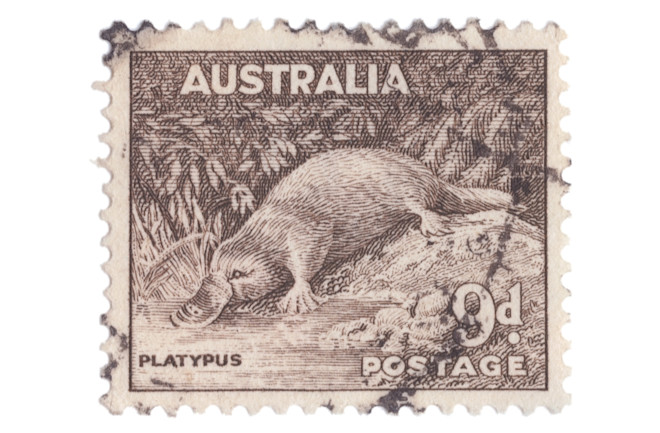
The creature had fur like a mammal, but no nipples. Its babies simply licked milk off the mom’s fur. It had a duck-like beak, but no teeth. And curiously, the Aborigines claimed the creature laid eggs. What’s more, those eggs were laid through a single, all-purpose opening for waste, reproduction, and egg-laying.

The platypus, found only in Australia, is a member of an ancient lineage of mammals called monotremes (“one opening”).

In the days before dinosaurs, a lineage of egg-laying animals split into two major branches: the reptiles on one side and a lineage that eventually led to the mammals on the other.

The platypus and its monotreme kin, the echidnas, have changed very little since the split.

Monotremes retain several “basal” traits – traits like those found in mammals very near the “base” of the family tree. Monotremes lay eggs through a single opening like their reptile cousins but produce milk and have fur like mammals.

I have no idea if Shaw received that first platypus on April 1, but it would have been a great Fools-Day discovery.

Happy April Fools Day from the enigmatic platypus!

(and btw, this is an Easter egg for my new book . . .!)

Bad Air and the New HHS Secretary

From inhaling the odour of beef the butcher’s wife obtains her obesity (Professor H Booth, writing in the Builder, July 1844)

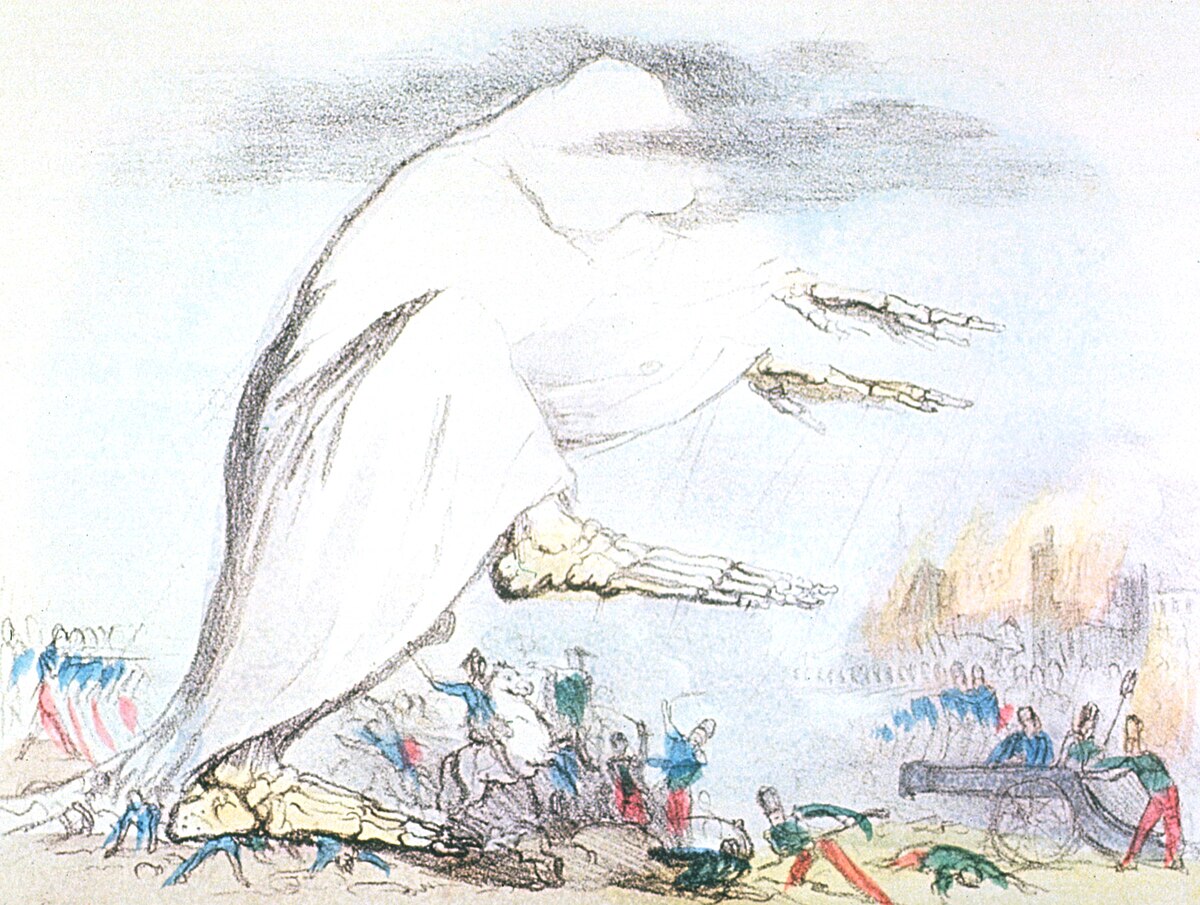
Ancient Greeks and Romans believed it. Folks in the Middle Ages, too. And in the 19th century, most medical professionals still swore by it: disease is caused by bad air.

Disease-causing bad air was called “miasma”, and for centuries, miasma explained illness. Well, sometimes it was the alignment of the stars and planets, but stinky air was the most common culprit.

Foul air was the cause of all sorts of sickness, from plague to deadly childbed fever.

Some, however, had other ideas. In 1847, Hungarian obstetrician Ignac Semmelweis insisted that doctors in his hospital wash their hands before delivering babies – and what do you know? Cases of childbed fever plummeted.

In Victorian London, physician John Snow insisted that it was infected water, not bad air that was responsible for a deadly cholera outbreak.

Semmelweis and Snow were pioneers in the development of one of the foundational principles of modern science: germ theory.

Germ theory says that pathogens – microscopic organisms – cause disease, not bad air.

This week, the Senate confirmed RFK Jr. to lead our nation’s health programs. He’s not a health care professional, an epidemiologist, or a scientist of any sort.

You’re probably aware of RFK Jr’s opposition to vaccine science and maybe his beliefs that 5G networks can control your behavior or that AIDS is not caused by HIV.

But you might not know that RFK Jr. doesn’t believe in germ theory. What’s more, he is a believer in miasma as the cause of disease.

Hello? The 1500s are calling. They’d like their HHS Secretary back, please.

“Germ theory aficionados blame disease on microscopic pathogens,” says RFK Jr. in his book The Real Anthony Fauci (2021).

Imagine that.

There’s a whole section in his book titled “Miasma vs. Germ Theory.”

It’s not life-saving vaccines and antibiotics that revolutionized medicine, says RFK Jr. It’s sanitation.

When a child dies from measles “germ theory proponents blame the virus,” he says, and not malnutrition. When RFK Jr. visited Samoa during a 2019 deadly measles outbreak, he urged vitamin A treatments, not vaccination.

Underlying malnutrition impairs the ability to fight disease, of course. But it is pathogens that cause disease. No matter how healthy you are, untreated rabies will kill you.

John Snow for HHS!

Looking Through the Telescope, Part 2: Climate and Religion

Looking Through the Telescope, Part 2: Climate and Religion

Four moons landed Galileo in trouble. 

The seventeenth century Church assumed that the earth was the center of All There Is. But here comes Galileo with his fancy new telescope and visual evidence of four moons orbiting Jupiter. 

Galileo set his telescope up in public and invited critics to look for themselves. 

But opposition to Galileo was never about the evidence. Opposition was so much NOT about the evidence that some people simply refused to look through the telescope. Hard pass, they said. I’m good, they said. Nothing to see here.

It’s easy to be judgy about the scientific positions of 17th century folk. After all, doctors still believed that disease was caused by an imbalance of bile, blood, and phlegm. What a sick person really needs is a good bloodletting! 

In the Year of Our Lord 2024, religious beliefs still obscure the telescope for many people, and climate science always makes the top three in religion-rooted denial. 

A new study found that the more strongly a person believes “God is in control of the earth”, the LESS likely they are to (1) believe that climate change is a real problem, (2) attribute climate change to human activity, and (3) support policies addressing climate change. 

Disappointing to say the least, but not the most disconcerting finding . . .

Those who were told that only God is in control of earth’s future, were less likely to request (when offered) climate-related evidence from NOAA. A peek in the telescope? No thank you. 

This last finding tracks with the contemporary melding of evangelicalism and right-leaning politics, both of which are predictors of negative environmental attitudes. 

Here’s former Trump staffer and SBC activist William Wolfe: “At the end of the day . . . we know that God has given us everything in creation to be used for our good and His glory. And yes, that includes plastic straws and big trucks. . . This world will be brought to an end when God decides that it is time, and not a moment before.”

Then there’s Tim Walberg (R-MI): “I believe that there is a creator in God who is much bigger than us. And I’m confident that, if there’s a real problem, he can take care of it.”

Politicians and pastors speak with authority, but seldom with expertise. 

People of faith in a modern scientific world need to speak with evidence-informed voices. 

Don’t be afraid to look. 

LINKS:

Kane, J.V., Perry, S.L. Belief in divine (versus human) control of earth affects perceived threat of climate change. npj Clim. Action 3, 78 (2024). https://doi.org/10.1038/s44168-024-00163-9

Preston, Jesse L., Shin, Faith. Opposing effects of Spirituality and Religious Fundamentalism on environmental attitudes. Journal of Environmental Psychology (Vol. 80) 2022. 

Pew Research (November 14, 2022) Highly religious Americans are less concerned about climate change, less convinced human activity is causing warmer temperatures.