The gentleman in photo with me is Dr. Allan Chapman. He’s an Oxford professor and one of Britain’s national treasures. He’s a legendary science historian and a former host of a British astronomy television show – he’s an English Carl Sagan. His science lectures are legendary.
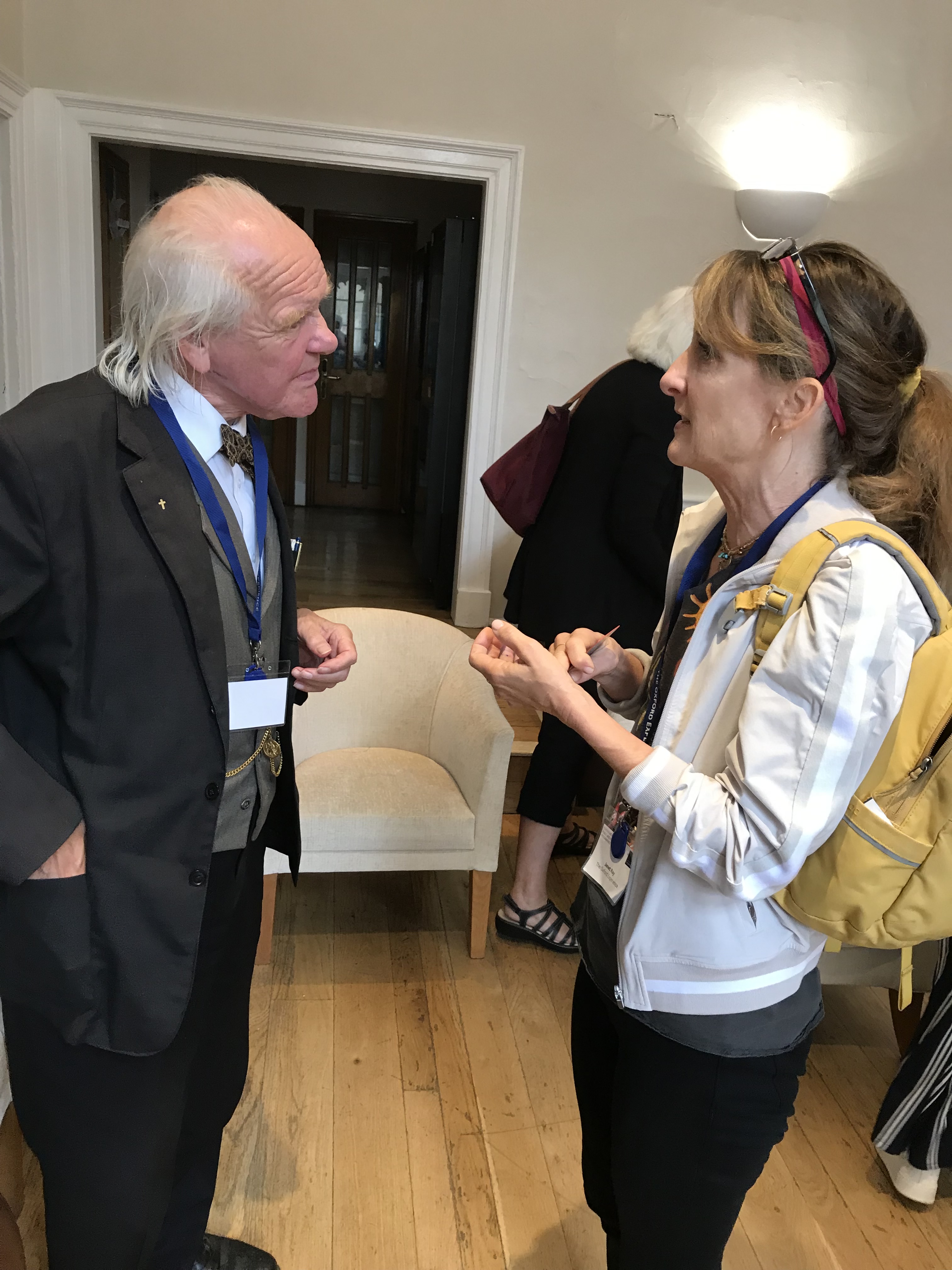
You’ll never see Dr. Chapman without a suit, bow tie, and pocket watch. He’s no longer able, but until just a few years ago, he biked around the Oxford campus a la Albert Einstein.
One of the coolest things I’ve done in my life is take two history of science classes at Oxford with Dr. Chapman.
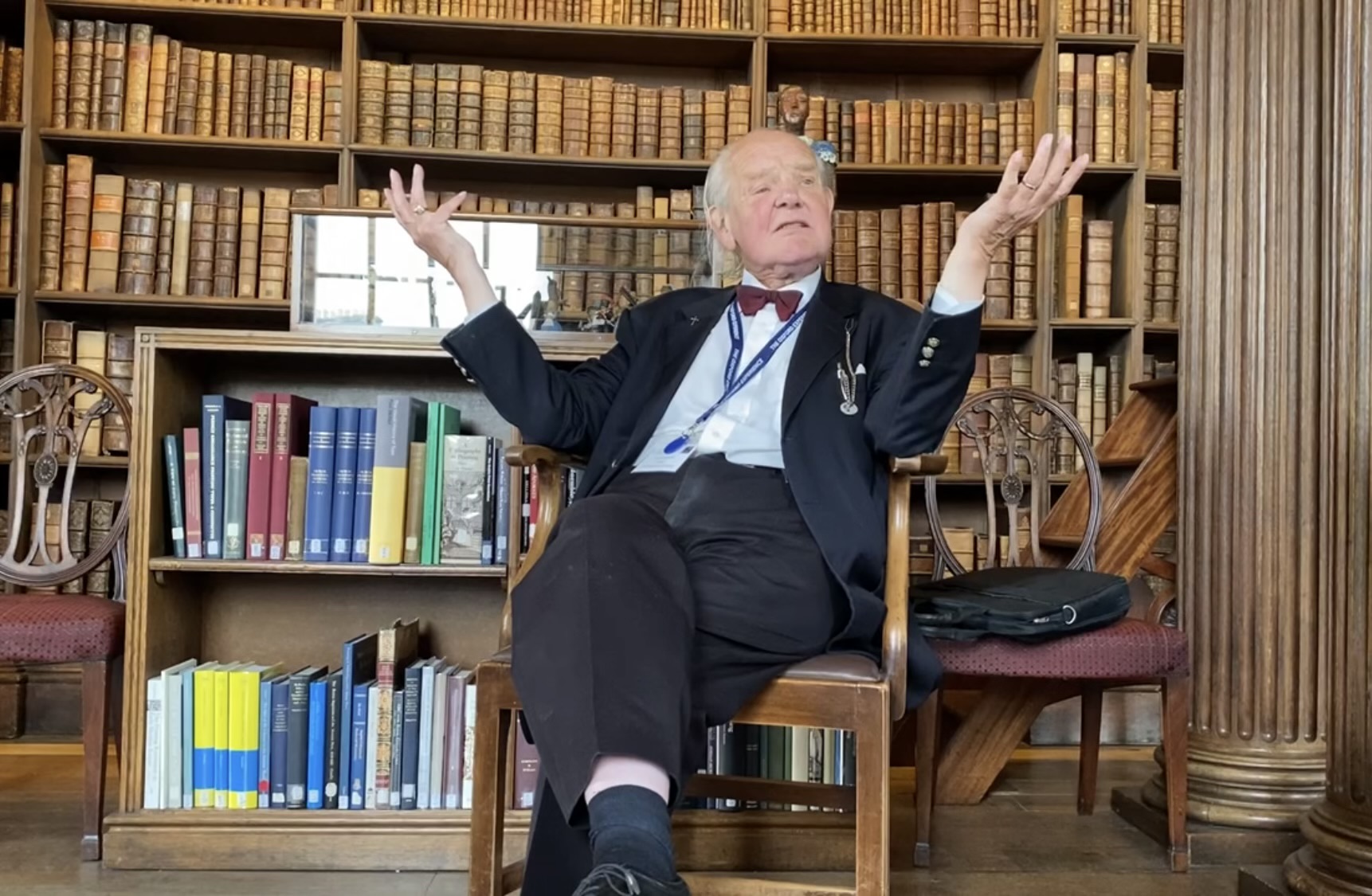
Allan Chapman is also a bit of a unicorn at Oxford, as well as in the entire UK, for that matter. Dr. Chapman is a man of science and a man of deep Christian faith.
Look closely at the pin on his lapel. That simple cross pin is ever-present. He was once mocked for wearing it as he delivered a lecture to a group of prominent British scientists.
In the UK, the science and faith dilemma is typically “can a respectable scientist be a person of faith?”
In the United States, the question is reversed.
In the USA, sixty-six percent of white evangelical Christians reject the science evidence for human origins. Many in this group also reject the science evidence for the age of the earth.
Young adults in the U.S., drawn to a career in science, often think twice about it if they grew up in evangelical spaces.
In the U.S., the science and faith dilemma is this: can a person of faith accept science evidence?
Dr. Chapman is in the minority in the UK, for sure. Oh, there’s others – my first book (Baby Dinosaurs on the Ark?) was nominated for an award by the Faraday Institute for Science and Religion, based in Cambridge.
But here’s the thing: science and faith discussions outside the United States aren’t consumed with defending evolution and the age of the earth.
Science and faith discussions outside the U.S. have waded past the shallows of the science of origins and are fully in the deep end:
How does faith inform decisions made in a world experiencing unprecedented human-caused climate change?
How does faith inform our response to a world-wide pandemic caused by a novel virus?
How does faith inform modern genetics, a field moving at break-neck speed?
Here’s the bottom line – highlight it, circle it, think about it.
What science and faith conversations are we missing because we haven’t moved out of the shallows?
How might people of faith move to the deep and speak to modern science?
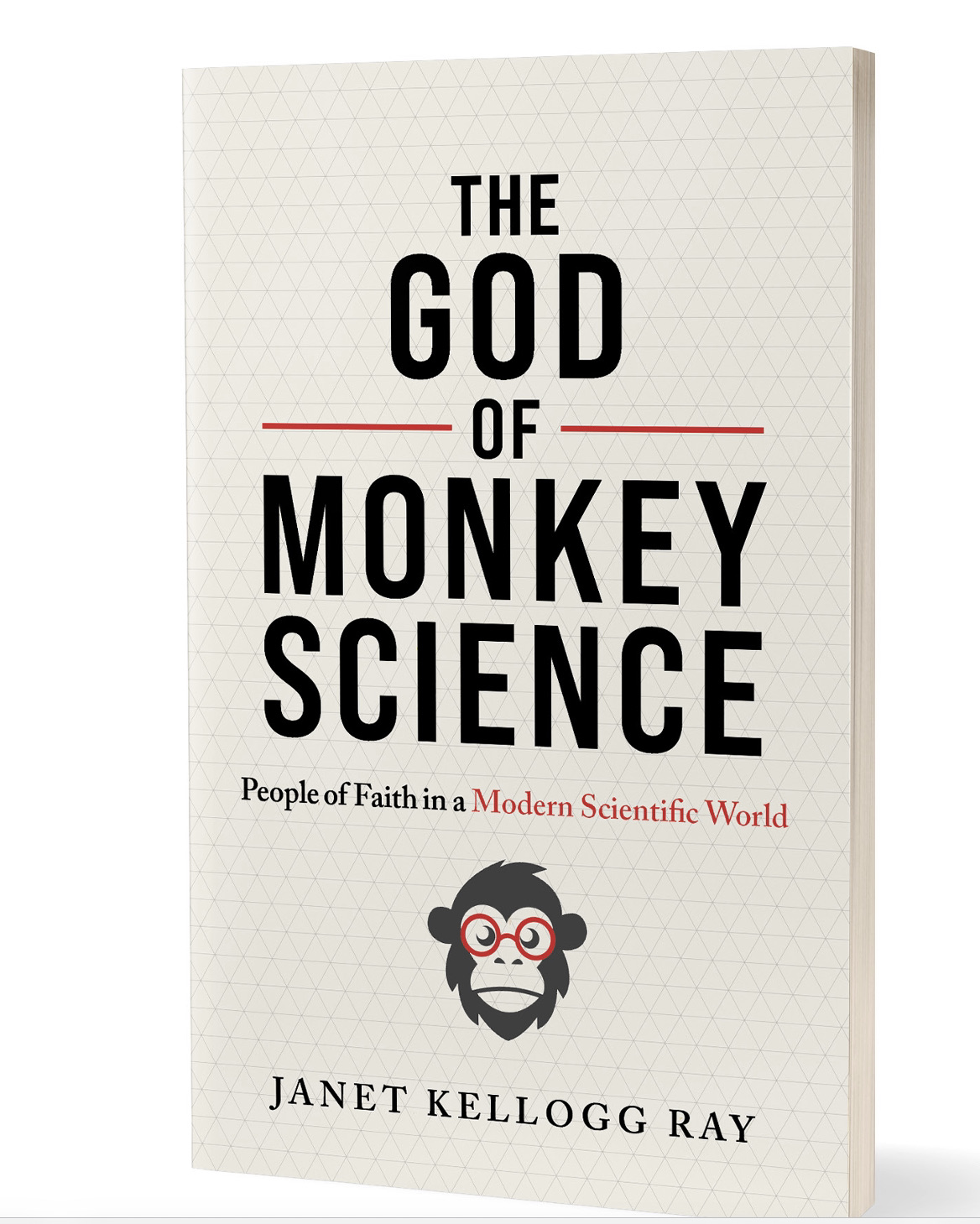
 Janet K. Ray