The Duggar family has always intrigued me. I’ve watched a few episodes and read stories updating the births of the latest offspring as the family approached twenty kids.
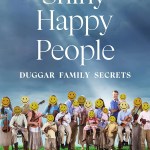
It always seemed like a wholesome human-interest story. I may or may not have photoshopped myself and friends into Duggar family lineups wearing matching pilgrim collars and jumpers.
After the four-part documentary “Shiny Happy People” (streaming now), I’m no longer amused. It will be a while, if ever, that sappy-happy-matchy-matchy-Duggar spoofs are funny.
The docuseries explores Bill Gothard’s para-church organization, the Institute in Basic Life Principles and how the principles are implemented in every single aspect of the Duggar family.
You don’t have to own a wardrobe of red jumpers and white, wide-collared blouses to see the influence of Bill Gothard and the IBLP beyond homeschooling fundamentalist families like the Duggars.
The talons of IBLP extend wide and deep in evangelicalism.
If you are an evangelical or have ever been evangelical-adjacent, you need to watch all four episodes. This is your homework. You will need to debrief, so I’ll put two stellar analyses at the end of this post.
I want to focus on a particular horror exposed in the documentary called “blanket training.” This is not the benign “tummy-time” practice for modern newborns.
Blanket training, according to IBLP:
Place your newly-scooting/barely mobile infant on a blanket. In case it’s not clear, you do this with an INFANT.
You show the infant their favorite toy. You use excited mommy voice about toy. Big smiles, happy baby.
Place infant on blanket. Place toy out of reach. Baby moves toward toy.
Hit the infant.
Repeat every day, for as long as it takes, until infant stays put on blanket and shows no interest in the toy.
Result? A child for whom curiosity is punishable.
And that child learns:
Curiosity is a sin.
Questioning is a sin.
Doubt is a sin.
In the documentary, the Duggars take a field trip to the Creation Museum. Dad Jim Bob’s voiceover tells us that although “some” people believe in evolution, we teach our children that evolution is “totally unscientific”.
Why would you ever investigate for yourself? Why would you ever believe the experts?
Curiosity is a sin.
Questioning is a sin.
Doubt is a sin.
The IBLP principle of absolute, unquestioned authority extends throughout life, but it begins in infancy. In run-of-the-mill evangelical churches, we may not hit our curious babies, but the impact is still seen in an unquestioning theology: “plain” readings of scripture. Distrust of intellectuals, especially scientists. People who “deconstruct” their faith are unfaithful.
It’s not just science that is out of bounds. The list is long. And when curiosity is a sin, those questions are never asked.
For an analysis from a faith perspective: : https://baptistnews.com/article/how-to-connect-the-dots-while-watching-shiny-happy-people/?fbclid=IwAR2evItQXFm92vvuk3iBREA1QTIS222NMnrS_IZjcRUsocxCJxqw_W6cLB4
From an analysis from a child development perspective:
 Janet K. Ray