MALARIA PART 2: Mosquitos, Malaria, and Intelligent Design Creationism

MALARIA PART 2: Mosquitos, Malaria, and Intelligent Design Creationism

Out of the three billion or so base pairs that make up human DNA, there is a single gene with a big job. 

This gene codes for hemoglobin, the protein in red blood cells responsible for carrying oxygen to every cell in the body. Just one change, just one mutation at a single point in the gene results in a defective version of hemoglobin. 

Healthy red blood cells have a characteristic biconcave shape, perfect for squeezing into the tiniest of blood vessels to deliver the oxygen payload carried by hemoglobin. 

Defective hemoglobin changes the shape of a red blood cell. Instead of smooth and biconcave, the cells are hard and sticky and are C-shaped, like a crescent or sickle. 

We have two copies of every gene – one from mom, one from dad. If one copy of the hemoglobin gene is operational, enough functioning red blood cells are made to keep a person healthy. A carrier of a defective hemoglobin gene may never know it or may only have occasional problems. 

British physician Anthony Allison grew up in the Rift Valley of Kenya. Allison returned to Africa in the 1950s with the intent of studying the A-B-O blood groups in East African people, but he changed course when he observed a curious phenomenon. 

Almost forty percent of the population in equatorial Africa were carriers of the defective hemoglobin gene, and most carriers were clustered in warm coastal areas.

Allison knew that the warm, wet areas of Kenya were breeding grounds for the mosquito that carries the deadly malaria parasite.

Was there a connection between carriers of the defective hemoglobin gene and malaria? Allyson wanted to know. 

Thousands of blood samples and a massive study later, Allison had his answer: carriers of the defective form of hemoglobin are resistant to malaria.

Carriers produce just enough defective hemoglobin to make their blood cells inhospitable to the malaria parasite. The parasites have a hard time entering sickled cells. 

To advocates of the intelligent design version of creationism, human DNA bears the mark of design. “Intelligent design” says that random mutations only break things. Important mutations, mutations that confer benefit, cannot arise randomly and therefore must have been directed, micromanaged by an intelligent designer.

Mosquitos kill, but a mutation in one gene confers malaria resistance. A good thing, right? A dandy design! With a tweak at just the right spot in the DNA, the designer heroically saves lives. 

Not so fast. 

It is not a surprise that a gene that provides malaria resistance would take off in a population. But with a high frequency of a single gene, it won’t be long before two carriers have children. If both parents are carriers, chances are ONE IN FOUR that a child will inherit not one, but TWO copies of the defective hemoglobin gene. 

Children who inherit two copies of the gene are resistant to malaria, yes, but at a terrific cost: sickle cell disease.

In sickle cell disease, red blood cells stick and clump together and block blood vessels. The result is excruciating pain and often stroke. Sickled cells are short-lived, so sufferers are anemic, exhausted, and prone to serious infections and kidney failure. 

Before modern medicine, children with sickle cell disease usually died in early childhood. Many still do.

The malaria resistance afforded to those with one copy of the gene fuels its spread. 

Crediting the malaria-resistance mutation to a loving choice by an intelligent designer demands consideration of the other side of the coin: the 300,000 children born each year with sickle-cell disease.
The World’s Most Dangerous Animal (it’s probably not what you think)

The World’s Most Dangerous Animal (it’s probably not what you think)

It’s Final Jeopardy and you can win it all with the correct response to this clue: The answer is: “the most dangerous animal on the planet.”

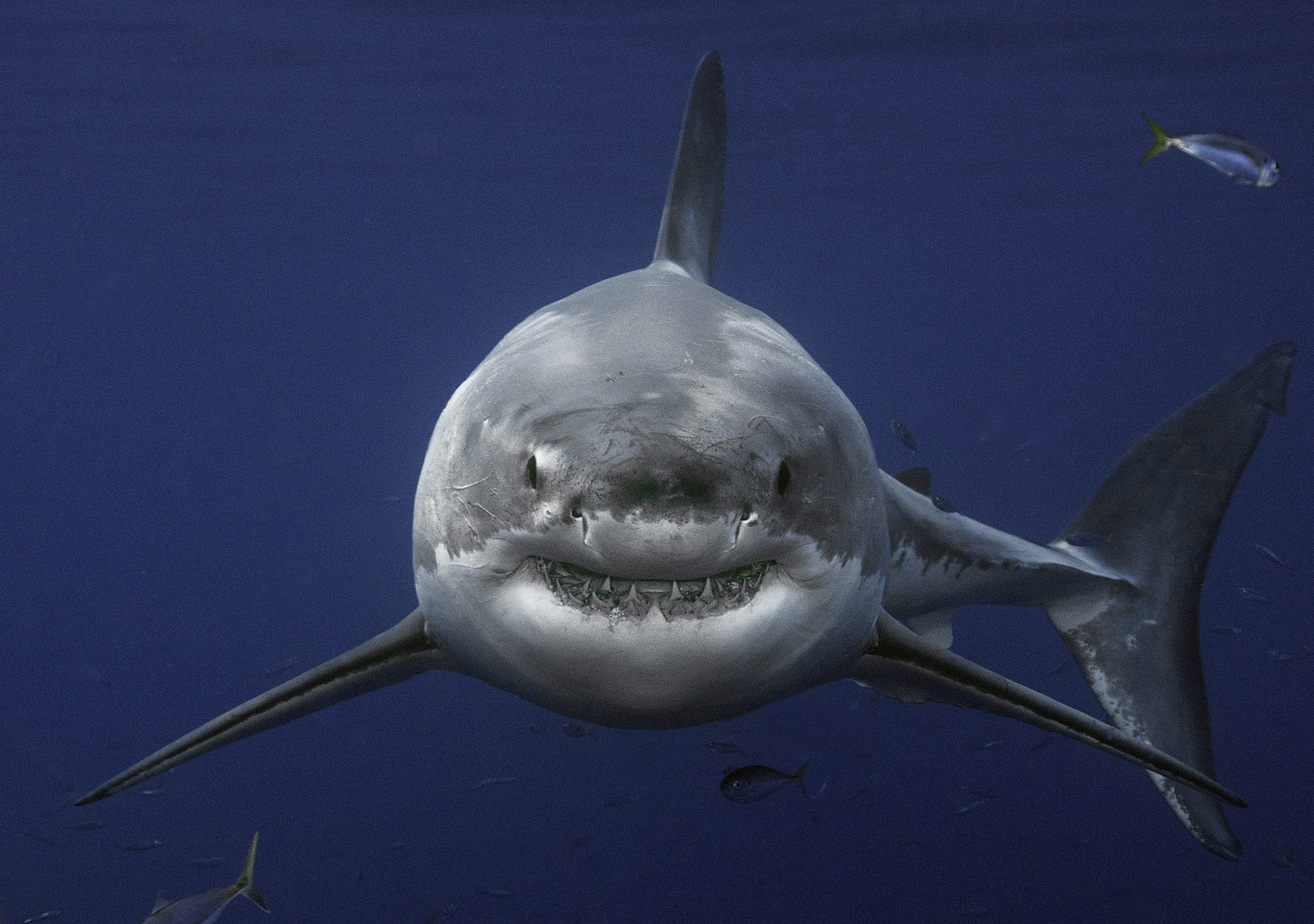
Sharks, right? After all, there’s an entire week of television dedicated to our fear of them and six (6!) movies terrorized us by dropping them from tornadoes. 

Not even close. Sharks kill less than ten people per year.

Ok, hippos? Crocodiles? Snakes? Elephants? No, no, no, no.

The deadliest animal on the planet, responsible for the deaths of 700,000 to one million people every year, is the vicious and fearsome . . .  mosquito. 

Yet, no one is marking their calendars for Mosquito Week. 

Malaria alone kills 600,000 per year, mostly young children. 

Just a few weeks ago, a case of locally transmitted malaria was confirmed in Texas. Four cases of locally transmitted malaria were confirmed in May and June in Florida.

These were the first documented cases of local transmission in the United States in twenty years. Malaria is spreading in southern states, and it was not brought in by travelers infected in other countries.

Oh, malaria in the U.S. isn’t new. George Washington had it, as did many others until the middle of the twentieth century. In fact, the CDC was created to respond to the threat from malaria.

We solved the problem by spraying huge layers of insecticide in order to kill the parasite responsible for malaria. Think Rachel Carson and “Silent Spring”.

We killed the parasite, but other environmental factors for malaria remained.

Several mosquito species that carry malaria are still present in the U.S. 

All it takes for local spread is a mosquito biting a recently returned traveler from a malaria-endemic country, and then that mosquito bites someone locally. 

Malaria is also dependent on an optimal temperature for spread. If it’s too cold, the mosquito reproduction cycle slows. Warmer weather means more mosquitos and more mosquito babies. 

Epidemiologist Katelyn Jetelina warns that human-caused climate warming isn’t a definitive cause of malaria spread, but it certainly doesn’t help. 

During the week of July 4th, our planet shattered “hottest day ever” records for FOUR DAYS IN A ROW.

Already, other mosquito-borne diseases like Zika and dengue are making inroads in the U.S. (My son brought home dengue as a fun souvenir from a college internship in Panama. It’s a horrible disease – there’s a reason dengue is called “break-bone fever”). 

Climate warming makes all mosquito-borne illnesses worse, globally. 

Malaria has a fascinating history, and understanding evolution is key. Watch this space for Malaria Part 2! 

Science This Week: Mammoths, Mosquitoes, and a Movie I Don’t Want to See

Mammoth Problems in South Carolina

She’s eight years old and she spends her recess time hunting for fossilized shark teeth on the playground. Her name is Olivia McConnell and she LOVES science.

Olivia McConnell  CBS News

Olivia McConnell
CBS News

When Olivia found out that her home state, South Carolina, had an official state bird, a state tree, and even a state spider but no official state fossil, she went to work.

Olivia knew that one of the first fossils ever discovered in North America was an ancient woolly mammoth, dug up from a South Carolina swamp in 1725. Olivia wrote Governor Nikki Haley and other state lawmakers and made the case for the woolly mammoth.

Here’s Olivia:

I wanted it to be the state fossil because I didn’t want that history to be lost, and our state to not get credit for it.

Olivia’s state senator thought it was a great idea and started a bill through the senate, expecting it to fly through.
Not so fast, little miss.

The bill is currently stalled in a House committee. Several state lawmakers are balking because the bill is not consistent with a literal reading of Genesis.

Here’s the original bill:

The woolly mammoth is designated as the official state fossil of South Carolina.

And here is the most recent (April 9) version of the bill that came out of committee:

The Columbian Mammoth, which was created on the Sixth Day with the other beasts of the field, is designated as the official State Fossil of South Carolina and must be officially referred to as the ‘Columbian Mammoth’, which was created on the Sixth Day with the other beasts of the field.

This latest iteration was voted down, so for now, South Carolina still has no state fossil. But Olivia is not deterred – she has vowed to fight on. Olivia says she will keep lobbying until she’s “23 or even 40” in the quest to have South Carolina join the majority of other states with paleo symbols. (By the way – Texas has two: a state dinosaur, Pleurocoelus and the state stone, petrified palm wood).

Coming to a Theater Near You 

On September 26, A Matter of Faith is scheduled to hit the theaters. matter of faith movie

Here’s what we know from the movie trailer: Wistful dad says one of the hardest things for a father to do is “send your little girl off to college”. College girl is loving life, especially her classes, especially her biology professor.

Concerned dad researches daughter’s professors.
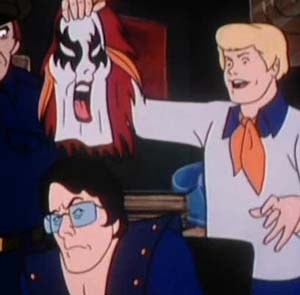
Dad meets with the dean, and in a tone of voice usually reserved for revealing the true identity of a super-villain, dad says (cue ominous music):

The guy’s an evolutionist!  phantom_scooby_doo_unmask_1_1750


Dad goes on to say that “nothing in the whole course description says that Biblical creation is even a plausible alternative”.

This film does not have the big names of Noah or Heaven Is For Real, but it will most likely gather a following. A Matter of Faith will appeal to the demographic who liked Fireproof, God’s Not Dead, and Facing the Giants – Christians who want to see family-friendly, God-honoring movies at an actual cineplex.
Christians will be encouraged to support the film so “Hollywood will make more movies like that”. The target audience is committed believers.

For eighty-nine minutes, viewers will be submerged in the concept that science (and specifically evolution) is the enemy of faith, sweetly played out on the big screen.

Ken Ham and Answers in Genesis are promoting this film big-time. Several AIG staff have consulted or previewed the movie.
Here’s Ken Ham:

Atheists and compromising Christians are going to hate A Matter of Faith! It’s a great new movie!

Rachel Held Evans, in her faith memoir Evolving in Monkey Town (recently rereleased as Faith Unraveled) described the fear she felt as she faced the first cracks in her “worldview”, a worldview in which she had a ready (Biblical) answer for everything.

Rachel asked this question:

If all truth is God’s truth, then why are we so afraid to confront the mountains of scientific evidence in support of evolution?

Who’s Ready for Skeeternado?

It probably wouldn’t have quite the flamboyance of a sharknado or the white-knuckleness of snakes on planes, but I don’t think there has been a man-against-nature movie made about the actual “world’s deadliest animal”: the mosquito.
Mosquitoes kill 725,000 people a year.
Snakes kill 50,000 people per year and sharks a paltry ten (yet they get their own TV week).

In a cool graphic posted by Bill Gates, the world’s deadliest animals are charted by number of people killed per year. Among the four-legged animals we know best, “man’s best friend” comes in first – killing 25,000 people a year. Second place? – the hippopotamus at 500/year (still want one for Christmas?).

Mosquitoes (Spanish for “little fly”) threaten half of the world’s population with death and disease. Malaria is the worst, killing 600,000 people every year. Many non-profits and faith-based organizations provide opportunities to purchase a $10 mosquito net, a simple and effective yet often unavailable tool in the fight against malaria.

In his Gates Notes on World Malaria Day (April 25), Bill Gates focused on the deadly mosquito and what is being done to combat mosquito-borne disease. For example, in Indonesia, dengue fever is being fought by inoculating the mosquitoes, not people.

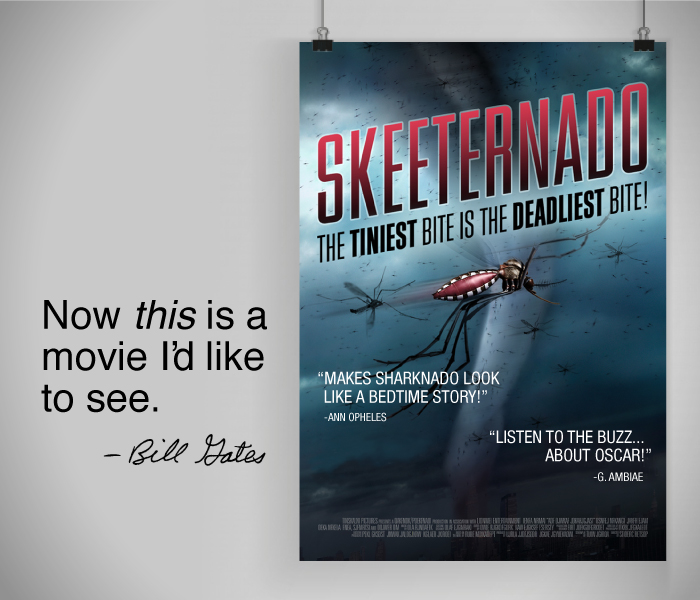
Now come on Bill, make this movie:
mosquito-week_skeeternado_2014_700px_v2

****************

I believe that the heavens declare the glory of God.
I believe that day after day the cosmos pours forth speech and night after night the cosmos reveals knowledge.
I trust that the evidence and knowledge that is revealed is true because the Creator of the cosmos is Truth.


2010-08-30-2010-8-30-Science-Cat