Have you ever taken a spin on one of these vintage carousels of death?
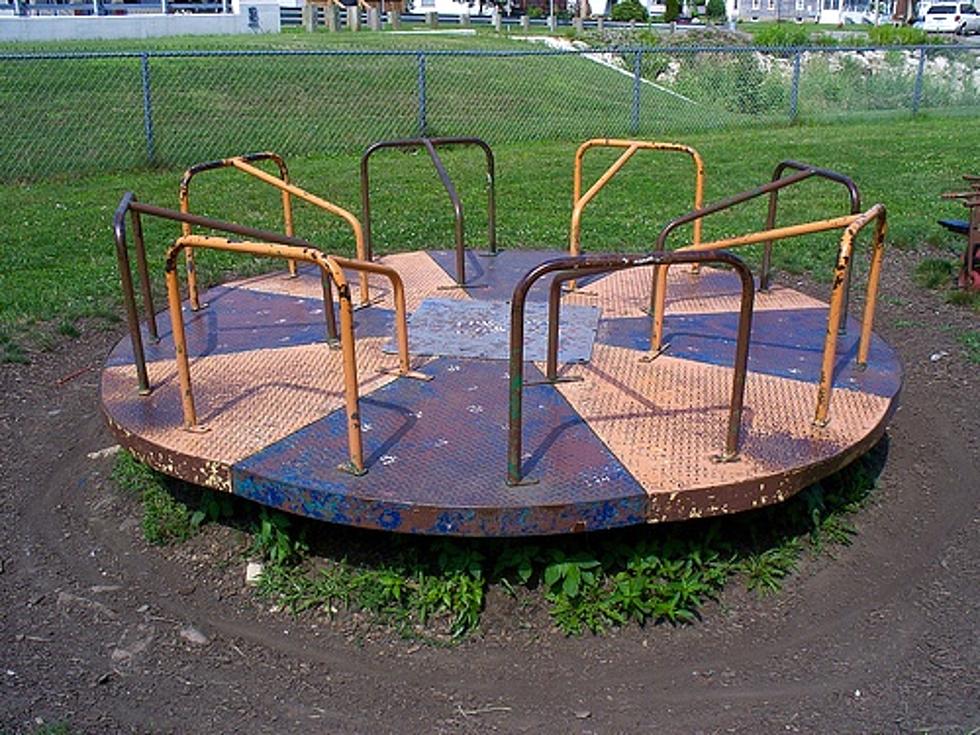
Let go of the rails and you’d find yourself launched to the parking lot. And no soft landing on a modern playground’s mulch or rubber ground cover. You skidded to a stop over sun-baked, rock-studded dirt, and with bad luck, into an ant bed.
Early in the twentieth century, Alfred Wegener, a German scientist trained in biology, botany, and geology noticed something very peculiar about our planet.
The east coast of South America and the west coast of Africa fit together almost perfectly, like a jigsaw puzzler.
Geologically, the Appalachian Mountains of eastern North America, the Scottish Highlands, and the Atlas Mountains along the northwest coast of Africa were of the same age and rock formation.
Plant and animal fossils unique to the east coast of South America were also found in the southwestern coast of Africa. Fossils of plants only found in warm, humid environments were found in the frozen arctic.
Wegner proposed an answer to these mysteries: continents were drifting away from each other. He attributed this motion to the rotation of the earth, slinging continents away from each other like that deadly playground merry-go-round of my childhood.
There was no evidence for this explanation, but it made “common sense.”
Fast forward to the 1950s. Marie Tharp was an American geologist and mapmaker.
Using sonar to bounce sound waves off the ocean floor, Tharp measured the depth of the Atlantic. Oh, and since women were not allowed on research ships, Tharp relied on data gathered by her colleagues.
Tharp discovered a deep rift running along the floor of the Atlantic. This mid-Atlantic rift indicated that continents were moving away from each other, not because they were being slung about but because the sea floor was opening up!
In the 1950s, a woman in science, much less a woman making breakthrough science discoveries, was not commonplace.
Marie Tharp’s boss was all “I don’t understand it and it doesn’t fit my preconceived notion of how things work. This can’t be right.”
This is just “girl talk,” said her boss. He actually said that.
Despite the evidence right under his eyes, Tharp’s boss did not believe that a lady scientist knew what she was talking about. He did not think moving continental plates (called “plate tectonics”) was a thing.
So, Tharp’s boss fixed it.
He took a pencil and erased her map.
He LITERALLY erased it.
Tharp went back to the drawing board and collected new data, yet the mid-Atlantic rift remained. Tharp overlayed her map with a colleague’s map of Atlantic earthquakes, and what do you know? The two maps lined up perfectly.
Eventually, underwater cameras confirmed the existence of the mid-Atlantic rift and the reality of continental drift due to plate tectonics.
One of my favorite trips ever was to Iceland. (Even though I came home sick as a dog from going nonstop because my husband the planner takes trips not vacations, but I married him on purpose so what can I say.)
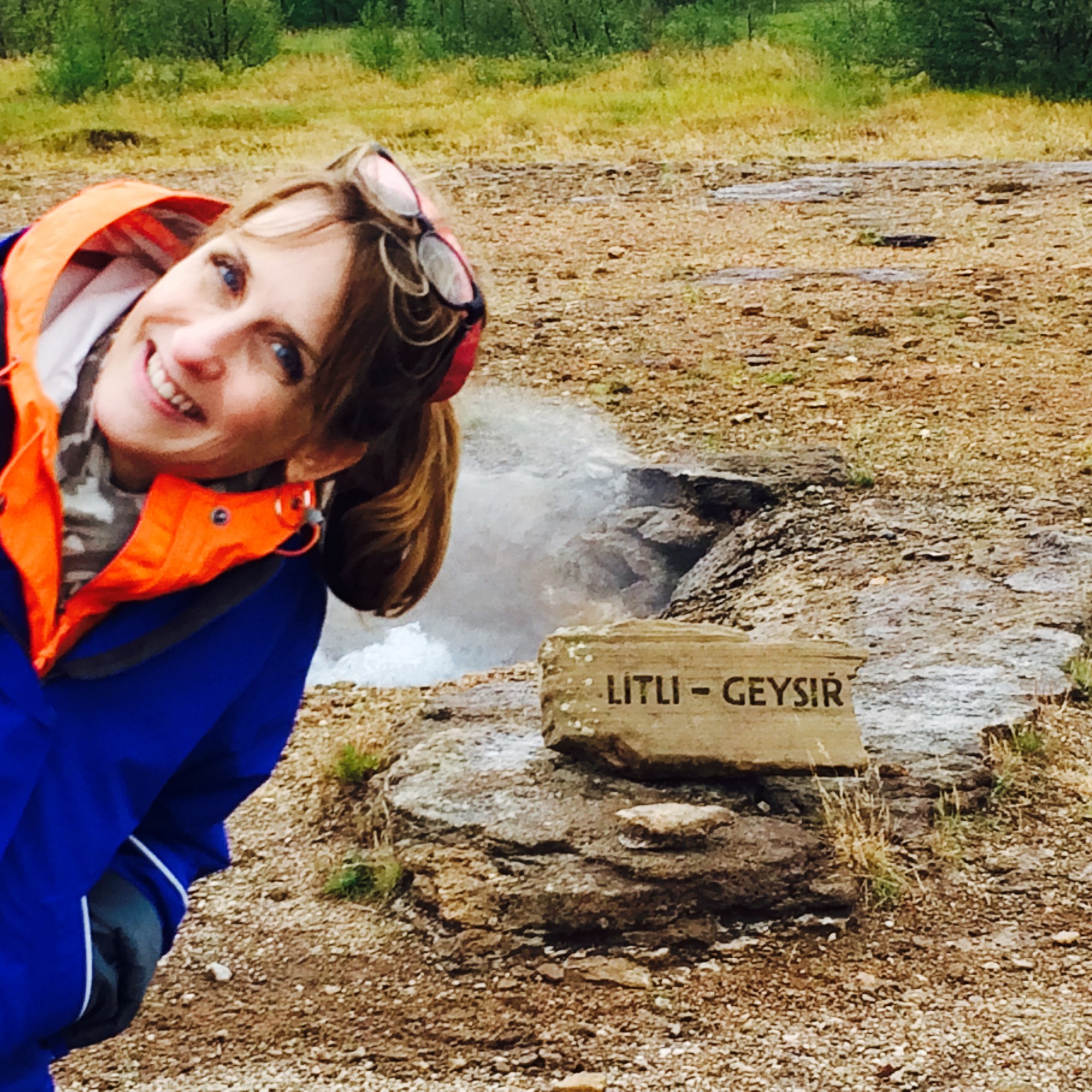
Iceland is a fairytale of “fire and ice.” Iceland straddles the mid-Atlantic rift, the one discovered by Marie Tharp. Heat from deep within the earth bursts through the rift in a wonder of impossibly blue geysers and boiling geothermal streams.
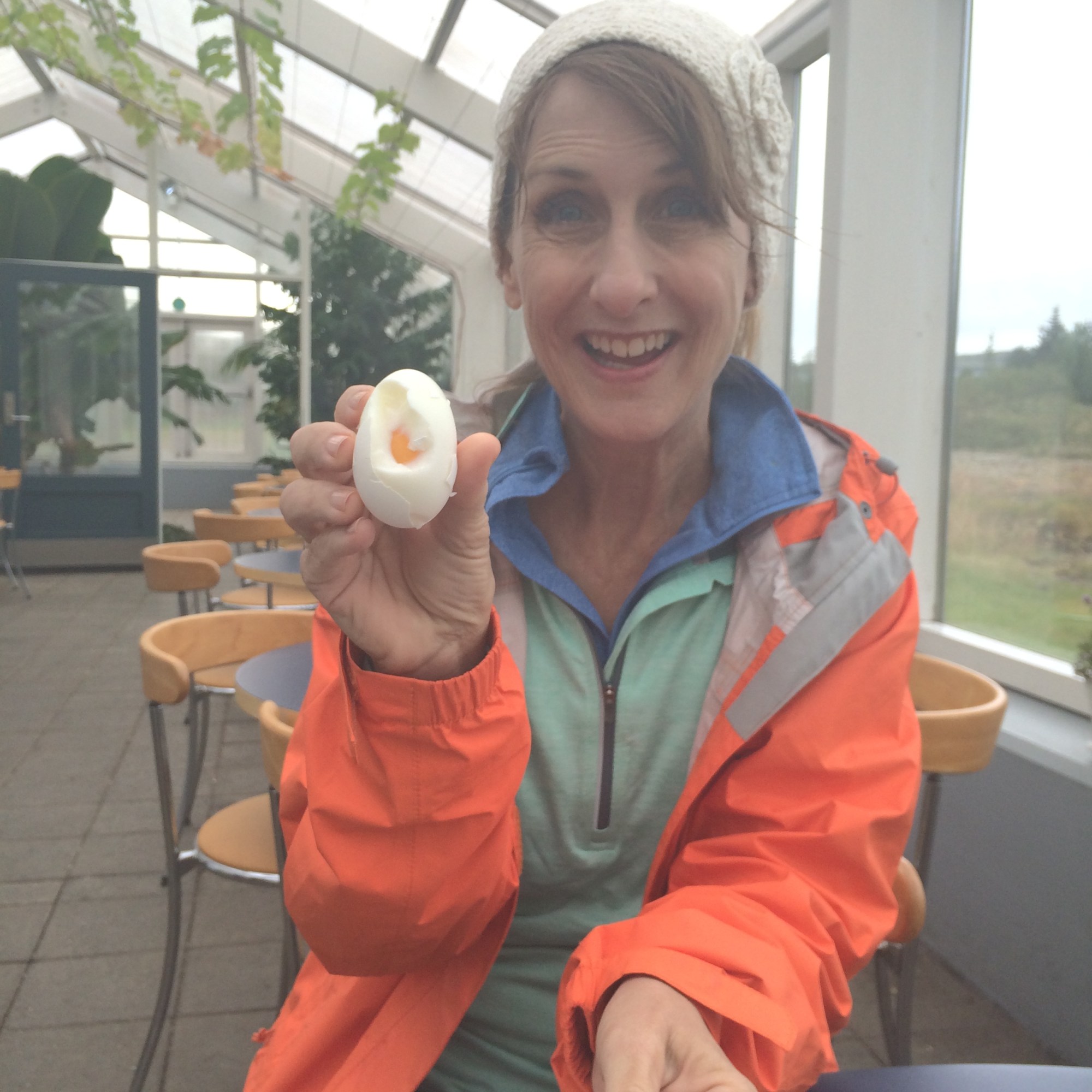
I boiled an egg in a stream! Photos below for evidence!
The modern theory of continental drift by tectonic plate movement is not “just” a theory, as if it’s simply someone’s best guess. Continental drift theory explains the facts we observe.
Continental drift theory continues to be tweaked as we learn more, but no one is going to throw out plate tectonics for the “playground merry-go-round” explanation.
If the facts from science don’t make sense to us, we are tempted to ignore them or to find our “own facts.”
Too often, we erase what we don’t understand.

 Janet K. Ray