Happy Birthday, Monkeys!

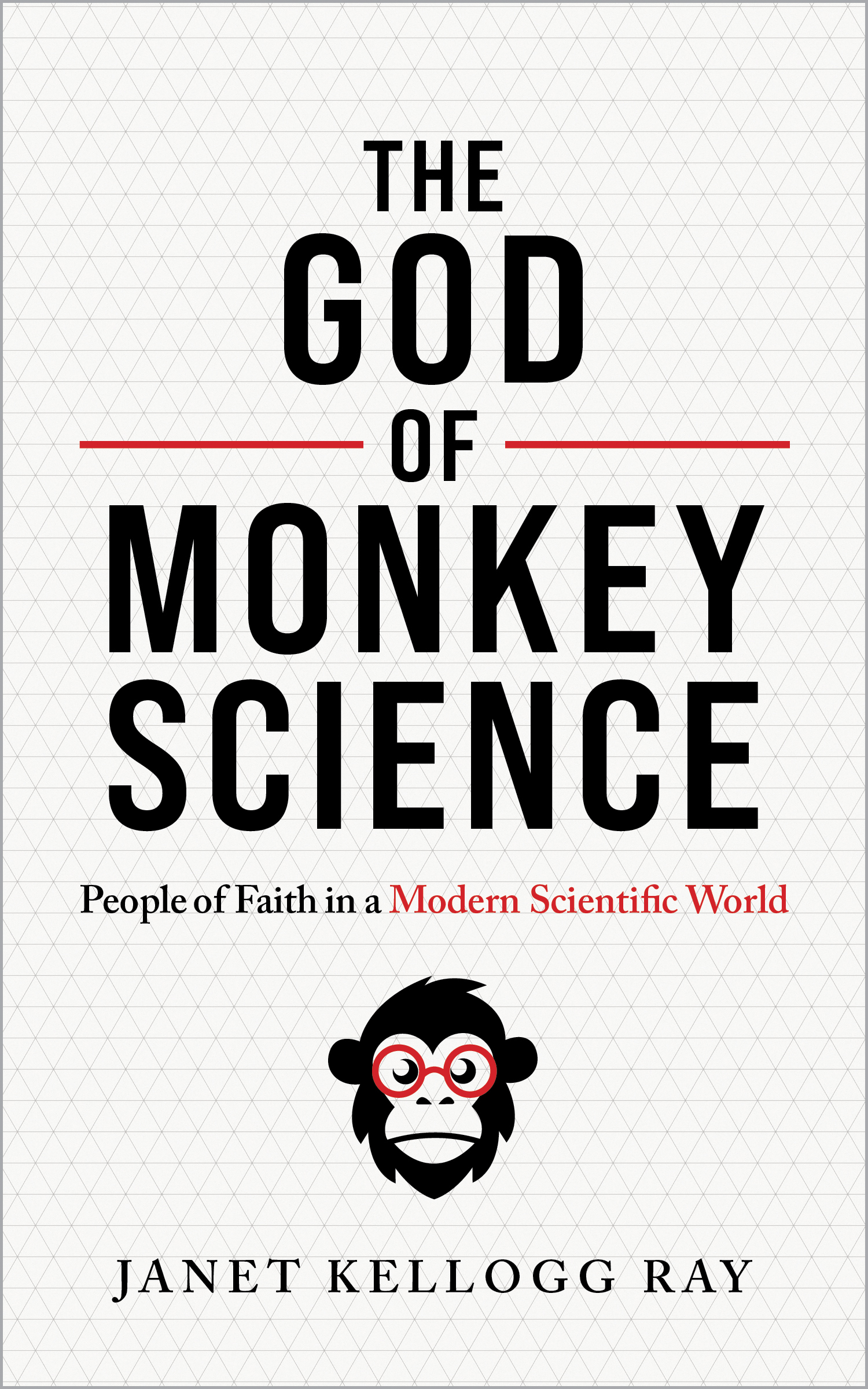
In September, THE GOD OF MONKEY SCIENCE turns two years old!

And just in time for the celebration, here’s a new review by Glenn Branch (National Center for Science Education) in Reviews in Religion and Theology (Vol 321, No. 2).

The message of the book – the dangers of science denial and its roots in evangelicalism – is just as important, if not more so, since HHS is now led by a germ theory skeptic and vaccine conspiracist.

Here’s Branch:

“Addressing them in the same appealing conversational tone she used in her previous book, Baby Dinosaurs on the Ark? (Eerdmans, 2021), she urges them to reconsider their attitudes toward science and scientists, because, as she summarizes, ‘Our culture wars are killing people and wrecking faith’ (p. 179). At a time when the American public is viciously and unnecessarily divided over issues such as these, The God of Monkey Science is a welcome intervention.”

Christian Nationalism and Science Denial

Christian Nationalism and Science Denial

I grew up in a small city in Texas. Almost everyone I knew went to church somewhere, usually some version of an evangelical church. 

Currently, many Americans who self-identify as “evangelical” aren’t a part of a traditionally evangelical church. “Evangelical” doesn’t necessarily describe where you go to church, or even if you go to church at all.

In fact, more than one-fifth of Americans who want the United States to officially be a “Christian nation” are secular or belong to a non-Christian faith. In 21st century America, “Christian” is more a cultural and political identity, rather than a religious one.

In the wake of this evolution, the terms “Christian” and “nationalism” have married. Characteristic of this marriage is an idealized version of history – that our nation was better, more moral, more diligent in the past. 

Other societies and cultures have idealized the past. Societies that idealize the past have many things in common, including support of “strong man” style leaders and a return to a “law and order” approach to society. 

There’s a lot to unpack here, but I want to focus on another characteristic of cultures that idealize the past: anti-intellectualism that often manifests as anti-science attitudes. 

Christian nationalism, as well as a belief that the Bible is historically and scientifically literally true, tracks with a greater tendency to believe conspiracy theories. Both groups track with anti-vaccine attitudes. 

White evangelicals were the religious demographic most resistant to a COVID vaccine, and also the most resistant to masking and social distancing.

And it didn’t stop with COVID. Already we are seeing state legislatures considering rollbacks of childhood vaccine requirements for school children. 

Look just below the surface of disputes about “science and religion” and you will see that they are primarily conflicts about moral and cultural order. 

Read more in The God of Monkey Science: People of Faith in a Modern Scientific World – available now for preorder!

Oh Texas, My Texas

Oh Texas, My Texas

You’re having surgery. As you wait in pre-op, your surgeon rushes in, says she is running really late, and would it be ok with you if she didn’t wash her hands or sterilize the instruments?

After all, germ theory is “just a theory.”

Want to jump out of an airplane without a parachute because gravity theory is “just a theory”? 

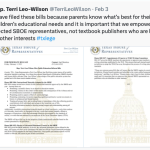
Newly elected Texas State Representative Terri Leo-Wilson recently introduced HB 1804, requiring Texas schools to present scientific theories in an “objective manner”, which means (according to Leo-Wilson’s bill):

“Clearly distinguishes the theory from fact”

“Includes evidence for both the scientific strengths and scientific weaknesses of the theory.”

As if a science theory is simply an opinion, and yours is as good as mine. As if a science theory is just a hunch or a guess or worse, someone’s agenda.

When an idea reaches the status of a “theory” in science, it is something about which we are quite certain. When a hypothesis has been tested over many decades, by multiple scientists, in multiple labs world-wide, and that hypothesis continues to be supported by evidence and continues to predict where new evidence will be found, the hypothesis is accepted as a theory. 

A science theory. 

In a hierarchy of terms, theories rank above facts and laws. Science theories make sense of facts and laws. Science theories are tweaked as we learn more, but the foundations of theories do not change. We aren’t going to decide that it actually IS the alignment of the planets that causes disease, and not pathogens.

I bet Representative Leo-Wilson is not advocating for teaching the strengths and weaknesses of germ theory or gravity theory or atomic theory or cell theory.

Just go ahead and say it: Texas kids can’t learn about evolution.

A couple of decades ago, a group of creationists persuaded the Kansas state board of education to erase all references to the wealth of Cretaceous-era fossils (for which Kansas is world-famous) in the state science curriculum. A textbook company responded by deleting a chapter referencing Kansas’ geologic history. 

For a few years, Kansas schoolchildren sat in schools built on land with a geologic history that never happened, according to the curriculum. It took a while, but the Kansas decision was reversed.

Texas, do better. 
A Book Easter Egg

A Book Easter Egg

Last fall I announced a contract with Eerdmans Publishing for a new book and left a little HINT about the title and topic with my special signing pen!

My niece Abigail said I was being all Taylor Swift, dropping an Easter egg for the book title . . . (It’s me! It’s me! I’m the writer it’s me!)

I’ll take being the Taylor Swift of science and faith books!

Soon and very soon the new TITLE and BOOK COVER will be released – hooray! (I have to say, the art department knocked it out of the park again with the cover.)

So, here’s the next Easter egg: I found this little vintage gem on Ebay and paired it with miniature lab ware, as you do.

Any more guesses?? Stay tuned!