Vive la France and Team Science!

It was the Age of Reason, a time of Enlightenment, and a Golden Age of Science – and King Louis XVI of France was here for all of it. 

The young king’s father, Louis the XV, had recently died after smallpox swept through the golden halls of Versailles. Fifty people were infected, eleven (including Louis XV) died.

Smallpox was disfiguring and deadly, and greatly feared. The only prevention was a medical treatment called “inoculation.” Inoculation was popular in most of Europe and in the Middle East, but the French were holdouts.

Inoculation meant taking pus from an actual smallpox lesion and injecting it under the skin of a healthy patient. Ideally, the patient would develop a few smallpox blisters, feel crummy for a few days, and recover with full immunity to smallpox.

The procedure came with risk – a few inoculated patients contracted smallpox, but not at the 30% fatality rate of a full-blown infection. 

But Louis XVI was on Team Science, and he wanted to encourage his people to do the same.

The king, along with his two brothers and a sister-in-law underwent inoculation. In other words, the entire line of succession.

Daily health bulletins were publicly posted, documenting the King’s inoculation experience:

“The king had a good night. Fever continues and is moderate. Local smallpox.”

“The king had slightly more fever with slight nausea. The king, as well as the princes and princess, continue to walk in the gardens.”

The reports continued for three more days, until the king was fever-free and the blisters dried out. 

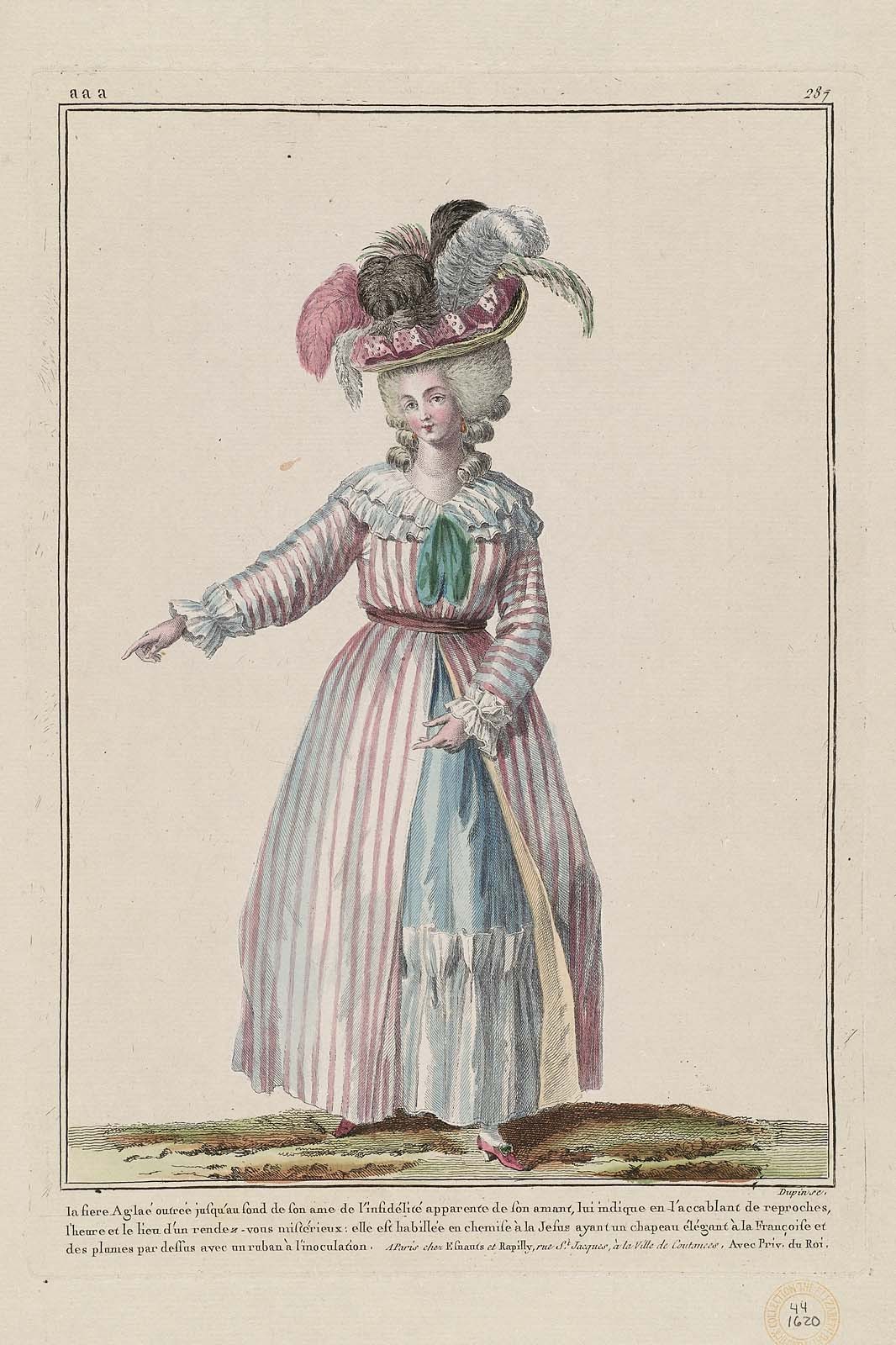
The king’s example made an impact. The people took up the banner and fashionable ladies sported pink-spotted “inoculation ribbons” pinned to their hats.

Oh, for a time when heads of state encouraged science and public health. Oh, for a time when leaders led by example.

Our leaders continue to downplay the surging measles outbreak – 500 cases in Texas alone. Yet, Texas Governor Greg Abbott has yet to say the words “vaccination” or “measles” in his responses to the ever-growing and spreading outbreak.

A Texas state representative recently filed a bill eliminating vaccination requirements for public school children. 

At the national level, our leaders recently cut funding and personnel supporting vaccination for uninsured children through a network of sixty providers.

In Dallas County, cuts meant the cancellation of 50 community vaccination events – many in areas with low vaccination rates.

“It’s catastrophic,” said Claire Hannan, executive director of the Association of Immunization Managers.

And while we’re cutting funding for vaccinations, our national leaders decided to fund new “research” looking at autism and the MMR vaccine, despite six decades of evidence that childhood vaccines are safe and effective. 

Louis XVI eventually lost his head in the bloody French Revolution, taking the fall for the excesses of his father and grandfather, but he stood up for what was right and true in science. 

Oh, for leaders who stand up for science.

Oh, for leaders who stand up for public health.
Freezer Failure and a Voyage on the Good Ship Smally-pox

Late on a Monday morning in early January, senior staff at a hospital in Mendocino County, California were gathered for the first executive meeting of 2021, when in burst the hospital pharmacist.

Ten hours earlier, the compressor on the hospital’s freezer failed. 

In a perfect storm of coincidences, the alarm meant to sound in such a failure also failed. 

And in a trifecta of disasters, the freezer held 830 doses of the Moderna Covid-19 vaccine. 

Two hours. 

Two hours was all that was left in the shelf life of 830 doses of a groundbreaking, life-saving, but temperature-finicky RNA vaccine.

Phone call number one was to Moderna, but there was no time to waste waiting on a callback. 

Fifteen minutes off the clock. 

The hospital shifted into local emergency mode. Two hundred vaccines to county workers, jail staff, and the fire department. Seventy doses to two elderly care centers. 

One hour left.

Every available medical professional (doctors, nurses, pharmacists) was called to man four pop-up vaccination sites across the county. The news blasted out on social media and by word of mouth.

Shots were given as fast as people could present arms. Despite the inevitable excitement and confusion, crowds were polite and cooperative. 

By 1:30, only forty doses remained at a church vaccination site. Seniors were called to the front of the line. 

In under two hours, every dose was given. Warp speed indeed.

Finicky shelf-life is the price we are currently paying for RNA vaccines that are an astounding 90-95% effective. 

The problem of vaccine supply logistics is a problem as old as vaccines themselves. 

In the eighteenth century, smallpox was a dreaded plague. If you managed not to die a horrid death, you were likely horribly scarred, and often left blind. 

But – conventional wisdom said that if you caught a similar, but milder disease called cowpox, you were safe from deadly smallpox. As the name implies, people who worked closely with cows (like milkmaids) often contracted cowpox. Milkmaids were known to brag that they would never be “ugly and pockmarked” after experiencing a case of cowpox. 

British physician Edward Jenner put two and two together in 1796. He took a bit of fluid from a blister of a local milkmaid who currently had cowpox. (In a curiously recorded historical detail, the infecting cow was named “Blossom”). 

Jenner then scratched the cowpox fluid into the arm of his gardener’s 8-year-old son. The boy developed a mild case of cowpox, but nothing more. Afterwards, Jenner infected the boy with smallpox, and to everyone’s relief, the boy did not get sick. 

Jenner’s procedure became known as “vaccination”, its root from the Latin word for cow – “vacca”. Thank you, Blossom!

Cowpox blister fluid (pus, actually) was a nineteenth century version of a vaccine storage and distribution problem. You could easily vaccinate those living near a cowpox outbreak, but cowpox blister fluid doesn’t travel well. 

The fluid dried up and inactivated before it could be transported across even small distances. 

From the sixteenth through the nineteenth centuries, smallpox decimated the western hemisphere, carried there by European conquerors and settlers. 

Spanish colonies world-wide were suffering from smallpox. But cowpox fluid didn’t survive a short trip, much less one across the globe. 

IN 1803, a Spanish physician, Francisco Xavier de Balmis, organized a shocking expedition. Twenty-two orphaned boys, ages three to nine, were put on a ship bound for the Americas. 

At the beginning of the trip, two boys were vaccinated with cowpox blister fluid. When they blistered, two more boys were vaccinated with the fluid. This process continued throughout the voyage, two by two, with the hope that at least one boy would arrive in the Americas with nice fluid-filled cowpox blisters. 

The twenty-two orphan boys were a living supply chain of vaccine.

As it turns out, only one boy had a single fluid-filled cowpox blister when the expedition arrived in the Americas. Still, it was enough. The chain of vaccinations propagated from that one boy resulted in the vaccination of thousands. 

The twenty-two Spanish orphans were adopted by Mexican families. In turn, twenty-six Mexican families “lent” their sons to continue carrying the vaccine to the Philippines and China. 

After circling the globe to deliver vaccine, Balmis remained committed to carrying smallpox vaccine across the world. 

May we be as resolute in vaccinating our modern population. 

And as You speak

A hundred billion creatures catch your breath

Evolving in pursuit of what You said

If it all reveals Your nature so will I

(Hillsong United So Will I)