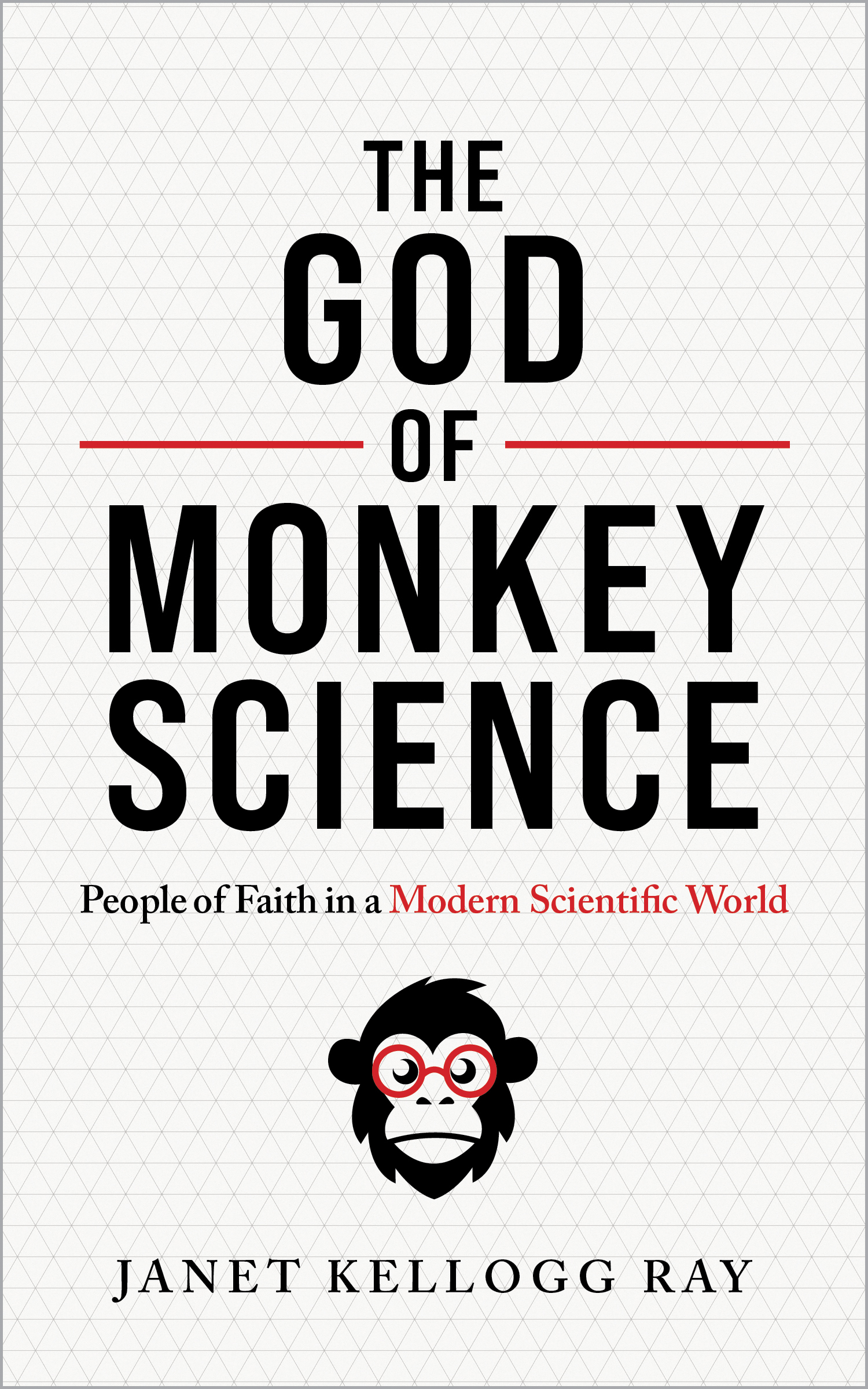
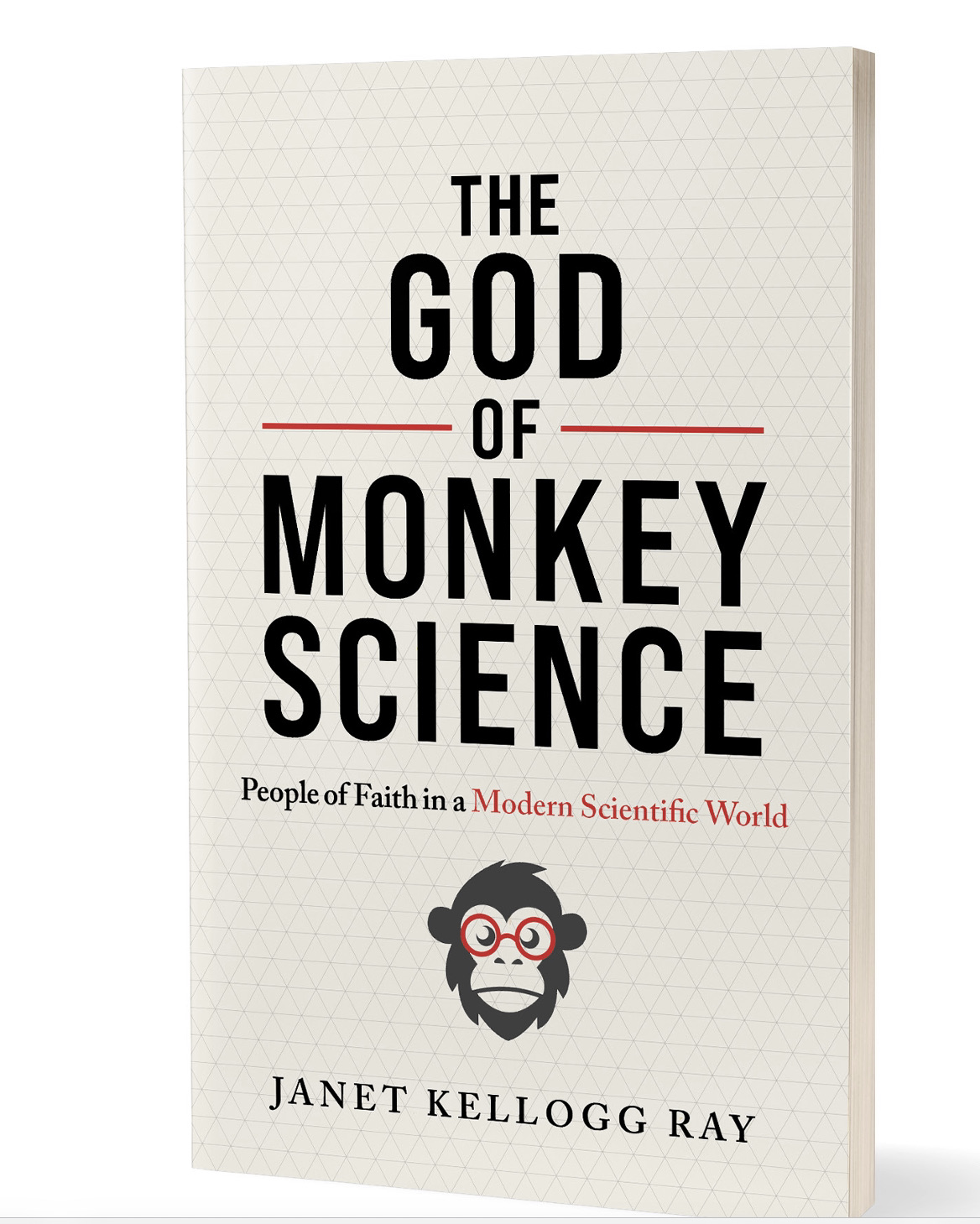
In September, THE GOD OF MONKEY SCIENCE turns two years old!
And just in time for the celebration, here’s a new review by Glenn Branch (National Center for Science Education) in Reviews in Religion and Theology (Vol 321, No. 2).
The message of the book – the dangers of science denial and its roots in evangelicalism – is just as important, if not more so, since HHS is now led by a germ theory skeptic and vaccine conspiracist.
Here’s Branch:
“Addressing them in the same appealing conversational tone she used in her previous book, Baby Dinosaurs on the Ark? (Eerdmans, 2021), she urges them to reconsider their attitudes toward science and scientists, because, as she summarizes, ‘Our culture wars are killing people and wrecking faith’ (p. 179). At a time when the American public is viciously and unnecessarily divided over issues such as these, The God of Monkey Science is a welcome intervention.”
In the 1970s, the American anti-evolution movement was gaining steam. Movement leaders set out to strip creationism of explicitly religious language and embed creation science in public schools as an alternative to evolution science.
When research in “creation science” stalled, anti-evolution activists turned their sights on culture.
Fighting evolution was never about science evidence. Originally, it was a theological problem.
In THE GOD OF MONKEY SCIENCE, I offer mounds of evidence indicating that evolution is no longer simply a theological issue but has morphed into a cultural issue.
And now, three months after the release of my book, comes a new book by Dr. Jason Lisle of the Biblical Science Institute.
Lisle, an astrophysicist and a young and prominent face of young earth creationism, erases all doubt: the battle ground is not science evidence, it’s culture.
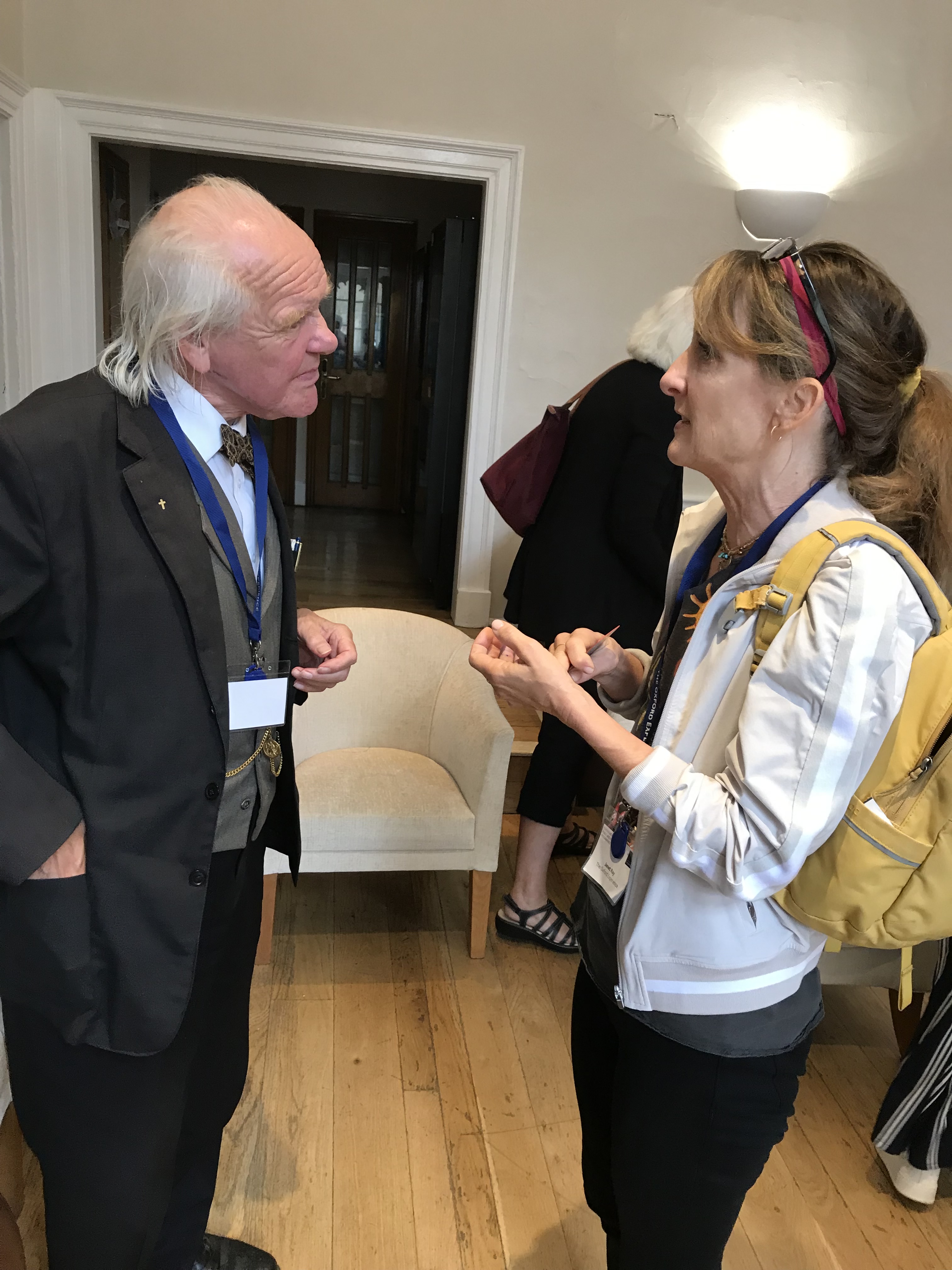
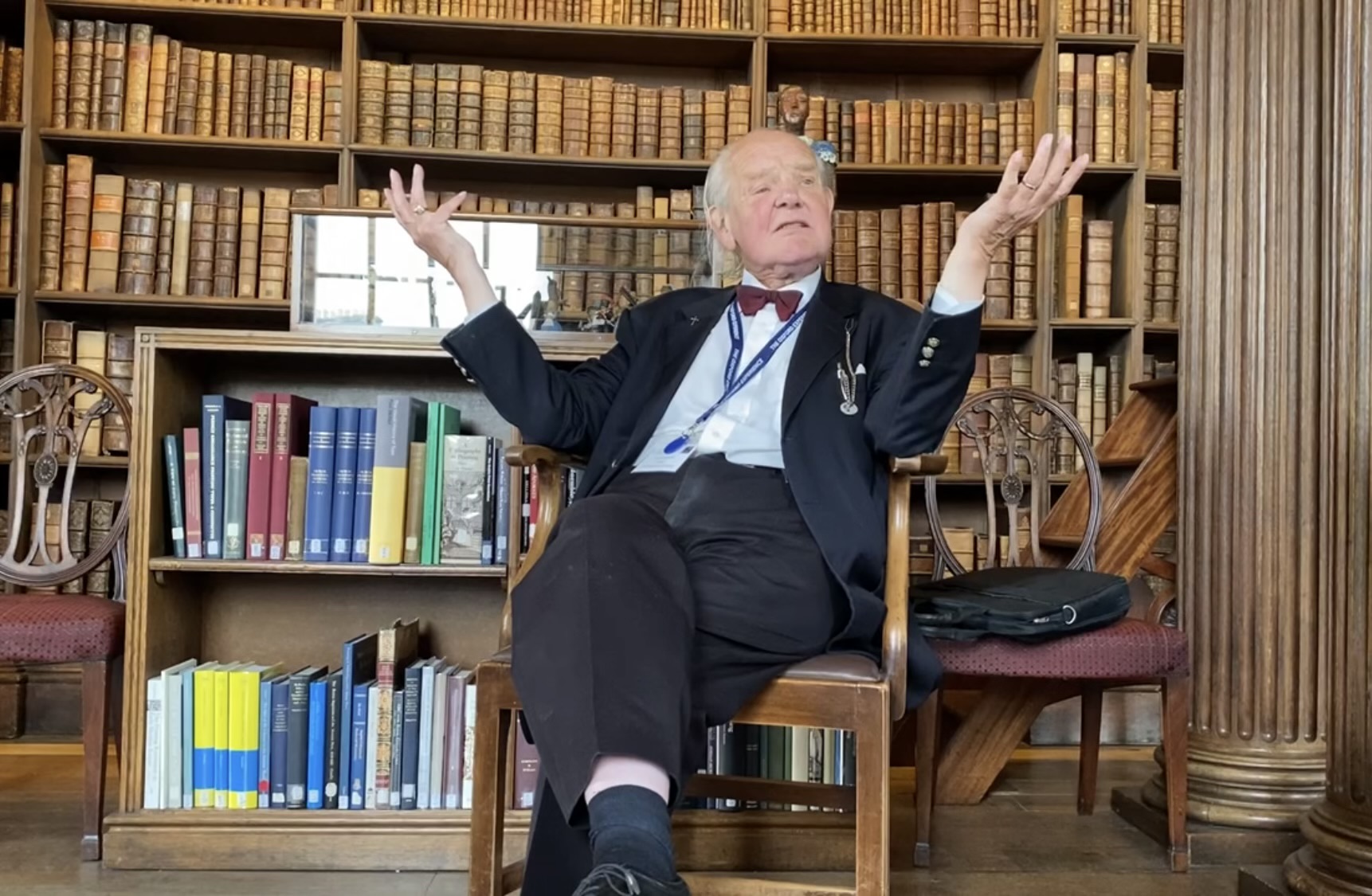
The gentleman in photo with me is Dr. Allan Chapman. He’s an Oxford professor and one of Britain’s national treasures. He’s a legendary science historian and a former host of a British astronomy television show – he’s an English Carl Sagan. His science lectures are legendary.
You’ll never see Dr. Chapman without a suit, bow tie, and pocket watch. He’s no longer able, but until just a few years ago, he biked around the Oxford campus a la Albert Einstein.
One of the coolest things I’ve done in my life is take two history of science classes at Oxford with Dr. Chapman.
Allan Chapman is also a bit of a unicorn at Oxford, as well as in the entire UK, for that matter. Dr. Chapman is a man of science and a man of deep Christian faith.
Look closely at the pin on his lapel. That simple cross pin is ever-present. He was once mocked for wearing it as he delivered a lecture to a group of prominent British scientists.
In the UK, the science and faith dilemma is typically “can a respectable scientist be a person of faith?”
In the United States, the question is reversed.
In the USA, sixty-six percent of white evangelical Christians reject the science evidence for human origins. Many in this group also reject the science evidence for the age of the earth.
Young adults in the U.S., drawn to a career in science, often think twice about it if they grew up in evangelical spaces.
In the U.S., the science and faith dilemma is this: can a person of faith accept science evidence?
Dr. Chapman is in the minority in the UK, for sure. Oh, there’s others – my first book (Baby Dinosaurs on the Ark?) was nominated for an award by the Faraday Institute for Science and Religion, based in Cambridge.
But here’s the thing: science and faith discussions outside the United States aren’t consumed with defending evolution and the age of the earth.
Science and faith discussions outside the U.S. have waded past the shallows of the science of origins and are fully in the deep end:
How does faith inform decisions made in a world experiencing unprecedented human-caused climate change?
How does faith inform our response to a world-wide pandemic caused by a novel virus?
How does faith inform modern genetics, a field moving at break-neck speed?
Here’s the bottom line – highlight it, circle it, think about it.
What science and faith conversations are we missing because we haven’t moved out of the shallows?
How might people of faith move to the deep and speak to modern science?
My publisher recently interviewed me and featured my books on the Eerdword blog!
Oh, I can talk about my books all day and night, but the “about you” questions were the hardest. ARGGGG. Fortunately, as an adult, I’ve completely embraced my inner nerd.
Here’s a bit of the interview. I’ll put the link to the entire post at the end.
What are three things about yourself that most people don’t know?
I’m a HUGE Dallas Cowboys fan, and that takes perseverance!
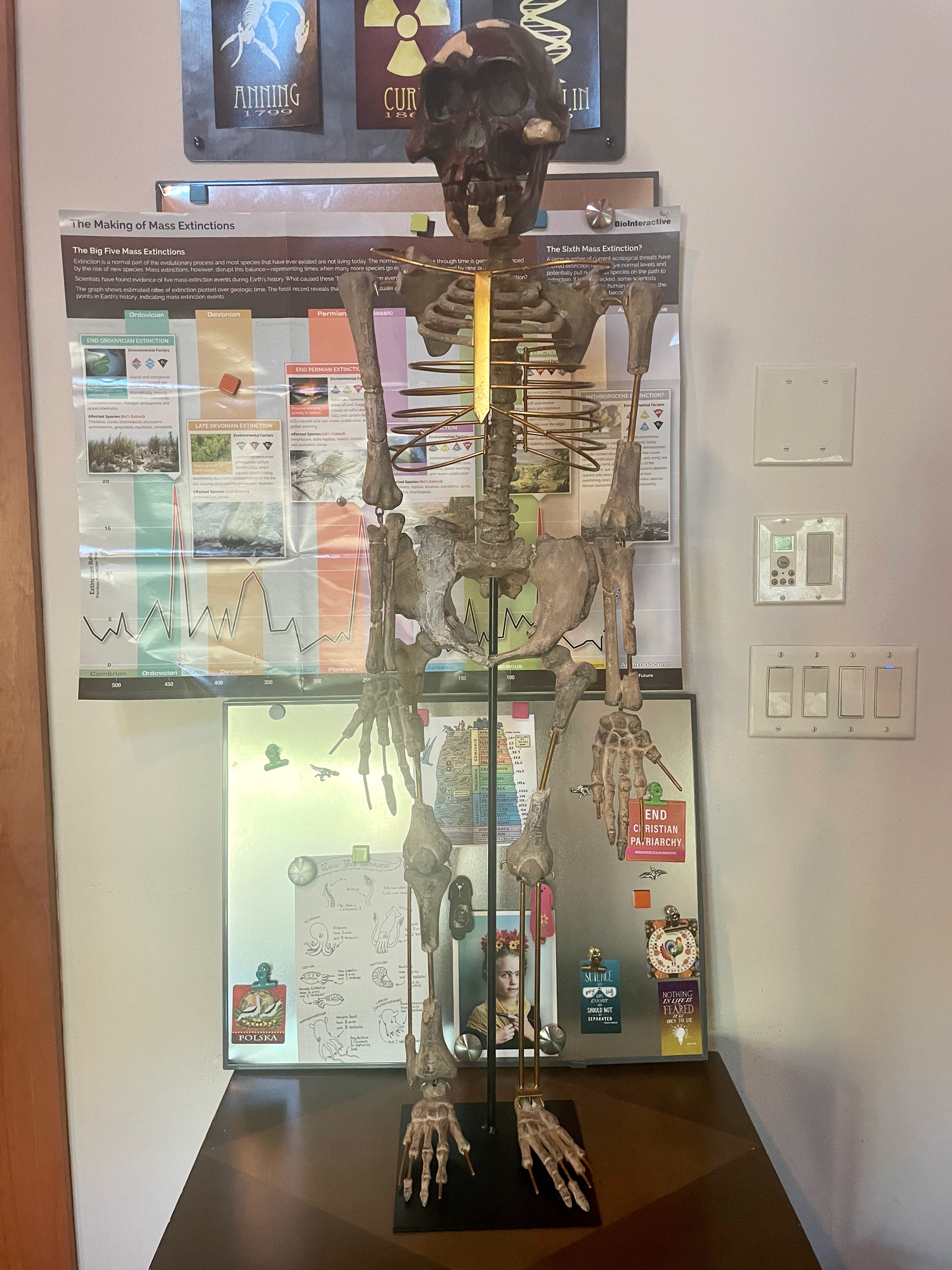
I have a life-size replica of the famous “Lucy” in my home office. I found her on sale in an import shop; nobody there knew what it was! I felt very Indiana Jones-ish.
Natural history museums are my happy place.
What do you do when you’re not teaching, writing, reading, or answering questions for EerdWord?
I’m currently managing a herd of five dogs–only two of which are by choice; it’s a long story!
I lead a book club. We’re from different churches and different backgrounds. We choose books (and sometimes podcasts) that may challenge our long-held beliefs.
And always: reading, thinking, researching, and writing the next book!
What can you tell us about your next release with Eerdmans coming this Fall, The God of Monkey Science?
Evolution was the area of science that first offended, but in evolution denial, evangelicals developed a whole way of talking about science.
Evolution-denial arguments were retooled and relaunched to serve another day in the evangelical response to climate science and to the COVID-19 pandemic. The God of Monkey Science explores the political and religious drama that got us to where we are today.
Who did you write these books for?
What most people who reject evolution know about evolution comes from anti-evolution resources. We build a straw man out of arguments no one is actually making, then we tear the straw man down. These books are written in an accessible, popular-science voice for readers who want to know more about the evidence for evolution, climate science, and the pandemic.
Could you describe your overall goal and dreams for your writing and research in a sentence or two?
Conventional Christian wisdom says that accepting evolution is a one-way ticket to atheism. But that’s not what research tells us – to the contrary, it is a rejection of science that is shipwrecking faith.
I want my readers to be people of faith who embrace modern science without fear.
Anything you’d like to say about anything?
Science moves on, with or without us. We can deny it, pretend it’s all a conspiracy, or politicize it, OR we can speak as people of faith in a modern scientific world.



 Janet K. Ray