On a pleasantly warm day near the equator, a large lobe-finned fish was hunting in the shallows and mudflats of a freshwater floodplain. He poked his head up above the waterline, looked right and left, then dragged himself to another spot for a better view.
375 million years later, our sunny freshwater floodplain has drifted north of the Arctic Circle.
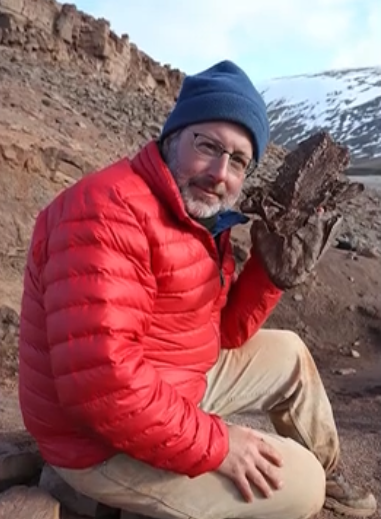
A team of paleontologists lead by Dr. Neil Shubin was hunting for fish fossils on a frigid July day.
Shubin was interested in the transition of water-dwelling fish to land-walking animals. He knew the age of rocks where fish are found. He knew the age of rocks where the first four-limbed creatures show up.
Evolution theory predicts that an animal with transitional traits would be found in rocks of an in-between age – and that happened to be Ellesmere Island in the north Arctic.
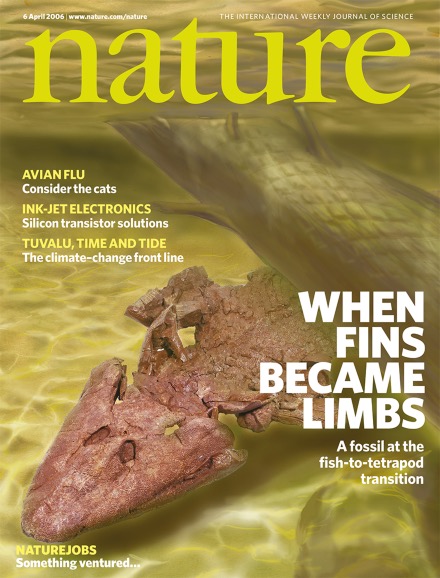
On a frosty July day in 2004, they found him. They named him Tiktaalik, which means “large freshwater fish” in the indigenous language of the area.
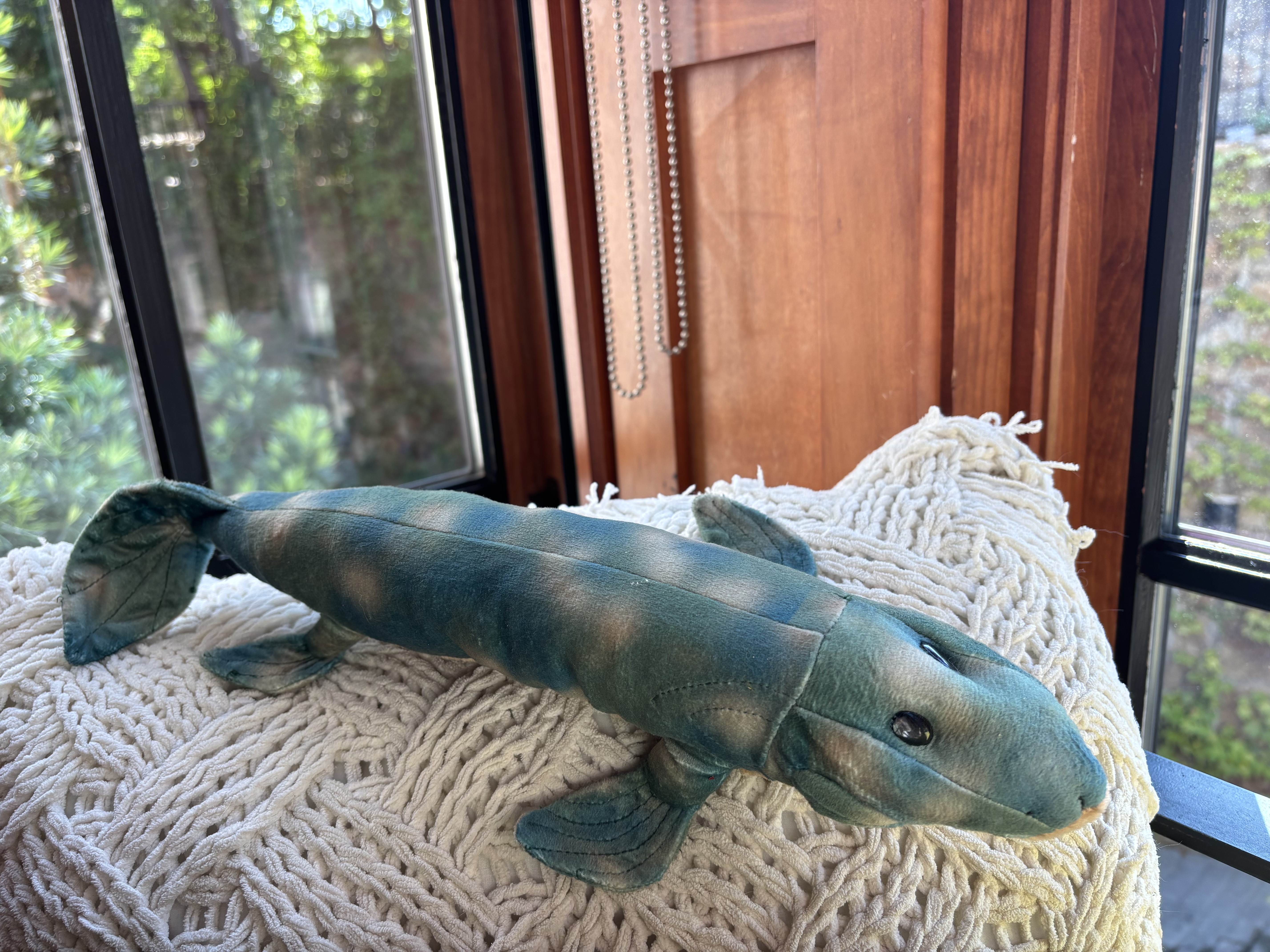
Tiktaalik was a fish. He had scales and fins and gills.
But Tiktaalik had a flat head, like a crocodile. Inside his front fins, he had the bone architecture of all four-limb creatures: one large bone, then two smaller bones, and then smaller bones of a wrist.
Tiktaalik also had a neck. And lungs.
More specimens were found, and now we know: Our wrist, our neck, our arm and leg bones . . . originated in a fish.
Happy Found-ya Month to Tiktaalik, our fishy ancestor!


Nice review. Do you know Bruce?