Creationism’s Playbook and the Closing of America’s Scientific Mind

I wrote my first letter to a politician this week. dan

I wrote Dan Patrick, the leading candidate and likely winner in the run for Texas lieutenant governor. I told him that I want Texas to lead in science, medicine, and technology. (In Texas, the lieutenant governor is a legislative leader capable of powerful influence on policy, including public education law).

Here’s Mr. Patrick on science education in Texas public schools:

When it comes to creationism, not only should it be taught, it should be triumphed, it should be heralded.

Mr. Patrick: how can Texas lead if our science classes discard the very basis of modern biology as well as modern physics and geology?

I’m still waiting for a reply.

Science is one of the few things in life unaffected by politics ( p. 167) – there is no such thing as a Democrat Krebs cycle or a Republican explanation of DNA replication.

Even when there are ethical or moral or political issues regarding how science should be applied, the underlying science is unchanged: those who want to ban stem cell research do not claim that stem cells do not exist; those opposed to nuclear weapons still accept atomic theory.

Social sciences, however, are a different story.

In his best-seller The Closing of the American Mind (1987), Allan Bloom scathingly critiqued American higher education. America’s most highly regarded virtue (according to Bloom) is openness.

Academia, specifically in the social sciences, has declared that all customs, all cultures, all philosophies, and all ideas are worthy of consideration. Evidence is not important; reason is not important. The greatest danger in social sciences is not error, but intolerance. If I make a judgment on the basis of evidence, I am not “open” to other ideas and interpretations. According to Bloom, the American mind is closed because it is (ironically) too open.

Here’s Bloom:

The point is not to correct the mistakes and really be right; rather it is not to think you are right at all (The Closing of the American Mind, p.26).

When Bloom published in 1986, he exempted the natural sciences from this trend. Bloom found natural scientists to be ruggedly devoted to empirical evidence, to their use of nature as the ultimate standard of proof:

It (natural science) is really self-sufficient, or almost so…. Natural science does not boast, it is not snobbish. It is genuine.

And I love this declaration:

Natural science simply does not care.

Natural science is the honey badger of academia.

honey badger don't care.

honey badger don’t care.


Enter: “The Wedge”

In 1998, the Discovery Institute (a creationist think tank), guided by University of California – Berkley law professor Phillip Johnson, outlined a strategy designed to overhaul the way science is “done”. To Johnson and the Discovery Institute, modern science was anti-religion. This strategy, essentially the “playbook” for Intelligent Design/ creationism, was called “The Wedge” by its creators. As the name implies, the intent of the strategy was to drive a wedge between science and its natural (materialistic) roots:

Design theory promises to reverse the stifling dominance of the materialist worldview, and to replace it with a science consonant with Christian and theistic convictions (The Wedge).

The Wedge proposed a three-phase plan of action: (1) scientific research and writing, (2) publicity, and (3) cultural confrontation.

Phase 1 has not been successful. No research supporting the Intelligent Design model of creationism has ever been published in a peer-reviewed journal.

Michael Behe, although one of the most prolific writers and proponents of Intelligent Design, testified to the lack of research at the historic trial in Dover, Pennsylvania:

There are no peer-reviewed articles by anyone advocating for intelligent design supported by pertinent experiments or calculations which provide detailed rigorous accounts of how intelligent design of any biological system occurred (Only a Theory, pp. 178-179).

Behe also testified that the darlings of Intelligent Design – the blood clotting cascade, the immune system, and the concept of “irreducible complexity” – had no peer-reviewed support.

And unless you count the Discovery Institute’s own research in its own journal, there is still no peer-reviewed evidence for Intelligent Design’s brand of creationism.

Anything Goes

The Wedge’s phases 2 and 3 (publicity and cultural confrontation), however, have been quite successful.
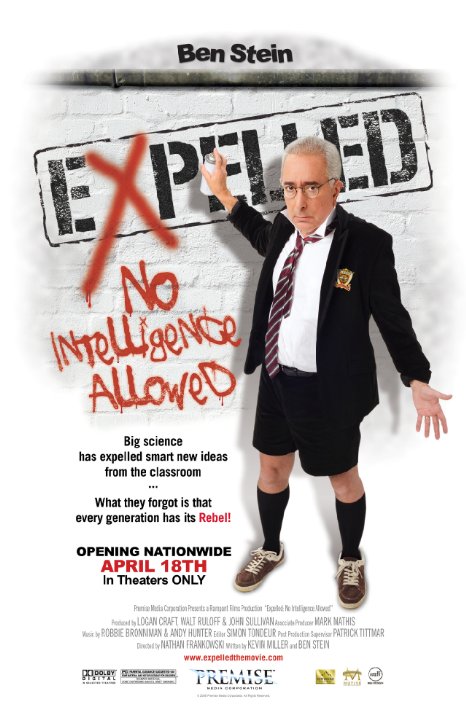
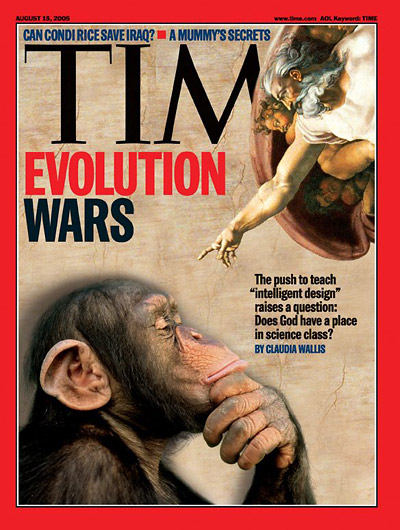
Multiple court cases in many states framed the teaching of evolution in public schools as a “culture-war” issue. A magazine cover time cover and a popular movie  expelledreinforced the believers-against-the-godless-evolutionists mantra.


The message was clear and found its way into education bills across the country: Teach the controversy. Present both sides. Don’t you want our children to be critical thinkers? It’s “only” a theory.

Ironically, Intelligent Design advocates adopted the strategy of left-leaning academics. With Intelligent Design/creationism, natural sciences are subject to the “open to everything” approach that Bloom said had closed the American mind. When scientific evidence no longer matters and when all comers get equal time, the American scientific mind has been closed.

Natural Explanations

Traditionally, scientists try to find natural explanations for natural events. In the world of Intelligent Design/creationism, non-naturalistic explanations get equal consideration.

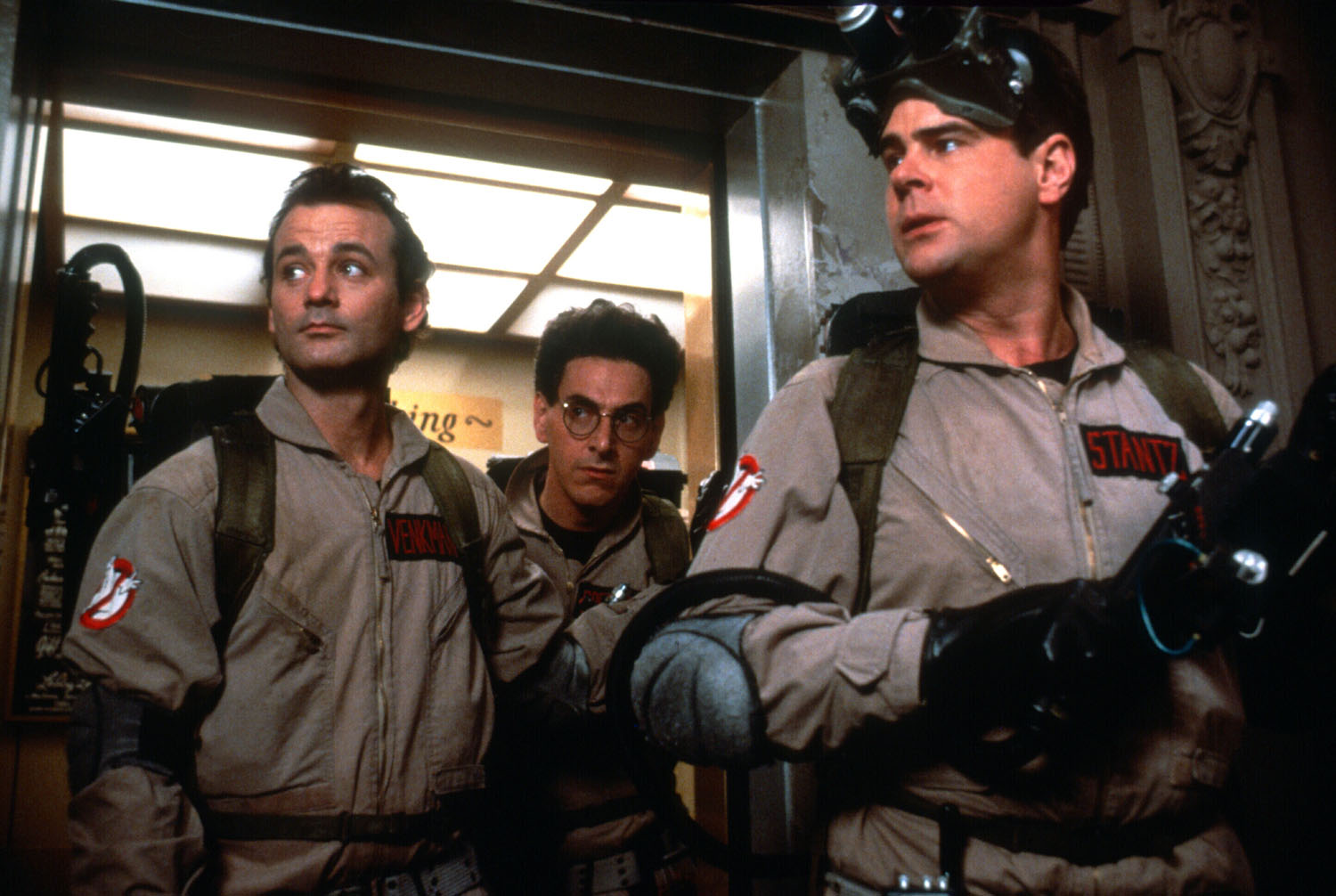
Let’s follow this line of thinking beyond the topic of evolution….if you break out in a nasty rash, do you want your doctor to divide her diagnostic efforts between looking for a medical cause AND looking for a neighbor who might have cursed you with bad skin? If your house is sinking, do you call an engineer or a ghost-buster? ghostbustersmenAlthough most anti-evolutionists believe that God blesses the earth with rain, they have no problem with teaching the water cycle in public schools. Only in the case of evolution do we find people lobbying for the inclusion of non-natural explanations in science class.
That’s Why Science Works

Here is Dr. Neil deGrasse Tyson in a recent interview, talking about the nature of science:

Once science has been established, once a scientific truth emerges from a consensus of experiments and observations, it is the way of the world. What I’m saying is, when different experiments give you the same result, it is no longer subject to your opinion. That’s the good thing about science: It’s true whether or not you believe in it. That’s why it works.

In my letter to Dan Patrick, I told him that I share his committed Christian faith and his high regard for scripture. I told him that there are a lot of us out here who see no conflict between science and faith. I offered to meet and discuss.

So far no invite.


This series is a chapter by chapter overview of Kenneth R. Miller’s Only a Theory, with my discussion and commentary.

****************

I believe that the heavens declare the glory of God.
I believe that day after day the cosmos pours forth speech and night after night the cosmos reveals knowledge.
I trust that the evidence and knowledge that is revealed is true because the Creator of the cosmos is Truth.
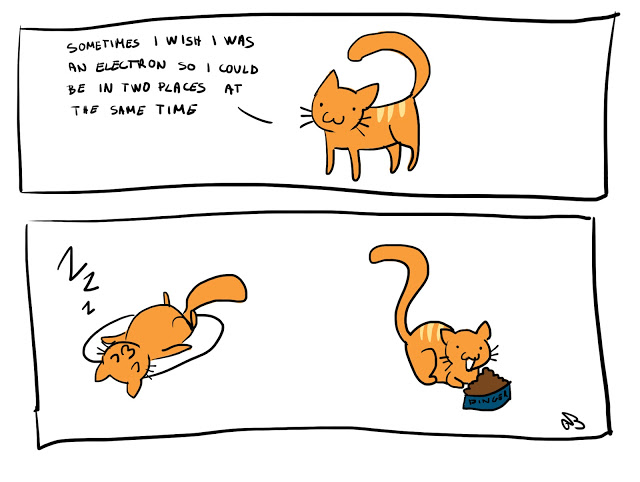

electron cat

Did the World Know We Were Coming?

higgs boson image (2)Call me Sheldon, but Particle Fever is one of the coolest films I’ve seen in a while.
Particle Fever tells the human story behind the recent discovery of the Higgs boson (aka “the God particle”).

My understanding of particle physics is about on the level of the intended audience of Chad Orzel’s book How to Teach Physics to Your Dog, but briefly:

The Higgs boson had been predicted for decades, but never found. For years, theoretical physicists based theories on it and experimental physicists designed machines and experiments to look for it.

Anticipation in the movie builds: If the Higgs boson is found and it has a small numerical value on the scale of The Way Physicists Measure Stuff, this would indicate that matter is organized according to a model called “supersymmetry”. And if the supersymmetry model is true, then physicists know where the Higgs boson fits into the model and can go from there to discover all the other parts and pieces of the model. Yay for science! Things are waiting to be discovered!

BUT if the numerical value for the Higgs boson is large, this would indicate no symmetry in matter – a chaotic, unknowable model with unknowable laws called the “multiverse” model.
Although intrigued by the concept of a multiverse, the young physicists in the film were pulling for supersymmetry. The complete randomness and unknowable-ness of a multiverse was depressing. If the multiverse is true, there would be no reason to continue research and experimentation, no reason to carry on their work, just no reason.

We don’t like random. It depresses us. Evolution-deniers have long defined evolution as a “random” or an “accidental” process. If that’s true, then we are not special, we are just sophisticated animals that accidentally obtained consciousness. We are depressed and deflated, with no hope for the future.

Rick Santorum, former Pennsylvania senator and presidential hopeful said this in a nationally broadcast interview:

It [evolution] has huge consequences for society. I mean, it’s where we come from. Does man have purpose? Is there a purpose for our lives? Or are we just simply, you know, the result of chance? If we are the result of chance, if we’re simply a mistake of nature, then that puts a different moral demand on us – in fact, it doesn’t put a moral demand on us….

Unpredictable VS Random

The process of evolution is unpredictable, but it is not random.

You cannot predict who will win the next Texas Mega-Gazillionaire Lottery. But the winner will not be me – I’ve never bought a ticket. The lottery is unpredictable but it is not random.

cat-in-trendy-strollerThe genes passed down from parents to offspring are unpredictable, but human parents will not produce a kitten or a starfish.
Human genetics are unpredictable, but are not random.

In the case of evolution, changes that occur in living things are not predictable, but neither are they random. Changes in living things are driven in a direction that benefits the evolution of the organism.

Contingency

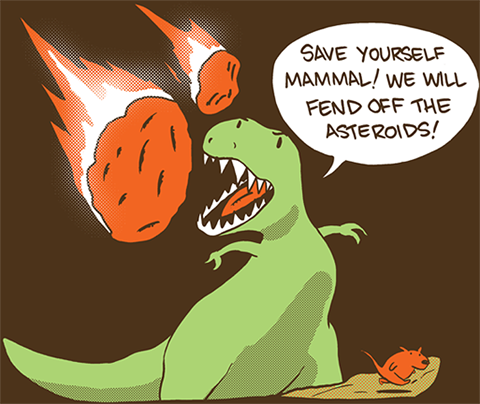
If we rewound the clock of evolution and set it out to run again, would we end up with the exact same natural history of life on earth? Is the process of evolution a contingent process – change one event and the whole picture changes? smbc-dinosave_large_copyfix_grandeFor example, if the asteroid missed the earth on that fateful day and the dinosaurs survived, would mammals have proliferated and advanced as they did, eventually resulting in humans?

The answer is yes and no.

What if your life was rewound back to the moment when your parents’ chromosomes were being shuffled about just before the fertilization occurred that resulted in you?

You would not be the exact person you are today. But – the same genetic constraints that were in place the first time around would still be in place in the rewind. You would still be your parents’ child.

Our universe and our planet are constrained by natural laws of physics and chemistry:

How strong are the constraints imposed by those conditions? To what degree do they guide and determine the course of evolution? (Only a Theory, p. 147).

In simpler words, did the world know that we (in one form or another) were coming?

Convergence

Visualize a watery space where animals might live – an ocean or a lake. Slow moving animals, whether large or small, can be almost any shape. But large, fast-moving animals living in the water tend to have a streamlined shape.

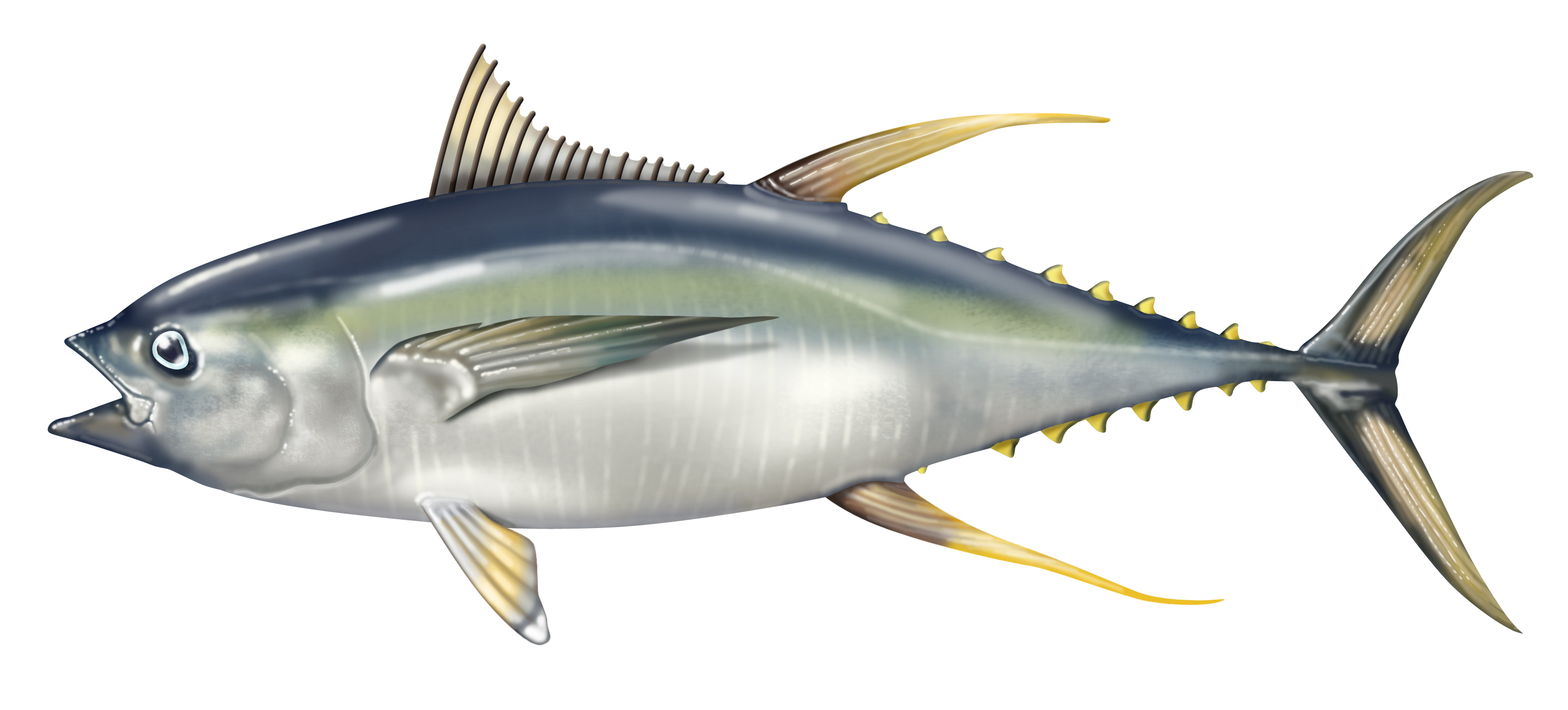
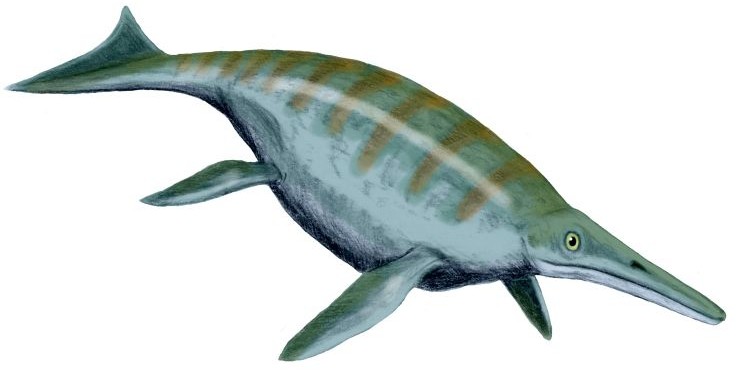
Think about a dolphin (mammal), a tuna (fish), and an ichthyosaur (extinct marine reptile) – all three very different animals. But all three are amazingly similar in shape:

Dolphin

dolphin

tuna

tuna

ichthyosaur

ichthyosaur

This concept is called convergence: organisms that evolve in a particular space will adapt to that space. Organisms evolve features that allow them to live and thrive in a particular environment. As a result, very different and unrelated organisms may look quite similar.

…evolution essentially “explores” any given adaptive space. It pokes and probes the multidimensional landscape of adaptation, and when two or more organisms arrive in a particular niche on that landscape, they are subject to the same physical constraints. (Only a Theory, p. 148)

koala in glassesKoalas, Kangaroos, Eyes, and Convergence

Do You Come From the Land Down Under? When the Australian landmass separated from the rest of the world (about 100 million years ago), it was home to both marsupial mammals (mammals that give birth to very underdeveloped young and carry them in pouches) and placental mammals (mammals that give birth to more developed young). In the newly isolated Australia, only the marsupials survived. In the rest of the world, however, the placentals were champions.

Outside Australia, placental mammals evolved and adapted to a variety of niches. Hunter/predator mammals evolved, as did burrowing mammals and tree-dwelling mammals. The same types of niches found throughout the world were also found in Australia, but only marsupials were around to fill them. In Australia, evolution also produced hunter/predators (the tiger quoll), burrowers (marsupial moles), and tree-dwellers (marsupial flying squirrels).

In Australia, evolution filled the very same spaces with marsupials that it had filled elsewhere with placental mammals.

Eyes Everywhere. Separated by a span of 400 million years, several groups of organisms faced the challenge of vision. Vertebrates, worms, and cephalopod mollusks (squids, octopi, nautilus) all evolved a camera-like eye. These three eyes did not evolve in the same way or from the same structures and are not the same biochemically.
BUT – all three types of eyes are constrained by the same physics of light and geometric principles of optics.

Were We Inevitable?

Again and again, life explores and fills adaptive spaces. Whether separated by oceans or millions of years, the same physical constraints of chemistry and physics are at work, solving problems in similar ways.

Is it reasonable, then, to believe that due to these constraints, the process of evolution would eventually and inevitably lead to us?

…it’s perfectly reasonable to maintain that evolution as we know and understand it was almost certain to produce a species like ours under conditions that prevail on Planet Earth (Only a Theory, p.153).

Life is possible only because of the precise and balanced fundamental constants of our universe. Exact outcomes of the evolutionary process might be unpredictable, but they are not random.

Accident of Nature or Willed by God?

To opponents of evolution, unpredictable is equated with random, and randomness is called God-less.

If God is the cause of causes, people of faith can accept evolution and still believe the universe was willed by God and our presence in it is God’s plan and purpose. The natural processes that brought about life on earth are no more God-less than the natural processes that maintain and propagate life.

God’s Image-bearers

This ad ran on the Answers in Genesis website following a rash of school shootings in 2006: Gun and God

The script reads:

As a society, we reap the consequences of the unquestioned acceptance of the belief in evolution every day. It diminishes your worth and reduces human beings from being made “in the image of God” to being mere players in the game of survival of the fittest.

Evolution makes some people nervous because of the whole connection-to-animals thing. Here’s the thought: how can we be “made in God’s image” if we are just animals?

Peter Enns is the Abram S. Clemens Professor of Biblical Studies at Eastern University and former senior fellow of biblical studies for The BioLogos Foundation. In his book The Evolution of Adam, Dr. Enns explored what the Bible says and does not say about human origins.

In Genesis, the phrase “image of God” does not refer to a characteristic that separates us from all other animals. The “image of God” does not refer to biology or a soul or a spiritual quality that makes us special.

Instead, the term “image of God” describes humans as God’s representatives in ruling creation. The original readers of Genesis would have understood this – ancient Near-Eastern kings declared themselves to be the gods’ image on earth. Kings liked to set up statues of themselves across the kingdom to remind their subjects that they were in charge and appointed by the gods.

In Genesis,  “image of God” means that humans have been tasked with representing God in the world.

That is a daunting task, and it certainly makes us special.


This series is a chapter by chapter overview of Kenneth R. Miller’s Only a Theory, with my discussion and commentary.

****************

I believe that the heavens declare the glory of God.
I believe that day after day the cosmos pours forth speech and night after night the cosmos reveals knowledge.
I trust that the evidence and knowledge that is revealed is true because the Creator of the cosmos is Truth.

CatsDinosaurs


Science This Week: Mammoths, Mosquitoes, and a Movie I Don’t Want to See

Mammoth Problems in South Carolina

She’s eight years old and she spends her recess time hunting for fossilized shark teeth on the playground. Her name is Olivia McConnell and she LOVES science.

Olivia McConnell  CBS News

Olivia McConnell
CBS News

When Olivia found out that her home state, South Carolina, had an official state bird, a state tree, and even a state spider but no official state fossil, she went to work.

Olivia knew that one of the first fossils ever discovered in North America was an ancient woolly mammoth, dug up from a South Carolina swamp in 1725. Olivia wrote Governor Nikki Haley and other state lawmakers and made the case for the woolly mammoth.

Here’s Olivia:

I wanted it to be the state fossil because I didn’t want that history to be lost, and our state to not get credit for it.

Olivia’s state senator thought it was a great idea and started a bill through the senate, expecting it to fly through.
Not so fast, little miss.

The bill is currently stalled in a House committee. Several state lawmakers are balking because the bill is not consistent with a literal reading of Genesis.

Here’s the original bill:

The woolly mammoth is designated as the official state fossil of South Carolina.

And here is the most recent (April 9) version of the bill that came out of committee:

The Columbian Mammoth, which was created on the Sixth Day with the other beasts of the field, is designated as the official State Fossil of South Carolina and must be officially referred to as the ‘Columbian Mammoth’, which was created on the Sixth Day with the other beasts of the field.

This latest iteration was voted down, so for now, South Carolina still has no state fossil. But Olivia is not deterred – she has vowed to fight on. Olivia says she will keep lobbying until she’s “23 or even 40” in the quest to have South Carolina join the majority of other states with paleo symbols. (By the way – Texas has two: a state dinosaur, Pleurocoelus and the state stone, petrified palm wood).

Coming to a Theater Near You 

On September 26, A Matter of Faith is scheduled to hit the theaters. matter of faith movie

Here’s what we know from the movie trailer: Wistful dad says one of the hardest things for a father to do is “send your little girl off to college”. College girl is loving life, especially her classes, especially her biology professor.

Concerned dad researches daughter’s professors.
Dad meets with the dean, and in a tone of voice usually reserved for revealing the true identity of a super-villain, dad says (cue ominous music):

The guy’s an evolutionist!  phantom_scooby_doo_unmask_1_1750


Dad goes on to say that “nothing in the whole course description says that Biblical creation is even a plausible alternative”.

This film does not have the big names of Noah or Heaven Is For Real, but it will most likely gather a following. A Matter of Faith will appeal to the demographic who liked Fireproof, God’s Not Dead, and Facing the Giants – Christians who want to see family-friendly, God-honoring movies at an actual cineplex.
Christians will be encouraged to support the film so “Hollywood will make more movies like that”. The target audience is committed believers.

For eighty-nine minutes, viewers will be submerged in the concept that science (and specifically evolution) is the enemy of faith, sweetly played out on the big screen.

Ken Ham and Answers in Genesis are promoting this film big-time. Several AIG staff have consulted or previewed the movie.
Here’s Ken Ham:

Atheists and compromising Christians are going to hate A Matter of Faith! It’s a great new movie!

Rachel Held Evans, in her faith memoir Evolving in Monkey Town (recently rereleased as Faith Unraveled) described the fear she felt as she faced the first cracks in her “worldview”, a worldview in which she had a ready (Biblical) answer for everything.

Rachel asked this question:

If all truth is God’s truth, then why are we so afraid to confront the mountains of scientific evidence in support of evolution?

Who’s Ready for Skeeternado?

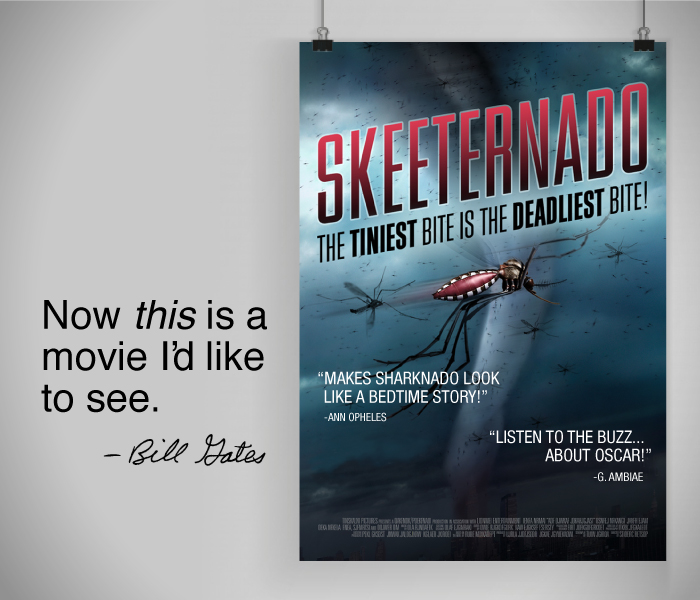
It probably wouldn’t have quite the flamboyance of a sharknado or the white-knuckleness of snakes on planes, but I don’t think there has been a man-against-nature movie made about the actual “world’s deadliest animal”: the mosquito.
Mosquitoes kill 725,000 people a year.
Snakes kill 50,000 people per year and sharks a paltry ten (yet they get their own TV week).

In a cool graphic posted by Bill Gates, the world’s deadliest animals are charted by number of people killed per year. Among the four-legged animals we know best, “man’s best friend” comes in first – killing 25,000 people a year. Second place? – the hippopotamus at 500/year (still want one for Christmas?).

Mosquitoes (Spanish for “little fly”) threaten half of the world’s population with death and disease. Malaria is the worst, killing 600,000 people every year. Many non-profits and faith-based organizations provide opportunities to purchase a $10 mosquito net, a simple and effective yet often unavailable tool in the fight against malaria.

In his Gates Notes on World Malaria Day (April 25), Bill Gates focused on the deadly mosquito and what is being done to combat mosquito-borne disease. For example, in Indonesia, dengue fever is being fought by inoculating the mosquitoes, not people.

Now come on Bill, make this movie:
mosquito-week_skeeternado_2014_700px_v2

****************

I believe that the heavens declare the glory of God.
I believe that day after day the cosmos pours forth speech and night after night the cosmos reveals knowledge.
I trust that the evidence and knowledge that is revealed is true because the Creator of the cosmos is Truth.
 

2010-08-30-2010-8-30-Science-Cat

Fossils and the Design of Life

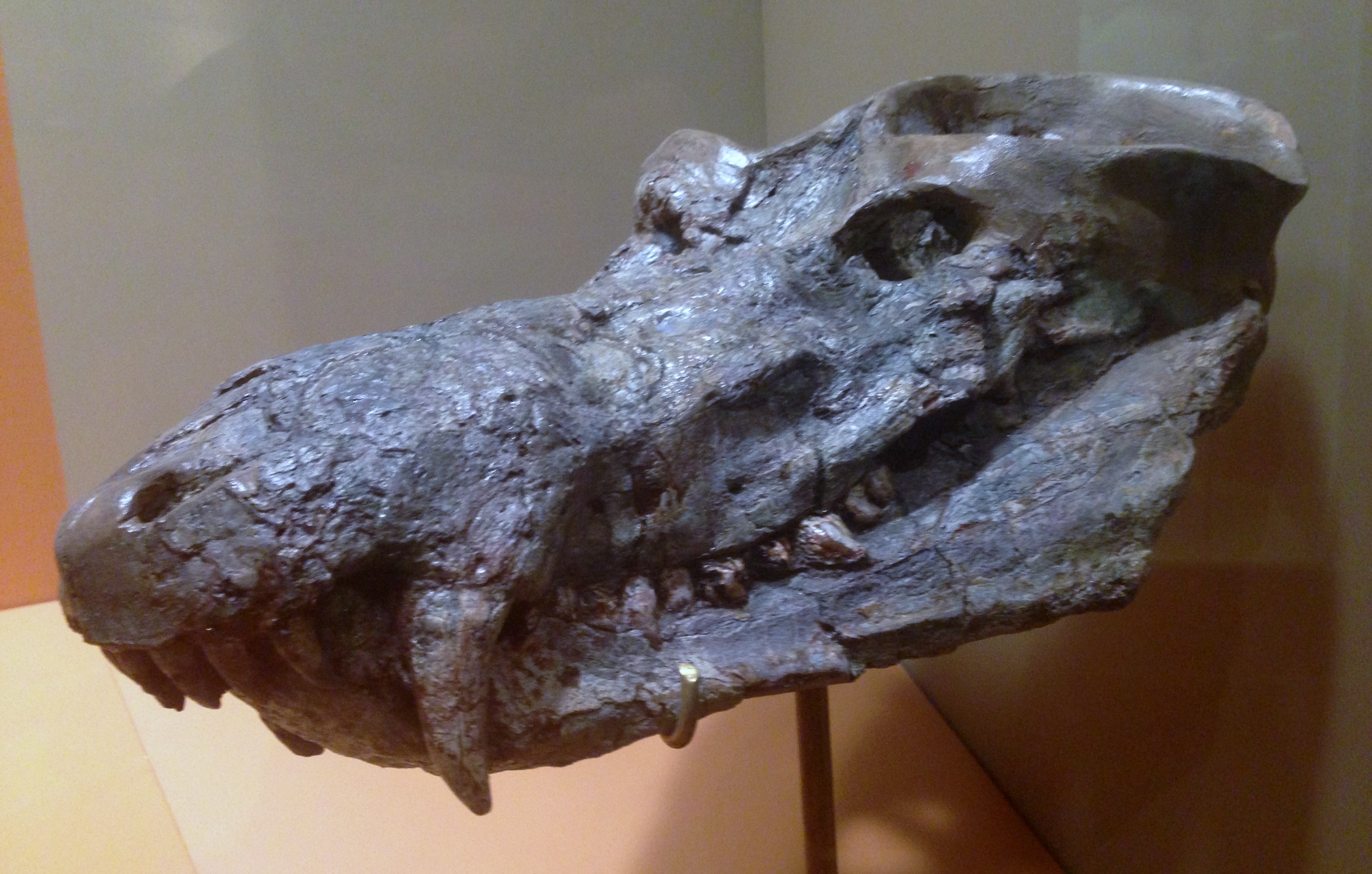
cynodontI found this guy three weeks ago at the National Museum of Natural History in Washington, D.C.
He is definitely a reptile… …but Grandma! What BIG TEETH you have!   little red and wolf

Reptile teeth are all the same shape – spiky and great for grabbing and swallowing things whole, but not so good for chewing. Reptiles swallow their food whole.

But not this guy. His teeth are not reptilian, they’re mammalian. Mammalian teeth have different shapes and surfaces, allowing the teeth to tear, crush, and shear… in other words, chew.

Meet Cynognathus, a lovely transitional fossil. Cynognathus is a reptile that lived 230-225 million years ago. This guy and his cousins are called Cynodonts (“dog-toothed”). As a group they are informally known as the “mammal-like reptiles”.

The Fossil Record

The fossil record is unambiguous in two aspects: there is a sequential character to the appearance of life on earth, and newer species are descended from species that preceded them (p. 47).
There is a widely held perception that to believe evolution means to believe that one day a fish gave birth to an amphibian, a reptile gave birth to a mammal, or a cow gave birth to a whale. And of course, a chimpanzee gave birth to a human baby.
But that is to misunderstand the process of evolution, even basic biology. And it is certainly to misunderstand the nature of the fossil record.
Changes from one species to a different species, especially changes across classes or phyla or kingdoms, occur due to accumulated mutations over hundreds of thousands, millions, and billions of years. It is a continuum, not a jump.

So, according to the theory of evolution, what we would expect to see in the fossil record would be transitions, not sudden leaps…and that is exactly what we see.

The earliest recognizable amphibians have many fishy characteristics (gills, skulls). And in between, we find animals “in transition”. The older the rock, the more fish-like and less amphibian-like the animal. The newer the rock, the more amphibian-like and less fish-like. And on it goes…the earliest reptiles had many amphibian features. The earliest mammals were reptile-like mammals (and preceding them were the mammal-like reptiles, like my friend at the museum).

More examples? Land dwelling animals with definite whale characteristics are found in older rocks, but whales in newer and newer rocks show diminishing hind and fore limbs. Modern whales have unused pelvic bones not attached to anything and some even have skeletal rudiments of hind limbs.
We see the same transitional pattern in dinosaurs to birds – oldest fossils are bird-like dinosaurs, newer fossils are reptile-like birds.

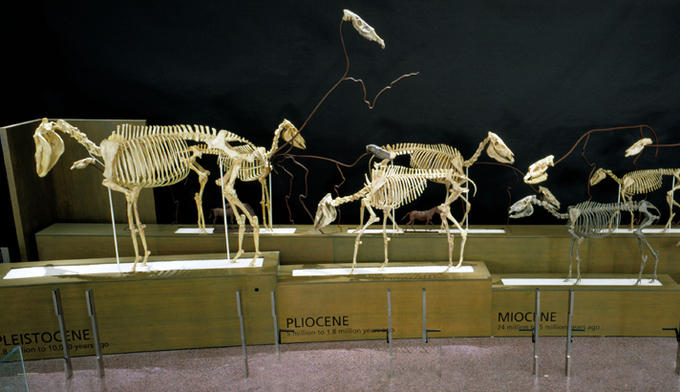
evolution-of-horses_dynamic_lead_hero_image

“Evolution of Horses” at the American Museum of Natural History, New York

Within specific animal groupings we also see transitioning. Nearly 55 million years ago, horses were no larger than house cats. Over the next 30 million years, horses diversified and many species of horses emerged. At one point, there were hundreds of horse species. Today, only one genus of horse remains (Equus) which includes all of the modern species (horses, zebras, donkeys). Three dozen distinct horse genera have lived on earth, but all are extinct except Equus (pp. 47-50).

Similarly, there have been twenty-two distinct elephant species in the last 6 million years. Only two species live today.

Suddenly, or Slow?

Is natural history a record of the sudden emergence of our living world in a single burst of creative energy? (p. 122).

Young Earth Creationism says that is exactly what happened – everything in six days, fully formed.
Intelligent Design says that each species of horse (for example) was designed separately and despite appearances, was not related to the other horse species in history. Intelligent design says that each of the animals in the fish to amphibian transition (as well as all other transitional fossils) were designed separately and were no relation to each other.

Intelligent Design claims that evolution could not be the mechanism for the diversity of life, but Intelligent Design does not pose an alternative mechanism.

Did each of the millions species (both extinct and modern) that lived across millions of years appear suddenly out of nowhere?

Was a newly designed species birthed by an existing species?

dog and kitten

Over and over again, the imposition of intelligent design on the facts of natural history requires us to imagine a designer who creates successive forms that mimic evolution (Finding Darwin’s God, Kenneth R. Miller).

The Spark of Life

The natural history of the earth suggests that life unfolded in a process of change and adaptation. The first living organisms appeared about 3.5 billion years ago.

Over billions of years, life changed. Bacteria, insects, plants, animals…species lived, then became extinct. Sometimes the extinctions were dramatically catastrophic, but were then followed by great diversifications.

Life probed, explored, and colonized. Once lit, the spark of life spread everywhere on this great blue planet and has never ceased its endless process of change and adaptation (p. 123).

The reality of natural history is that living things are not one-case-at-a-time design projects.

Life doesn’t resist change but favors it, tolerates it, and channels it into useful variations. Ironically, the design of life is to change its own design (p. 124 – 127).

Americans and Scientific Confidence

Just a few weeks ago, an AP poll summarized Americans’ confidence in various scientific statements. You’ll be glad to know that only four percent of Americans doubt that smoking causes cancer. smoking
Unfortunately, as religious belief rose, confidence fell regarding scientific evidence of evolution, the big bang, and the age of the earth. (An alarming number of Americans also doubt the safety and effectiveness of vaccines – there are definite similarities in the thought processes of anti-evolution folks and anti-vaccinators, but that is a topic for another post!).

It is not surprising that the more religious Americans are, the less they trust science. The originators of the Intelligent Design model very intentionally chose the term “design” for their movement. “Design” implies purpose, order, and meaning (p. 112-113). By contrast, any other explanation (i.e. evolution) is cold, purposeless, and meaningless. Traditional Creationism and its newest incarnation, Intelligent Design, have been tireless in making evolution the enemy of faith.

The good news for those of us who believe both science and God is this:

As it turns out, there really is a design to life, but it’s not the clumsy, interventionist one in which life is an artificial injection into nature, a contradiction of its physical laws. Rather, it is a design in which life emerges from the laws of the universe around us. That conclusion is unavoidable, robust, and scientific. The elegant universe is a universe of life. And the name of the grand design of life is evolution (p.134).

An elegant universe is not the enemy of faith.

Quite the contrary.


This series is a chapter by chapter overview of Kenneth R. Miller’s Only a Theory, with my discussion and commentary.

****************

I believe that the heavens declare the glory of God.
I believe that day after day the cosmos pours forth speech and night after night the cosmos reveals knowledge.
I trust that the evidence and knowledge that is revealed is true because the Creator of the cosmos is Truth.

2010-08-30-2010-8-30-Science-Cat

Science This Week: Your Family is Fishy & a Goodnight (for the) Moon

There’s Something Fishy About Your Ancestors

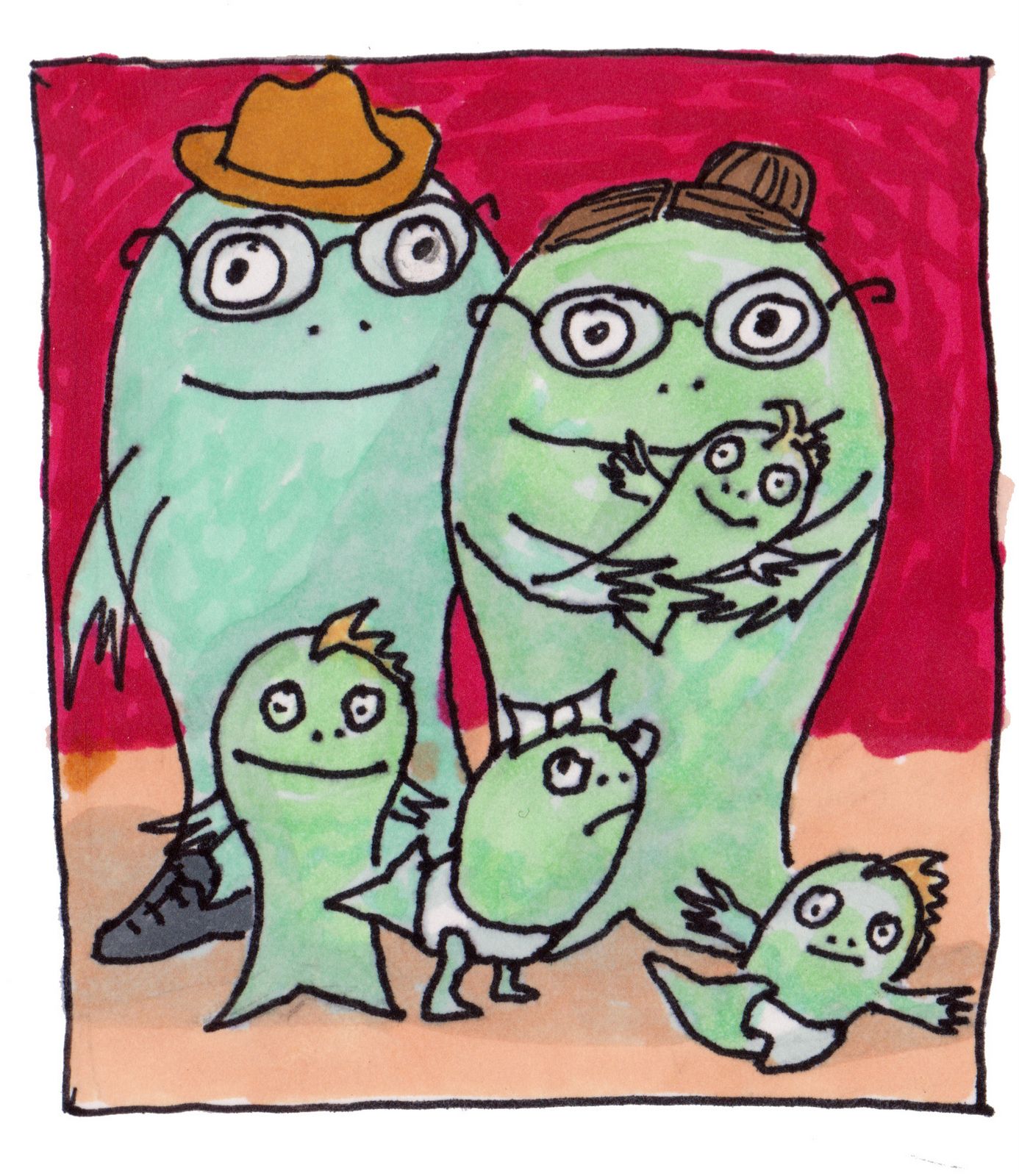
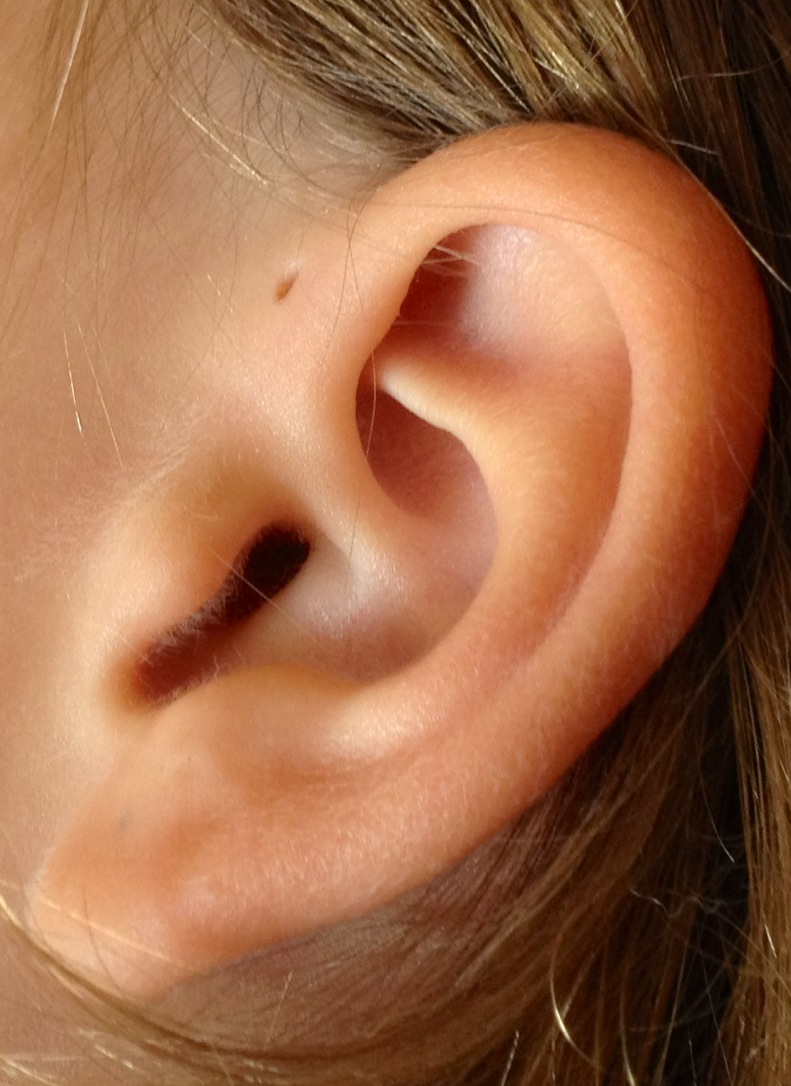
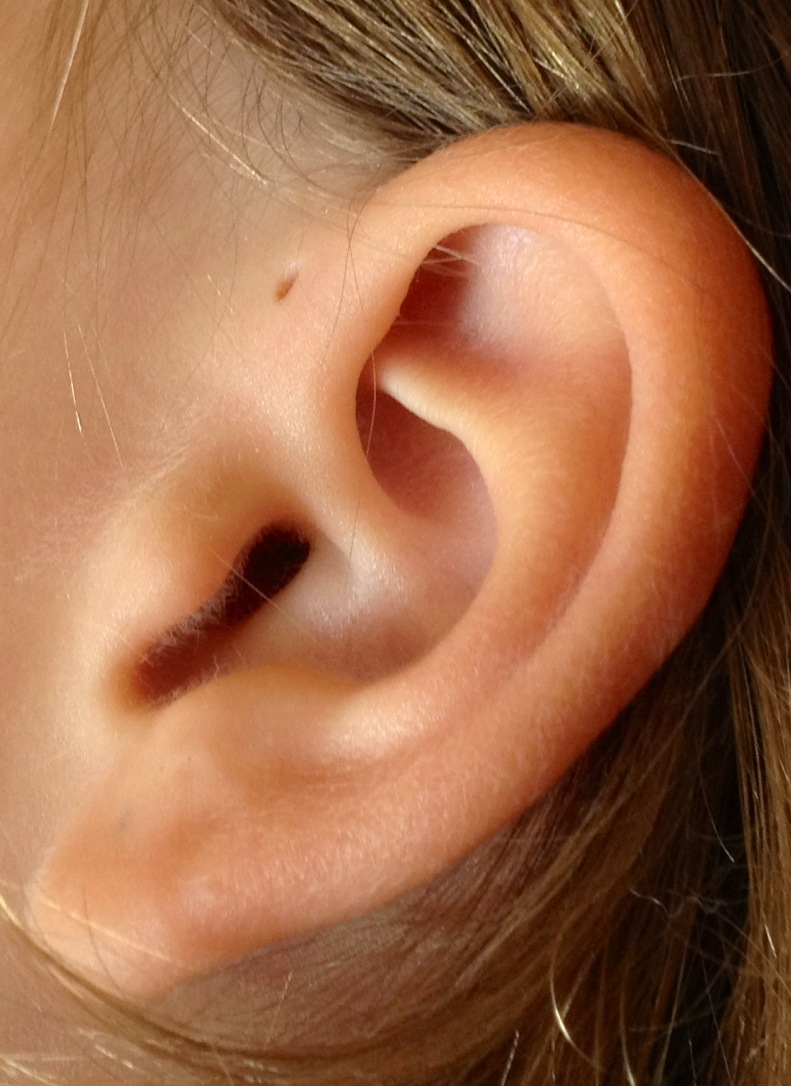
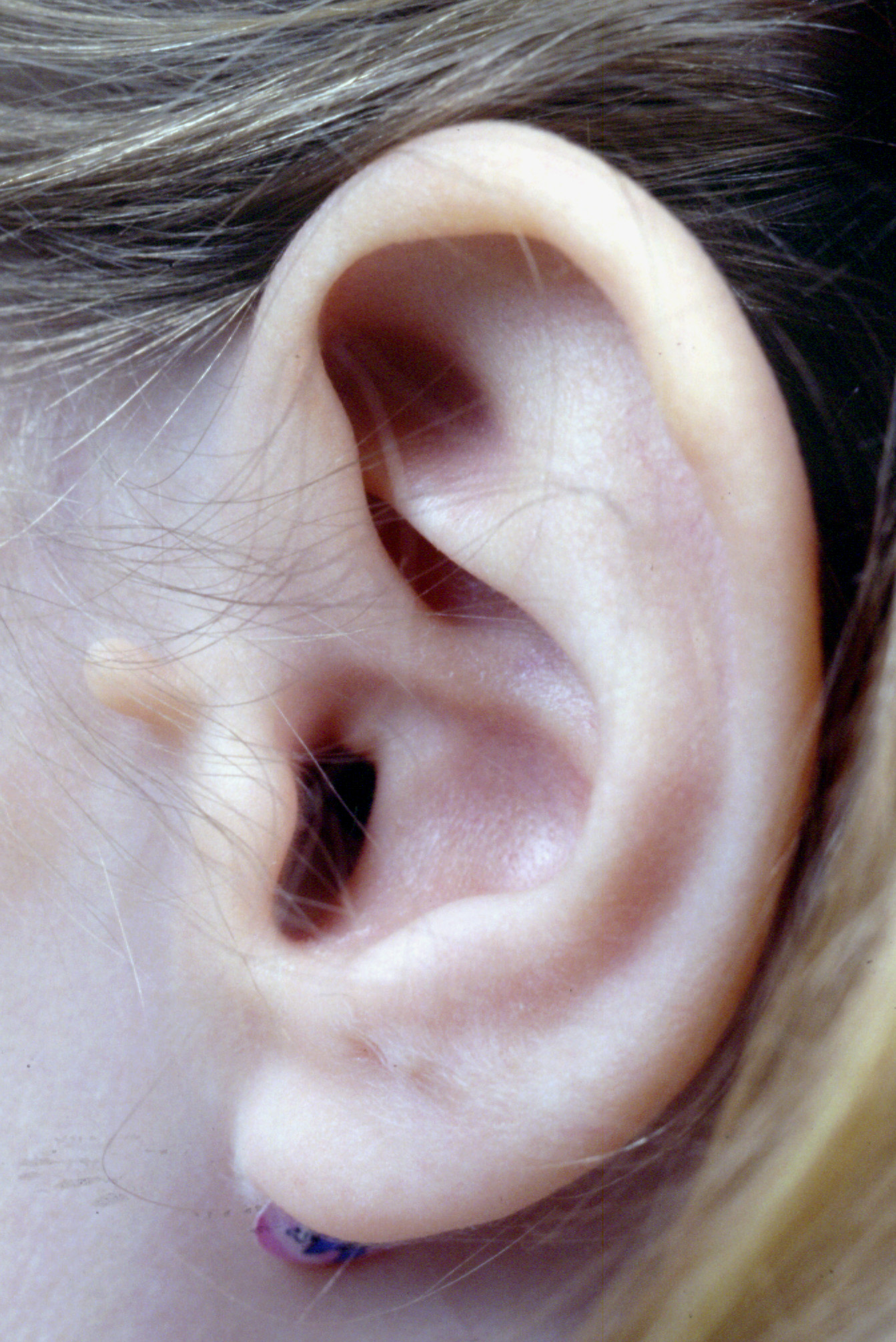
1st family portrait copyGrab a mirror or snap a selfie. About one percent of you will have a small dent close to your ear.

http://emedicine.medscape.com/article/845288-overview

What you see in the photo (or in your mirror!) is evidence of the hundreds of millions of years-old story of life on earth.

A fish paleontologist seems an unlikely choice for chairman of the anatomy department at a prestigious medical school.
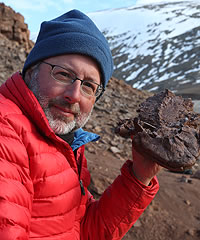
Meet Dr. Neil Shubin. shubin-neilHe is host of the new PBS series Your Inner Fish and is author of a book by the same title. Dr. Shubin is witty and a talented story-teller (Your Inner Fish has been on my list of “favorite books I’ve read” for years). If you haven’t yet, watch episode one – I promise you’ll set the recorder for the rest. I love the Cosmos series, but Inner Fish is more engaging.

One Bone-Two Bones-Lots of Bones-Digits

All living things with skeletons – every reptile, every bird, every mammal, every human – every vertebrate alive today is descended from ancient fish. You might be surprised to learn how much of the human body is an inheritance from our fishy-families.
Every animal walking the planet today has the exact same grouping of bones in their limbs (think about your own arm or leg): one bone, two bones, lots of bones, digits.
We even see this arrangement in a preliminary form in the fins of fish.
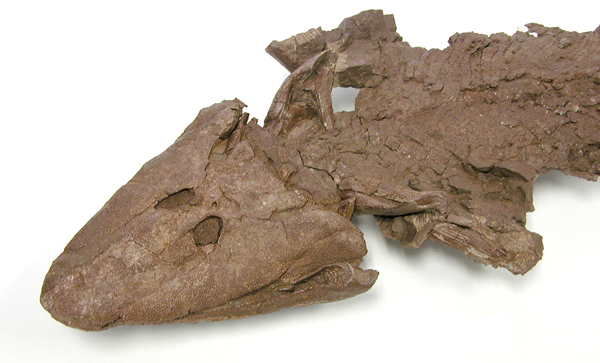
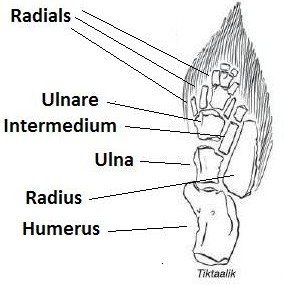
In the transitional fossils between fish and the first amphibians, we see this pattern (one bone-two bones-lots of bones-digits) become more and more pronounced as we move closer to amphibians (the first true tetrapods, aka four-legged animals). The most famous of the fish-to-amphibian transitional animals, Tiktaalik, had a flat head and a neck.

Tiktaalik

Tiktaalik

Tiktaalik had distinctive fish features (scales, fins, gills), but inside its fins was an early version of one bone-two bones-lots of bones-digits. Tiktaalik even had a kind of wrist! tiktaalik2

Your Inner Fish

Our skeletons are not the only key to our fishy past. In both human and fish embryos, there are swollen structures found near the face and neck. In fish, these structures become the gills. In humans, these structures become the lower jaw, the middle ear, and the voice box. That’s why a fish paleontologist is an excellent human anatomy professor – many of the same muscles, bones, and nerves humans use to talk and hear correspond to the gill structures in fish.

Sometimes your “inner fish” comes out.

ear pit      ear tag
If you have a tiny dent near your ear (sometimes it is a small tag), you have a remnant of the gill structures you had as an embryo. Own your inner fish!

Your Inner Boy Fish

In male fish, the testicles are located high up in the body – close to the heart. Fish are cold-blooded animals, so body temperature isn’t a problem for heat-sensitive sperm.
In male human embryos, testicles start in the same location – high up, tucked deep in the body. But humans are warm-blooded, so before birth (about 24 weeks old) the testicles of human males descend to a cooler climate outside the body cavity. This descent through the muscle wall leaves an opening where intestines can potentially poke through – a hernia.

Organizing Principle of Biology

The primary organizing principle of all modern biological sciences is the theory of evolution. Your Inner Fish is an excellent introduction as to why that is so.

Catch up here if you need to: Episode 1: Your Inner Fish
And get excited about the rest of the series! -Wednesdays on PBS.

(a) Goodnight (for the) Moon

Let’s hope for clear skies Monday night/early Tuesday morning (April 14-15). For the next two years, there will be a celestial rarity – a lunar eclipse every six months – and Monday night/Tuesday morning is the first one in the line-up.

The eclipse will begin at 1:58 a.m. (EDT, just after midnight on April 15); totality will be at 3:07 a.m. (EDT).

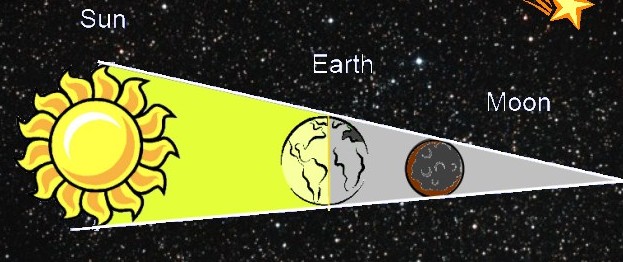
lunar-eclipse-starfieldLunar eclipses (unlike solar eclipses) are perfectly safe to view. During a lunar eclipse, the moon passes behind the earth so that the earth blocks the sunlight from shining directly on the moon.

As the moon starts to pass into the earth’s shadow, the round disc of the earth-outline becomes visible on the moon. Ancient Greeks saw this and understood that the earth was round.

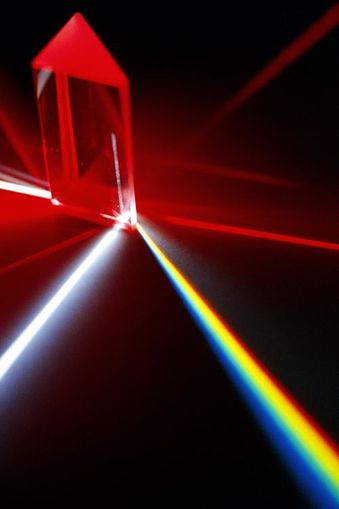
As the sunlight passes though the earth’s dusty atmosphere, the light is bent (refracted) toward the red part of the color spectrum and cast upon the moon. The more dust in the atmosphere (from volcanoes, etc.), the redder the moon. Refraction

As the lunar eclipse progresses, the moon changes from its familiar white-gray color to a deep red, then back to white-gray.

And if a blood-red moon isn’t enough, look for Spica (a bright star in the Virgo constellation) right next to the moon. Then off to the west, look for Mars shining bright and orange.

****************

I believe that the heavens declare the glory of God.
I believe that day after day the cosmos pours forth speech and night after night the cosmos reveals knowledge.
I trust that the evidence and knowledge that is revealed is true because the Creator of the cosmos is Truth.
2010-08-30-2010-8-30-Science-Cat


The Touchy Topic of Human Evolution or You Can’t Make a Monkey Out of Me

Seventeenth century Church leaders were not really all that upset with Galileo’s science – the science that put the sun (instead of the earth) in the center of the solar system. Of course there were the literalists who were genuinely upset about the Bible verses that said the earth was fixed and unmovable, but that wasn’t the biggest deal.

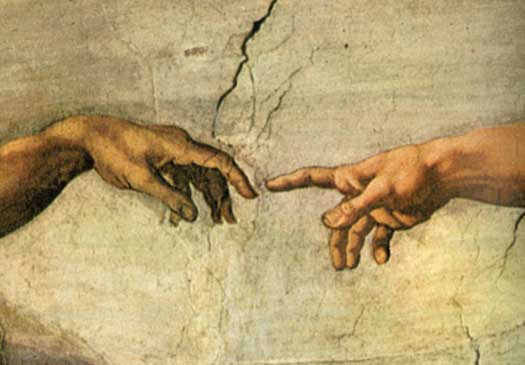
Galileo didn’t hurt the Church’s science feelings as much as he hurt their theological feelings: if the earth is not the center of everything, then man is not the central focus of creation. If the earth is just one of innumerable planets in the universe, the earth is not special to God and man holds no special place in creation. Creation-hands-L

If the earth is not the center of the solar system, the gospel is lost.

Monkeys Make a Mess of Things

trunk_monkeyDayton, Tennessee, 1925. John Scopes, a high school teacher, was tried and convicted in the most famous science-versus-faith trial to date. Actually, Scopes wasn’t in hot water for teaching that plants or even animals had evolved over time.
Scopes was convicted of teaching against the “Divine creation of man” and that man “has descended from a lower order of animals” – both violations of Tennessee’s Butler Act.

Evolution per se didn’t get John Scopes in trouble, but bringing in the monkeys did. Add monkeys into the mix, and your theology is ruined: man is no longer special.

Twenty-first century Americans aren’t much different. A 2005 Harris poll (p. 88) surveyed Americans about evolution – asking the question in different ways. In surveys that only mentioned plant and animal evolution (leaving out humans), 49 percent accepted evolution, topping the 45 percent who did not. But – if the survey included human evolution, only 38 percent accepted it, while 54 percent rejected it. If God was referenced in the question, the numbers changed dramatically. Only 22 percent agreed that humans evolved from an earlier species if the other option was “humans were directly created by God (62 percent).

Suggesting that humans evolved makes many people (theologically) nervous.

Evolution might be just fine to explain the ancestry of ferns and bluebirds and germs, but just keep those damn monkeys out of our family tree (p. 89).

Caps-for-Sale-07

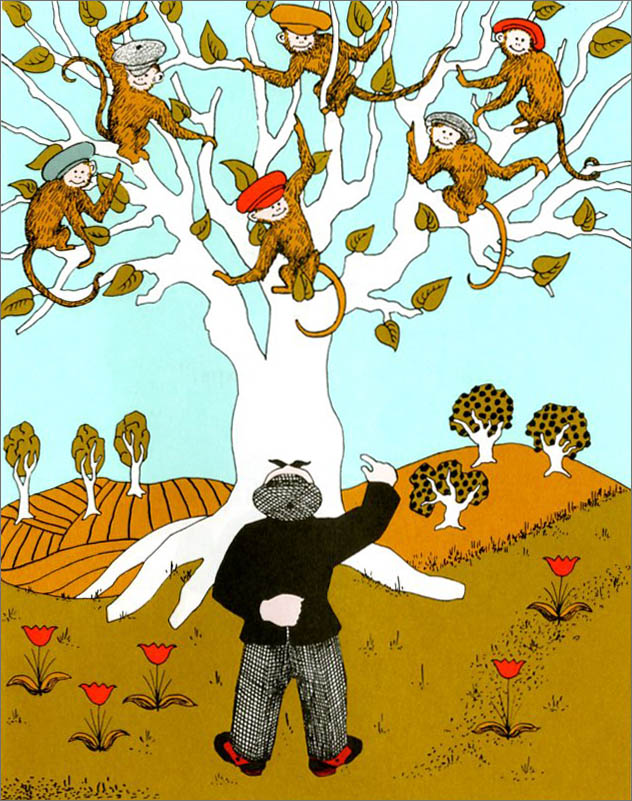
If People Came From Monkeys, Why are There Still Monkeys Today?

Ever since Darwin published his work regarding our prehuman ancestors, skeptics have demanded to see “the missing link” – the one and only, definitive half-monkey, half human creature that bridges ape to man. patty_the_sasquatch_by_rowdyrobert-d2yqftm

But to demand a single “missing link” is to misunderstand evolution. The theory of evolution does not suggest that species to species change occurs in a straight-line, one-turning-into-the-other kind of process. Instead, evolution is a slow spreading and branching process that eventually results in greater and greater species diversity. Over the years, many of these branches became dead ends. Others survived, and are the modern species we see today.

So, there is no one “missing link” for humans. There are, in fact, more than a dozen “links” – distinct species exhibiting human traits – each found in Africa from the past four or five million years.

We have, in reality, discovered so many missing links that the real question has become how to deal with this embarrassment of riches – in other words, how to connect the dots (p. 92).

Evidence Right Before Our Very Eyes: The Human Genome Project

It’s really hard to overstate the magnitude of the announcement. It has been called one of the “great feats of exploration in history”.
In 2003, the Human Genome Project, headed by Dr. Francis Collins, announced the complete mapping of the human genome – a map of all the genes of human beings.
Here’s Dr. Collins:

…this Book of Life is actually at least three books. It’s a history book: a narrative of the journey of our species through time. It’s a shop manual: an incredibly detailed blueprint for building every human cell. And it’s a transformative textbook of medicine: with insights that will give health care providers immense new powers to treat, prevent and cure disease. We are delighted by what we’ve already seen in these books. But we are also profoundly humbled by the privilege of turning the pages that describe the miracle of human life, written in the mysterious language of all the ages, the language of God.

Already, mapping the human genome has

  • fueled the discovery of more than 1,800 disease genes
  • lead to the discovery of genes for inherited diseases in a matter of days, not years as it previous took
  • enabled physicians to determine genetic disease risks and diagnose genetic disease for more than 2,000 genetic conditions

And soon, information from the Human Genome Project will

  • allow us to identify all the genetic abnormalities seen in 50 major types of cancer
  • result in the development of drugs that are much more effective and cause fewer side effects than those available today

The information from the Human Genome Project has and will continue to revolutionize the diagnosis and treatment of human disease.

But the human genome tells us more: “it is a history book: a narrative of the journey of our species through time”.

And that’s where the missing link appears right before our very eyes.

History in our Genes

Drink your orange juice! Humans must have a source of vitamin C in their diets or the connective tissue in the body will break down – a disease called scurvy. British sailors limeys [640x480]brought limes aboard ship in order to stave off scurvy on long voyages – hence the nickname limeys.
Most mammals are able to make their own vitamin C from ordinary sugars – but humans can’t.
Here’s where things get interesting. Humans aren’t missing the gene that is needed to manufacture their own vitamin C. The gene is exactly where it should be, on chromosome 8, in approximately the same spot where the vitamin C-making gene is found in other mammals. But – the gene is broken and no longer works. In a sense, all humans have a “genetic disease” and we must treat it by ingesting outside sources of vitamin C.
Humans aren’t the only ones with a broken vitamin C-making gene. A certain group of primates, the ones that happen to be our closest evolutionary ancestors (chimpanzees, gorillas, orangutans) also have this broken gene. Other more distant primate relatives have a functioning copy of the vitamin C-making gene.
Mapping the human genome has shown us that the capacity to make vitamin C wasn’t lost in a human ancestor, but in a primate ancestor.

Plagiarism in the blood. Hemoglobin is the protein in blood that carries oxygen and makes blood red. On human chromosome 16, there are five genes that are responsible for the production of hemoglobin. Right in the middle of the five functioning genes sits one broken non-functioning gene. Humans aren’t the only ones with five functioning genes for hemoglobin production surrounding one broken gene – gorillas and chimpanzees have them, too, and the genes are identically arranged. In fact, the broken gorilla and chimpanzee genes have the exact same errors as does the broken human gene.

Like a cheating student copying another student’s work – mistakes and all -the matching errors are not coincidental. cheating-student

There’s no escaping the implication of these matching mistakes…The only sensible interpretation is that the original errors developed in a single ancestor of these three species (pp. 102-103).

The missing chromosome. Before the human genome was mapped, an abundance of fossil evidence indicated that humans share a common ancestor with the great apes (chimpanzees, gorillas, orangutans).
There was, however, a mysterious inconsistency at the chromosome level. Humans have 23 pairs of chromosomes (one pair from each parent) and the great apes have 24 pairs. At some point in the lineage leading to humans, had two chromosomes accidentally fused? The human genome map gave us a way to test this hypothesis.

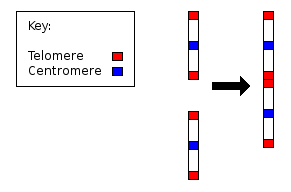
Every chromosome has landmarks – specific structures that are only found at the two tip-ends of the chromosome (called telomeres) and a structure found only in the very center of the chromosome (a centromere).

Human chromosome 2 is unlike any other in the genome. Chromosome 2 has working telomeres at each tip-end, as would be expected. But Chromosome 2 has two more telomeres, fused together, right in the center of the chromosome. Chromosome 2 also has two centromeres instead of one.
What’s more, the genes on human chromosome 2 correspond almost exactly to the genes on chimpanzee chromosomes 12 and 13. The evidence for fusion is so apparent that scientists now number the chimpanzee chromosomes 2A and 2B to match the human chromosome to which they correspond (p. 107).

Chromosome2_merge

What About Design?

In Only a Theory, Kenneth Miller continually asks us to examine the evidence regarding Intelligent Design.

Is our genome … a modified copy of an earlier work, or is it an entirely new creation? …In every case for which we have data – and that now includes our complete genome and the genomes of many of our closest animal relatives – the answer is clear. We’re working with a modified copy, a genome loaded with inherited errors that has been shuffled and mutated and rearranged. We have, in short, a genome that evolved (p. 109).

The Same Science

There is historic, groundbreaking science emerging from the Human Genome Project. It is science that will heal diseases and prevent human suffering and for which believers will (and rightly so) give thanks to God.
This same science also tells us that we share common ancestry with all life. It tells us that we most closely share an ancestor with the great apes.

The science cannot be valid in one case, but invalid in the other. It is the same science.

The world renown geneticist at the helm of the historic Human Genome Project, Francis Collins, is a committed, all-in, vocal Christian. He described the genome as “the language of God” and wrote a book by that title, arguing for the compatibility of faith and science. Dr. Collins is currently the director of the National Institutes of Health, working at the cutting edge of DNA research.

Francis Collins is one of my all-time favorite examples of why we don’t have to be (theologically) nervous about human evolution.

This series is a chapter by chapter overview of Kenneth Miller’s Only a Theory, with my discussion and commentary.

****************

I believe that the heavens declare the glory of God.
I believe that day after day the cosmos pours forth speech and night after night the cosmos reveals knowledge.
I trust that the evidence and knowledge that is revealed is true because the Creator of the cosmos is Truth.
 2010-08-30-2010-8-30-Science-Cat

Science This Week: Measles, Debunking the Monk, & Flying Monkeyducks

Measles (they’re baaack)

In the year 2000, measles was virtually nonexistent in the United States.
But this week, a measles advisory was issued in New York City after the twentieth case of measles was confirmed. Before the week was over, it was twenty-one cases. Orange County in California also reported its twenty-first case of measles so far this year. Last year, nearly 200 cases of measles were reported in the U.S., and we are on track to top that in 2014.
Measles is making a comeback due to the increasing number of parents who are opting out of vaccinations for their children. measles
Despite the “childhood disease” euphemism, measles is a highly contagious, often serious and potentially deadly disease. The virus can linger airborne in a room as long as two hours after an infected person has been there.

Because measles has been rare for so many years, the memory of the disease for parents and health care workers has faded (“Remembering How to Fight Measles”, The New York Times, March 27). Many clinicians have never seen a case of measles. In the recent outbreak in New York City, some of the cases were thought to have resulted from exposure in hospitals – undiagnosed patients were not isolated immediately and exposed others waiting to be seen.

Nineteen states allow “personal belief” exemptions for school-required vaccinations.

If a single parent does not immunize a child, the risk to that individual is low. But as the number of unvaccinated children grows, the risk of numerous people contracting and spreading the disease multiples, creating a health risk for a large segment of the population…When the immunization rate falls, the danger to the young and the elderly increases dramatically (“A Doctor’s Take on the Anti-Vaccine Movement”, Forbes, March 20).

Cosmos and Bruno: Debunking the Monk

I think the new Cosmos series is brilliant thus far – but the first episode drew criticism for its portrayal of Giordano Bruno as a hero of science (“How Cosmos Bungles the History of Science”, Daily Beast, March 23).

In lengthy animation, Bruno is depicted as the only man on the planet who believed that the universe was infinite. In the Cosmos cartoon, Bruno wandered through Europe, mocked, rejected and impoverished because of his staunch refusal to disavow his scientific hypotheses about the universe. Eventually, demonically-drawn church officials imprisoned him and ultimately burned him at the stake – all for standing up for science.

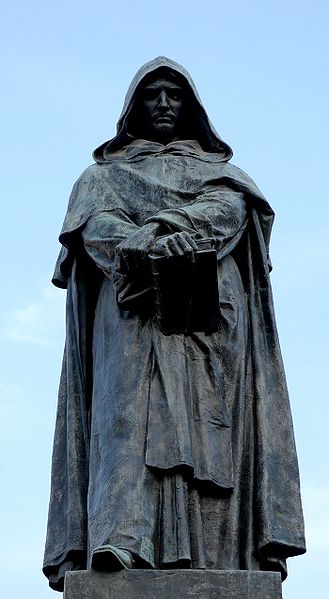
329px-Giordano_Bruno_Campo_dei_FioriHere’s the problem: Bruno wasn’t a scientist – far from it – even by 16th century standards. Bruno espoused Hermetism, practicing adoration of the sun as the center of all (hence his affection for Copernicus). The church inquisition listed eight charges against Bruno, including denying the divinity of Jesus, practicing magic, and believing that the earth and all animals had souls. He wasn’t the poor cast-out loner depicted in the animation – he had multiple important patrons throughout Europe.

Call Bruno a martyr for religious freedom, but not a martyr for science. Of course there were actual scientists who were persecuted by the Church (Galileo, for example), but focusing on Bruno as the archetype science-martyr doesn’t make the point. For many posters on social media and journalists in popular media, the Bruno story (unfairly) picked a fight between science and faith.

To a certain extent, misunderstanding the story of Bruno isn’t going to do a whole lot of harm – especially in a country where so many people are in denial about basic scientific facts. But that Cosmos added an unnecessary and skewed version of Bruno – especially one skewed in this particular way – is a good miniature lesson about our tendency to turn the past into propaganda for our preferred view of the present (“How Cosmos Bungles the History of Religion and Science”).

Flying Monkeyducks and the the Awesomeness of Pterosaurs

Up in sky! It’s NOT a bird! It’s NOT a dinosaur! It’s a pterosaur!

Pterosaurs were reptiles, close cousins of the dinosaurs. Pterosaurs evolved on a separate branch of the reptile family tree. There were dozens of species of pterosaurs, some as large as an F-16 fighter jet and others as small as a paper airplane. Pterosaurs were the first animals after insects to evolve powered flight—not just leaping or gliding, but actual flight by flapping their wings to generate lift and travel through the air.

The American Museum of Natural History is opening a new pterosaur exhibit April 4. If you are expecting nothing but pterodactyls, think again.

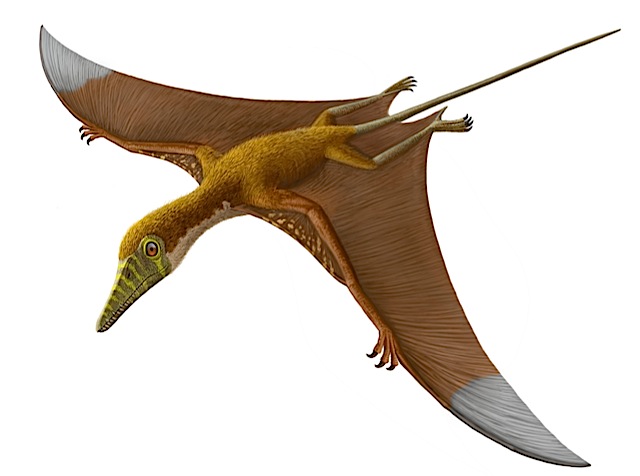
Sordes pilosus

Sordes pilosus

Sordes pilosus looked like a flying monkeyduck. Some fossils indicate that Sordes had a thick coat of fibers similar to fur.

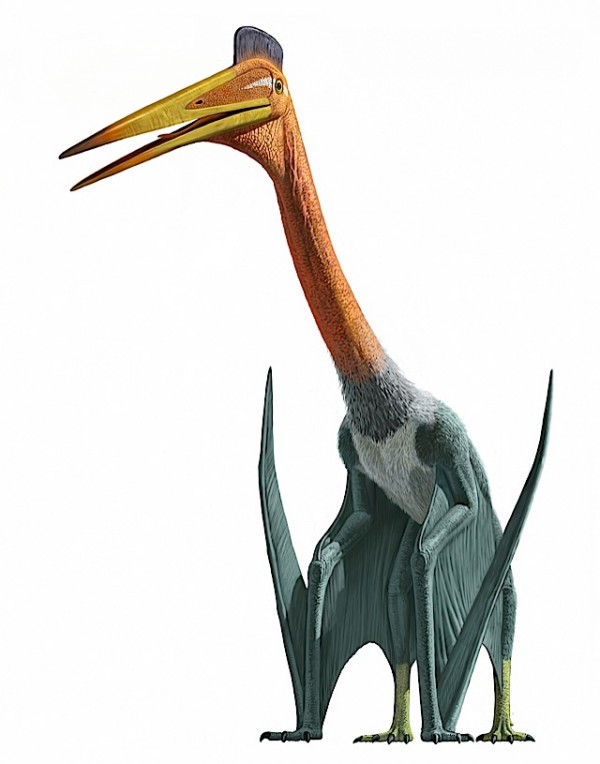
Quetzalcoatlus northropi

Quetzalcoatlus northropi

Quetzalcoatlus northropi was probably the largest animal ever to fly – and – it’s a native Texan! Quetzalcoatus had a wingspan of at least 33 feet.

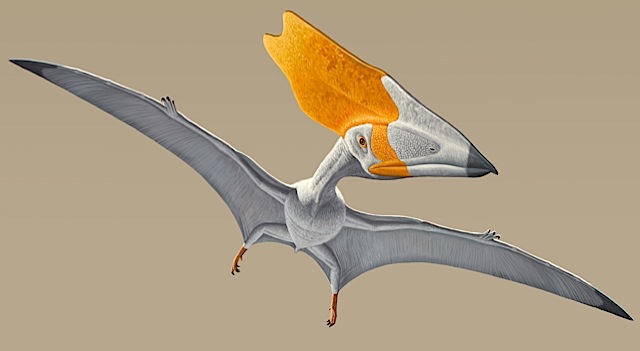
Thalassodromeus sethi had the largest crest of any known vertebrate – three times larger than the entire rest of its skull. Thalassodromeus probably looked a lot like Toucan Sam’s more flamboyant cousin. It had a wingspan of 14 feet.

Thalassodromeus sethi

Thalassodromeus sethi


Here’s a link to more info about the exhibit.


 ****************

I believe that the heavens declare the glory of God.

I believe that day after day the cosmos pours forth speech and night after night the cosmos reveals knowledge.

I trust that the evidence and knowledge that is revealed is true because the Creator of the cosmos is Truth.

2010-08-30-2010-8-30-Science-Cat

Science This Week: The Newborn Universe, Cosmos #1, & ID in the News

Baby Pictures of the Universe baby2

They thought it was pigeon poop – but what it really was earned them the Nobel Prize in Physics. In 1964, Arno Penzias and Robert Wilson were experimenting with a super-sensitive antenna, trying to detect radio waves bounced off a satellite. But mysterious background noise (static) was interfering. Penzias and Wilson discovered pigeons roosting in their high-power antenna – and thinking that was the source of the interference – they set about removing the birds and scrubbing away all of the poop. Yet, the background noise remained. Eventually Penzias and Wilson realized they had just observed the earliest known baby picture of the universe. The faint glow of cosmic background radiation they discovered dates back to just 380,000 years after the big bang. Before that time, the just-born universe was too hot to even allow light to travel. Cosmic background radiation is the light that began to glow when the universe cooled – 380,000 years after the big bang.

static_tv_021709If you have an old TV around, the kind with a rabbit-ear antenna – you own a time machine. Tune the TV between channels and one percent (1%) of the static you see is cosmic background radiation left over from the big bang. How cool is that?

This week, an international team of physicists announced the discovery of an even earlier universal selfie – a newborn photo. It has long been a mystery as to why the universe is uniform from pole to pole and not a jagged warped mess as you might expect from an explosion like the big bang. It was hypothesized that following the initial “bang”, the universe ballooned out and swelled inconceivably fast – faster even than the speed of light – and this rapid expansion (called inflation) ironed out all the wrinkles and irregularities. If inflation had indeed occurred, we would expect to find ripples of gravitational waves in the radiation as the universe was wrenched ferociously apart. Long-term observations of the cosmic background radiation found just that. The team of researchers announced this week that the light from the cosmic background radiation is distorted, rippled, and polarized in a pattern that fits the gravitational waves left over from inflation. What this means: we now have a “picture” of the universe, just one-trillionth of a trillionth of a trillionth of a second after the big bang. Wow.

Cosmos, Episode 2: Some of the Things Molecules Do

The second installment of the new Cosmos series with Dr. Neil deGrasse Tyson ventured into the universe of molecules inside of us. This episode focused on the beauty and diversity of life resulting from eons of natural selection. Dr. Tyson noted right away that many people are very uncomfortable at the thought of sharing an ancestor with the apes. Amen to that. Moms, wanting their prodigious science-loving offspring to understand that science and faith are not in conflict, have often asked me to explain to their kids why dinosaurs and humans didn’t coexist. Mom beams with pride as offspring comprehends the evidence of an ancient earth and evolution of animals, but breaks out in a blotchy sweat when her junior scientist asks the inevitable “so did we come from monkeys?”

Dr. Tyson brought us on a journey through the “tree of life”, demonstrating that in reality humans are related to all of life, even plants. Just like DNA testing can tell us about paternity and who is related to whom, DNA can demonstrate relatedness between all living things. The closer the relative, the more DNA in common. I found it fascinating that on a section of DNA carried by both oak trees and humans – in the same spot for both – we find genes coding for the breakdown of sugar. Digesting sugar is so loan-oak-treebasic to life that the ability to do so evolved before all the myriad forms of life split off from each other. I loved this observation by Dr. Tyson:

The stuff of life is so malleable, that once it got started, the environment molded it into a staggering variety of forms.

An exceptional animated graphic tracing the evolution of the eye illustrated how living things are molded in response to their environment. (here’s a link to episode 2 – the segment on the evolution of the eye begins at 21:37) Dr. Tyson addressed the claim that evolution is “just” a theory, as if it was someone’s opinion. Evolution is a theory… like gravity is a theory. Evolution really happened – it’s in our DNA.

Note: Francis Collins is the author of one of my top-ten of all time books, The Language of God. Dr. Collins headed the ground-breaking Human Genome Project, is currently the director of the National Institutes of Health and is a vocal and committed Christian. According to Francis Collins, DNA is the “language by which God spoke life into being”. Beautiful.

Intelligent Design in the News

Advocates of Intelligent Design have long insisted that ID was a science-based explanation of the diversity of life. God is never mentioned in ID materials, only an “intelligent designer”. Despite these claims, in the high-profile 2005 Dover case a U.S. district judge ruled that ID was indeed religious in intent, replacing “God” terminology with “design”. Stephen Meyer, a respected leader in the ID movement recently reiterated the “non-religious” claim:

Contrary to media reports, Intelligent Design is not a religious-based idea, but instead an evidence-based scientific theory about life’s origins—one that challenges strictly materialistic views of evolution.

However, a conference held last weekend at Faith Bible Church in the Woodlands (north of Houston) may represent a shift in the ID model. The conference featured three stars of the ID movement: William Dembski, John West, and the author of the preceding quote, Stephen Meyer. The website for the conference presents a straightforward choice: science either undermines essential Christian doctrines or points to intelligent design.  Does this move to explicitly link leaders of the ID movement and Intelligent Design itself to Christian “essentials” represent a paradigm shift? If so, the multiple movements in several states to teach ID alongside evolution might get a bit more interesting.

************************

I believe that the heavens declare the glory of God.

I believe that day after day the cosmos pours forth speech and night after night the cosmos reveals knowledge.

I trust that the evidence and knowledge that is revealed is true because the Creator of the cosmos is Truth.

2010-08-30-2010-8-30-Science-Cat

Intelligent Design: Creationism Redux

It was must-see TV. Live from the KERA studios in Dallas: the Texas Lieutenant Governor Primary Candidates Debate!

Oh… you missed it?

The four GOP candidates (the Democrat candidate is unopposed) squared off on important issues – term limits, guns, abortion, legalization of marijuana.

Toward the end of the debate, the four men vying for what is arguably the most powerful state office in Texas were asked to respond to these questions: lt gov debate

Does creationism belong in schools? Would you like to see creationism in textbooks?

Yes.

Yes.

Yes.

Yes.

Here are the responses from the two candidates who will face each other in the May 27 runoff:

David Dewhurst (the incumbent): I am fine with teaching creationism, intelligent design, evolution. Let students, with advice and counsel, decide for themselves which one they believe in.

Dan Patrick (the frontrunner): When it comes to creationism, not only should it be taught, it should be triumphed, it should be heralded.

Gussied-up Creationism

For many people of faith, traditional young-earth creationism demands too high an intellectual price, primarily because it demands a 6,000 to 10,000 years old universe.  “Creationism” and “creation science” have been replaced in many circles with Intelligent Design (ID). The Intelligent Design model is infused with scientific vocabulary and complex concepts and has no objection to evidence from physics or geology.

Intelligent Design proponents contend that the theory of evolution is flawed because it cannot explain the complexity of living things. According to ID, an “intelligent designer” was required to step in and specially design (create) each organism, each aspect of life. Intelligent Design is creationism, just gussied-up and more science-y. Intelligent Design is old-earth creationism.

Intelligent Design proponents advocate for equal treatment with evolution theory in public schools.

The likely lieutenant governor of Texas agrees.  

 Teach the Controversy

teach_the_controversy_by_ex_leper-d2xgnkiSo what’s the harm, really? Don’t we want our students to be critical thinkers? Weigh strengths and weaknesses? Should we “teach the controversy” regarding evolution as many education bills are worded?

In other words, should Intelligent Design (old-earth creationism), by law, be given equal status with the theory of evolution in public schools?

Under the Microscope: Does ID Hold Up?

Advocates of Intelligent Design present ID as a valid, scientific approach to the study of biology. As such, ID should pass the tests required of any new science idea.

What happens to a newly introduced science concept?

TNBlog_Scientist

Ta-Daaah!!

Science is self-correcting. New ideas aren’t automatically accepted in the scientific community, no matter how big a splash they make. A couple of decades ago, cold fusion was all the rage. Scientists across the world jumped on board and began trying to replicate the process in their own laboratories, but no one was successful. It soon became apparent that the concept itself was flawed and cold fusion has since been relegated to “the scrap heap of junk science” (p. 45).

And – just a few weeks ago, a Japanese team published an important breakthrough in stem cell research. Almost immediately, scientists reported irregularities in the research and difficulties in replicating the results. The exciting new findings were discredited less than 40 days after their announcement.

If bad science is published in a peer-reviewed forum, it will not stand long. Science polices itself.

What happens when ID is put “under the scope” by the scientific community?

The basic principle of Intelligent Design is “irreducible complexity”. Irreducible complexity means that living systems are so complex all of their parts must be present in order to be functional. According to ID, gradual development (evolution) could not possibly produce these systems – complex systems had to appear “all at once” or they would have been useless. The mousetrap is the go-to example of irreducible complexity: all parts must be present in the mousetrap in order to catch a mouse.

Reduce the trap by even one part, and the mousetrap is useless.

Dr. Kenneth Miller, in a true story from his childhood (pp. 53-55) deconstructed the mousetrap analogy. Using a broken mousetrap with several parts missing, a classmate built a perfectly functioning spitball catapult, capable of launching a juicy one from the gym floor to unsuspecting students in the balcony.

spit-ball-custom

The “reduced trap” was not useless.

The “reduced” mousetrap caught no mousies, but it was still functional: it was an ideal spitball launcher.

The concept of irreducible complexity fails when it comes to mousetraps, but a mousetrap is not a living, biological system.

What about the biological darlings of Intelligent Design – blood clotting, the flagellum, the eye?

Blood Clotting Cascade. Intelligent Design proponents regularly cite the blood clotting mechanism of vertebrates (animals with backbones) as an example of irreducible complexity. Even the tiniest break in a blood vessel triggers a cascade (or pathway) of events, eventually resulting in a blood clot that plugs the leak. Each step in the cascade triggers and amplifies the next step. So precise is this clotting pathway that the absence of just one component in the cascade has a devastating effect (uncontrolled bleeding).

Therefore, Intelligent Design says that the blood clotting cascade was put into place, “as is” and all at once. According to ID, evolution (a gradual process) could not have produced it.

But that is not what the evidence shows.

Simpler systems work. Some vertebrates are missing parts of the clotting pathway, yet the pathways are useful and are able to successfully form a blood clot.

Scientists have known for years that dolphins and whales are missing one of the clotting factors, and their blood clots just fine. In 2003, it was discovered that the puffer fish is missing three of the factors, yet it also has a working system.

In fact, many vertebrates have clotting systems simpler than the systems of mammals, yet they clot quite nicely. Dr. Russell F. Doolittle has extensively documented that the number of components in blood clotting systems increases and decreases as you move up and down the evolutionary scale from jawless fish to advanced mammals.

If a simpler clotting system is able to work, then blood clotting is not irreducibly complex.

Going back further. If we go back to even earlier ancestors, less complex than the vertebrates (animals with backbones), what would we find?

CionaSea Squirts do not have a backbone, so they are not vertebrates like us. Sea squirts do, however, have a nerve chord. Sea squirts are descended from organisms that split off from the line of animals that eventually lead to vertebrates (including us).

In 2002, the complete genetic code of the sea squirt was determined and the results were spectacular. No genes for vertebrate clotting factors were found, but scattered throughout the genetic code for the sea squirt were genes for all but two of the protein domains that build the vertebrate clotting factors. In other words, almost all of the nuts and bolts and spare parts needed to piece together the clotting factors were there, 400 million years ago (p. 66).

It appears that clotting systems evolved from a simple mechanism that could handle the low-pressure, low flow blood systems of less complex animals. Over long periods of time, more and more elements of the cascade were recruited, evolving into the complicated systems needed by mammals with high pressure cardio-vascular systems.

Yet Intelligent Design advocates assert that the blood clotting cascade was created from scratch, “as is”.

But if that were indeed the case, then why do we find the raw materials for clotting exactly where evolution tells us they should be, in the last group of organisms to split off from the vertebrates before clotting appeared? (p. 66).

The Bacterial Flagellum. Your body is host to billions of helpful bacteria that zip around your gut driven by their own little outboard motors – the flagella. Flagella are microscopic whip-like structures powered by a complicated chemical motor. As many as thirty components must be securely in their places in order for a flagellum to operate properly.

Intelligent Design says that the components should have no function whatsoever until all thirty are in place.

Most bacteria are harmless, even helpful. But the bad guys – the bacteria that cause disease – threaten living organisms in a variety of ways. Bacteria can pump poisons directly into a host cell using a protein pump known as a TTSS (type III secretory system).

Studies of proteins in the TTSS pump revealed a remarkable fact: the proteins in the TTSS are almost identical to the proteins in the base of the flagellum. About ten of the thirty proteins in the flagellum function perfectly well as a TTSS pump.

…the TTSS is just like my spitball catapult – a small part of a larger system that works just fine for an entirely different purpose (p.59).

In fact, nearly all of the proteins in the flagellum are like proteins found elsewhere in the bacterial cell.

The flagellum isn’t a made from scratch, all-at-once structure. Rather,

It’s much more like a collection of borrowed, copied, and jerry-rigged parts that have been cobbled together from the spare-parts bin of the cell. In short, it’s exactly the sort of thing you’d expect from evolution (61-62).

Intelligent Design proponents also claim that evolution could not have produced the eye or the middle ear. According to ID, these too, are irreducibly complex. But – multiple lines of research have demonstrated that both the eye and the middle ear could have been generated in a step-by-step, gradual process. (If you’d like to read more about the evolution of the eye, the middle ear, the bacterial flagellum, and the blood clotting cascade, check out these BioLogos links).

Unfortunate Choice of Words

Many believers want a faith-affirming approach to science that is also intellectually honest. At first glance, Intelligent Design seems to offer what Creationism cannot. On the contrary, when we inspect the claims of ID we simply find an old-earth version of Creationism.

It is unfortunate that the “competitors” to evolution appropriate the terms creationism, intelligent, and design. When used with capital letters, the terms are loaded with suppositions about the universe and life that contradict all of modern science.

But using small letters, they become descriptors, not dogma. It is possible to acknowledge God as creator of all, source of all intelligence, and author of all physical laws – and still speak the truth about what his creation reveals to us.

This series is a chapter by chapter overview of Kenneth Miller’s Only a Theory, with my discussion and commentary.

Previous posts in this series:

Big Tex, T-Rex, and the American Scientific Soul

Just a Theory

Design: The New Playbook

I believe that the heavens declare the glory of God.

I believe that day after day the cosmos pours forth speech and night after night the cosmos reveals knowledge.

I trust that the evidence and knowledge that is revealed is true because the Creator of the cosmos is Truth.
CatsDinosaurs

The Ark Was Round?

It must have been a sight.

London,1872. Tucked away in the depths of the British Museum, curator George Smith suddenly jumps up from his work and runs around the room, hooping and hollering. GeorgeSmith

And – to the astonishment of his colleagues – proceeds to strip down to his skivvies.

What would provoke such a display?

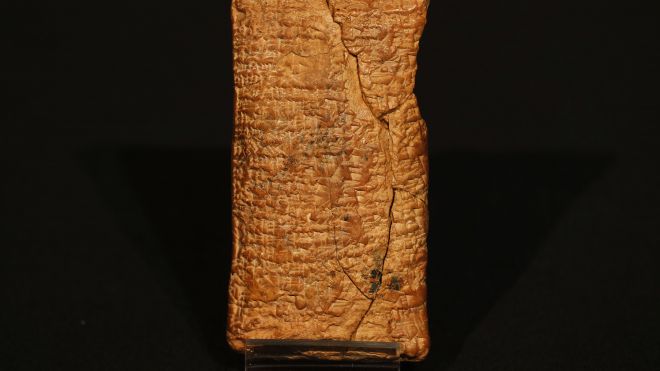
George Smith had been translating an ancient Assyrian tablet (7th century BC) when he came upon a story about a devastating flood: forewarned by the gods, a man built a big boat and filled it with animals and his family, and later sent out a dove and raven to check for dry land. All this in a story that far predated the book of Genesis.

Whaaaaat???

The uncanny similarities between the flood story in the more-ancient Epic of Gilgamesh and the Noah story were worrisome to many believers in 1872. There is an even older Mesopotamian flood story (17th century BC), a prequel to Gilgamesh, which also mirrors the Bible story.

The Round Ark

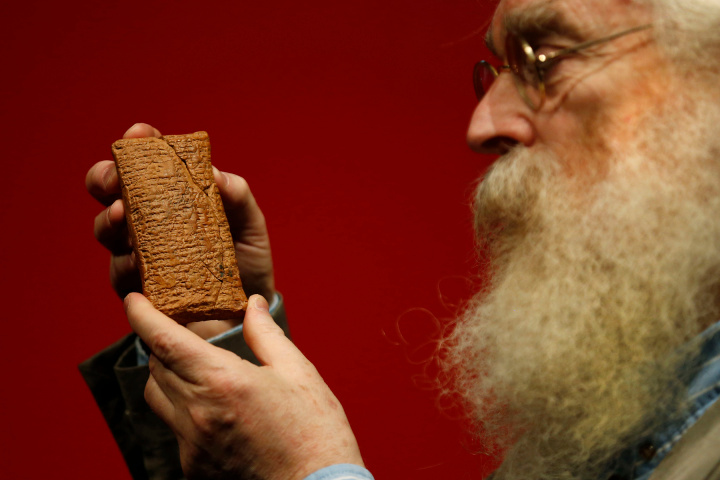
Just a few weeks ago, a 4,000 year-old newly-deciphered cuneiform tablet went on display in the British Museum. ancientarkThe flood story contained in this tablet predates other Mesopotamian stories and the Genesis story.  The boat-building and animal-gathering instructions are more technical and detailed than in subsequent flood stories.  The biggest media splash, however, was the description of the boat – giant, made of rope, and round.

The boat described is an oversized coracle, used in ancient Iraq as water taxis.coracle_india

The (fully clothed) museum translator, Irving Finkel, was delighted. Irving Finkel

Uneasy

Discoveries of flood stories more ancient than Genesis make many Christians uneasy for several reasons.

  • If your theology requires a literal world-wide flood, you might be uneasy.
  • If your theology requires that the Noah story be the original flood story, you might be uneasy.
  • If your biblical interpretation does not make room for culture and context, you might be uneasy.

The Science

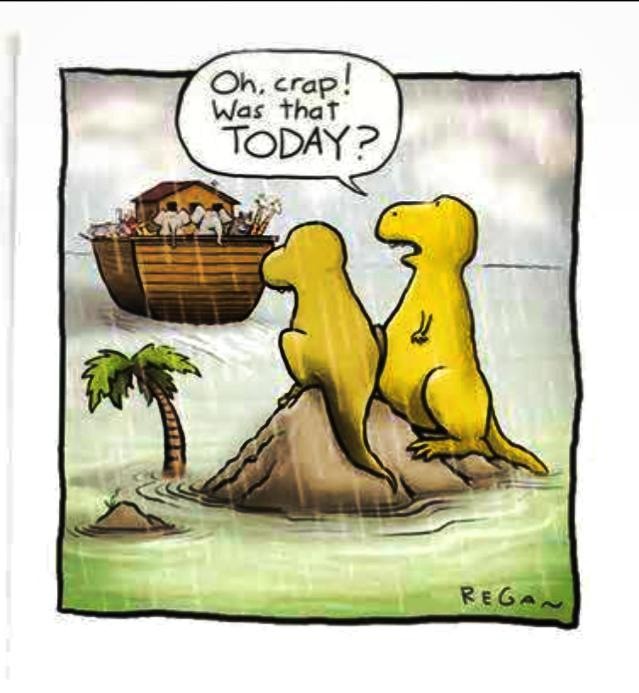
There is a line of thinking specific to many in the young-earth camp that attributes earth’s complex geologic history to a global flood as described in Genesis. From continental drift, to the Grand Canyon, to fossil layers, to the demise of the dinosaurs – a literal, global flood has been credited as the cause. dino ark

Can we find geological evidence to support such a catastrophic event?

Salt deposits. There are many massive salt beds on earth, some thousands of feet thick. We know how salt beds form – we can observe actively growing salt beds such as those in Utah. Salt beds form when salty water evaporates. Global flood proponents argue that the massive salt beds found throughout the world are the result of waters evaporating from “The Flood”. The problem with this explanation is that the salt beds are covered with thousands of feet of sediment, also said to be left by The Flood. Water from The Flood could not have evaporated enough to produce the vast amounts of salt and still be massive enough to produce the thousands of feet of sediment on top of the salt.

Grand Canyon. Every year, Answers in Genesis guides rafting tours of the Grand Canyon. According to the trip website, the guides

…give the biblical creation perspective on the formation of Grand Canyon, which stands as a testimony of the global Flood of Noah’s day.

I teach a “how to teach science” course to elementary education majors. In our soil lesson, we fill a glass jar – half soil, half water – and shake the jar vigorously until it looks like chocolate milk. We let the mixture settle for a few hours and this is what we see: jar soil

The heavier rocks settle out first, followed by finer sand, followed by finer silt, then clay, finest of all.

In geology, this phenomenon is called fining upward. When flood waters recede, we can observe a “fining upward” sequence in the layers of soil that are laid down by the floodwaters – coarse layers at the bottom, getting finer and finer toward the top.

If a single catastrophic flood – a single surge of rushing water – was responsible for carving the Grand Canyon, we would expect to see coarse layers at the bottom of the canyon, with finer and finer layers to the top. But that is not the case.
Deposition in Grand Canyon is a series of alternating layers – fine, coarse, fine, coarse, fine, coarse, and so on. Some of the alternating layers are larger than others. Now, throw multiple layers of limestone (never found in large flood deposits) into the mix, and Flood explanations for the Grand Canyon are in serious trouble.

Fossils. If a global Flood was responsible for the layers of fossils we observe today, what should those layers look like? Waters turbulent enough to rip up and move continents would churn all unfortunate non-ark animals as well as the bodies of previously deceased animals into one big animal-soupy concoction. There would be no orderliness to the fossil record; instead, we’d have the paleontological equivalent of a scoop of rocky road ice cream.

rocky road ice creamBut that is not what fossil layers look like. In very old rocks, we find fossils of trilobites. In later rock beds we find dinosaurs. Later still, we find mammoths and other mammals…and humans. Flowering plants are found in newer rocks, but not in older rocks.

Localized Flooding

Geophysicists William Ryan and Walter Pitman have documented scientific evidence that there was an enormously catastrophic flood in the middle east about 7,500 years ago. There is evidence that as sea levels rose following an ice age, the Mediterranean Sea overflowed and deluged the Black Sea basin. Ryan and Pitman estimate that waters could have rushed through this channel with forces greater than Niagara Falls, with water levels rising six inches per day.

In addition, there are written records of catastrophic floods in Mesopotamia that date back to 2900 BC. These accounts coincide with observable flood deposits in that area.

Whether they were Neolithic farmers 7,500 years ago or Mesopotamians 5,000 years ago, the flood refugees would have thought the world was ending. From their limited perspective, the whole world was under water.

It is reasonable that ancient Babylonians would pass down stories of a catastrophic flood and that these stories would find their way into the literature of the people.

It is also reasonable that their neighbors, the Israelites, would have this story.

Where the Israelites depart from their near eastern neighbors is theology.

The Theology

To our twenty-first century minds, it’s hard to fathom not being able to predict or even explain natural events like hurricanes, earthquakes, and floods.

Ancient people told stories in an attempt to understand.

The flood stories of the near east (including Genesis) have many shared elements: building boats, collecting animals, judgment, destruction, starting over.

But that’s where the similarities end.

The gods in the Atrahasis and Gilgamesh Epics were angry and revengeful. Humans were created to be slave labor for the gods. The humans rebelled and made so much noise it kept the gods awake.

The God of Israel is just. He sends the flood because humans chose evil and rebelled against him.

The gods of the Atrahasis and Gilgamesh Epics gleefully wiped out everyone. The gods demanded that humans respect distance and boundaries.

The God of Israel saves, restores, and finally (and this is HUGE) covenants. This God, unlike the gods in those other stories, saves because he wants to relate to, live with, and LOVE people.

To argue about the shape of the boat, the extent of the waters, the uniqueness of the story, dinosaurs on the ark or drowning in the flood, or to twist geology impossibly – ALL of these miss the point:

What this stilted literalism does, in its efforts to take the story seriously, is often to miss the point of the story. This story was a major leap forward in human consciousness, a breakthrough in how people conceived of the divine, another step toward a less violent, more relational understanding of the divine.

It starts like the other flood stories started.

but then goes somewhere different.

Somewhere new.

Somewhere better. (What is the Bible? Part 2: Flood).